Get Full Government Meeting Transcripts, Videos, & Alerts Forever!
Get email alerts on the Evidence Law topic
No spam. Unsubscribe anytime.
Committee approves bill limiting when creative expression can be used as criminal evidence
Summary
House Bill 237, as amended, creates criteria for when creative or artistic expression may be admitted as evidence in criminal trials and excludes certain hand signs and tattoos from the "creative expression" protection; the committee passed the bill after extended debate between prosecutors, defense attorneys and judges.
Representative Carpenter presented a substitute for House Bill 237 (LC481534S), which would regulate admissibility of creative or artistic expression as evidence in criminal trials. The sponsor said the goal is to prevent juries from being prejudiced by unrelated artistic works while allowing relevant expression to be considered when it specifically connects to the facts of a charged crime.
Key elements explained by the sponsor include: applying a preponderance-of-evidence standard; narrowing the test for when artistic expression is tied to specific facts of an alleged crime; and directing courts to redact or minimally present creative-expression material to avoid undue prejudice. The bill also contains language clarifying that certain items—specifically hand signs and tattoos related to criminal street gangs—are not considered "creative or artistic expression" for the purpose of that protection and therefore may be admissible.
Opponents, including Coweta Circuit District Attorney Herb Cranford and other prosecutors, said the state's existing evidence rules already allow judges to balance probative value against undue prejudice and warned the new statute could create duplicative or conflicting rules. Cranford said the bill was "way better" than an earlier version but reiterated concern that the proposed test could complicate trials and create uncertainty about what qualifies as expressive material. Defense and civil-liberties arguments in favor of the bill emphasized protecting creative artists from having songs or other works used to infer guilt on unrelated charges.
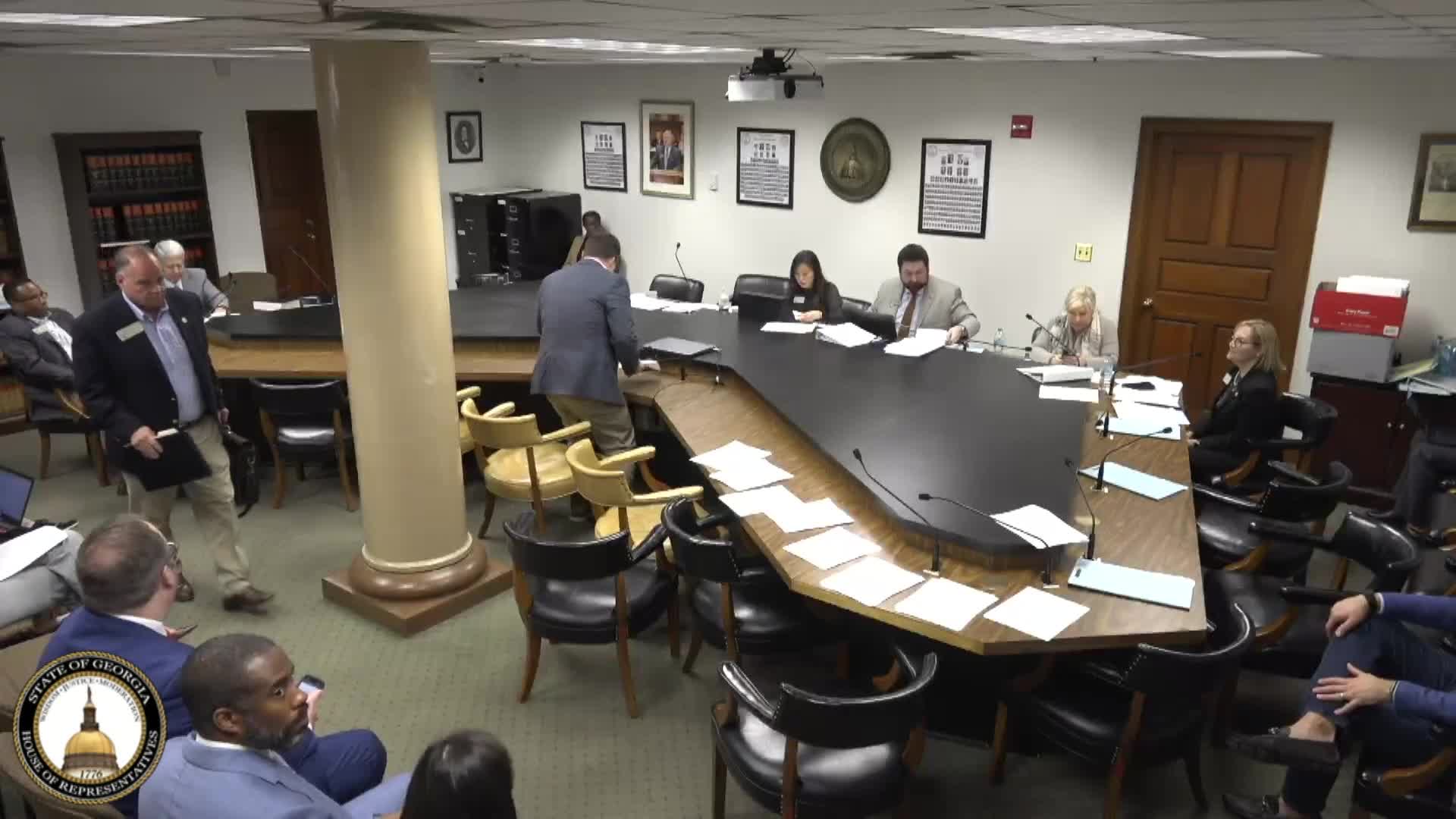
After extended discussion, the committee voted to pass HB237 (LC481534S) by voice vote. The transcript records the motion, a second and the chair announcing the bill "passes." The committee also recorded prior debate and requested continued inter-branch dialogue on specific clauses.
Why it matters: The bill tries to balance artist protections and fair trial rights against prosecutors' need to introduce probative evidence. It has direct implications for criminal trials involving music, tattoos, graffiti, or other expressive materials and drew active participation from prosecutors, defense counsel and judges.