Get Full Government Meeting Transcripts, Videos, & Alerts Forever!
Get email alerts on the Alley Improvements topic
No spam. Unsubscribe anytime.
Commission reviews proposed alley speed table and removable canopy behind Water Tower Plaza
Summary
Staff presented a conceptual plan to raise a section of the public alley behind Water Tower Plaza to provide a flush pedestrian route between front and rear commercial buildings; engineers flagged drainage, emergency-access, and utility-easement concerns and asked the applicant for additional detail.
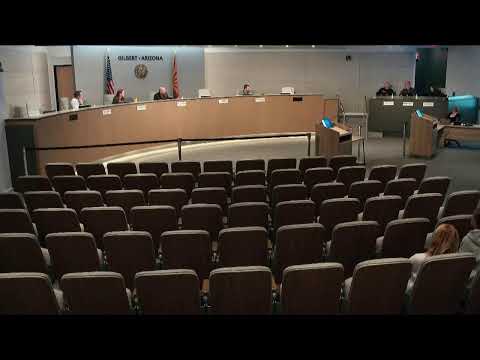
Town planning staff on a study-session agenda presented conceptual designs for alley improvements behind a building adjacent to Water Tower Plaza intended to reconnect a front storefront to a rear storefront without an enclosed walkway.
The proposal would raise a short length of the alley into a ‘‘speed table’’ to create a flush walking surface between the front and rear buildings, and install a removable four‑post canopy with a shade‑sail roof. Staff said the canopy would be supported by steel columns mounted into the adjacent buildings, and the canopy fabric would be removable so utility or maintenance access could be accomplished without demolishing permanent structure.
Why it matters: the alley is public right-of-way; utilities (identified in discussion as APS, Cox and Southwest Gas) run in easements there. Town staff and the engineering reviewer said the town owns the alley surface but utilities are protected by easements, so any physical work would require encroachment agreements that obligate the property owner to remove or reconstruct the improvement if utility owners need access.
Planning staff said the design is early and intended to solicit feedback rather than to approve a final construction plan. Commissioners pressed staff and the applicant for technical clarity: engineering staff raised drainage and long‑term maintenance concerns and said current plans lack sufficient detail to ‘‘stamp’’ approval. The development engineering manager said staff expect the applicant to provide plan details showing drainage (including pipes through the raised table) and slope modeling for storm events.
Commissioners also focused on emergency access. Staff said the alley must provide clearance and a slope that a fire apparatus can traverse without bottoming out; the study materials referenced a 15.5‑foot vertical clearance at the top of the ramp for fire apparatus in the Heritage District. Staff said they will ask the applicant to model typical fire‑truck dimensions over the proposed ramp to demonstrate feasibility, and that ramp geometry may change as a result.
On dimensions, staff and commissioners noted different figures in the materials: initial slides described the raised element as “approximately 6 feet wide and 2 feet tall,” while later plan images and commissioners’ readings showed the raised platform measured at roughly 16 feet wide and about 2 feet high. Staff said the project is in first review and dimensions could change with further engineering input.
Utility access and removability were repeatedly emphasized. Staff and the applicant’s spokesperson said the canopy is designed to be removable (shade sails that can be unclipped) so that crews can access subsurface utilities if work is required; by contrast, removing the raised table to access utilities would be a major operation (jackhammering) and would be addressed in an encroachment agreement with the property owner.
Next steps: staff said they will continue the engineering review, request clearer drainage and slope calculations from the applicant, pursue utility clearance letters, and, if the details show compliance with town standards and fire access, return the project as a formal permit submittal. No public hearing or vote occurred during this study session.
Ending: commissioners provided feedback—chiefly to resolve drainage, assure emergency vehicle access, confirm utility clearance, and ensure the canopy material and colors fit the Heritage District—before staff moves the concept forward toward permitting.