Lifetime Citizen Portal Access — AI Briefings, Alerts & Unlimited Follows
Assistant superintendent: Pittsfield’s Chapter 70 foundation rises $6.2M under governor’s FY26 proposal; state aid increase preliminary
Loading...
Summary
Assistant Superintendent Behnke presented a Chapter 70 funding update showing the district foundation budget rising to roughly $104.0 million under the governor’s FY26 proposal and preliminary state aid increasing by about $4.49 million.
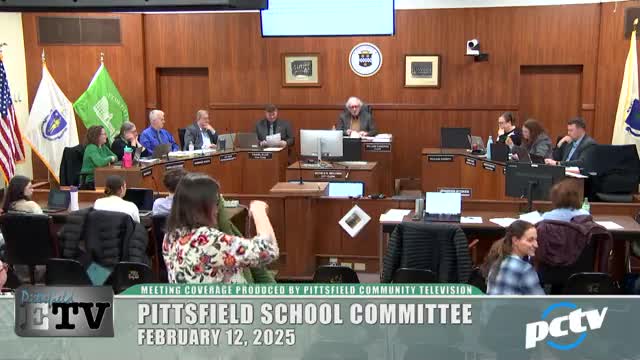
Assistant Superintendent Behnke presented a Chapter 70 funding update to the School Committee on Feb. 12, explaining the calculations behind the governor’s FY26 budget proposal and how the changes would affect Pittsfield’s foundation budget, required local contribution and state aid.
Key figures the administration cited (described as preliminary and tied to the governor’s proposed budget): the district foundation budget is shown as $104,024,895; total enrollment used in the state calculation is 5,576 students (up 18 from last year); the district’s counted low‑income percentage is 70.97% (placing the city in group 11); English‑learner counts increased by about 113 students in one year (49 additional elementary, 24 additional middle, 40 additional high‑school EL students); and the preliminary state aid figure under the governor’s proposal is $68,450,361, an increase of $4,489,402 (about 7% over FY25 under the governor’s numbers). Behnke emphasized these are governor’s‑budget numbers and could change during House and Senate consideration.
Behnke said the increases result primarily from the Student Opportunity Act implementation categories the state emphasized: benefits and fixed charges (health insurance and similar costs), guidance and psychological services, special education (including out‑of‑district tuition), English‑learner services, and additional support tied to students from low‑income backgrounds. She also noted that benefits/fixed‑charges rates reflect a three‑year average premium increase (Group Insurance Commission) and that the benefits line contributed materially to the increase.
Behnke walked the committee through documents that show how the state counts enrollment (including how preschool and special‑education assumptions are applied) and explained that some numbers (for pre‑K and certain special programs) remain listed as “TBD” because final enrollments are still uncertain. She also explained how the state calculates a district’s “required local contribution” by applying the municipal revenue growth factor to the prior year’s contribution; that number is used to determine the difference the state will cover through Chapter 70 aid.
Committee members asked process questions; members noted that the governor’s proposal appears to draw on multiple revenue streams and one asked whether the so‑called “fair share” or millionaire‑tax revenues were being applied; Behnke said she had heard similar reports but could not confirm all revenue‑source details and that some items were still under legislative consideration.
The School Committee voted to accept the update as presented; the motion carried by voice vote.
Why it matters: A multi‑million‑dollar increase in the district’s foundation budget and preliminary state aid under the FY26 governor’s budget could affect staffing, programming and local budget planning, but the numbers are preliminary until the legislature finalizes FY26 appropriations.
Ending: Behnke and the administration said they will monitor legislative action and report updates; committee members asked for follow‑up as bills move through the House and Senate and as final figures are confirmed.