Get Full Government Meeting Transcripts, Videos, & Alerts Forever!
Get email alerts on the Animal Control topic
No spam. Unsubscribe anytime.
Sunnyside forum draws rescues, officials to discuss animal-control, spay-neuter and countywide coordination
Summary
Local rescuers, volunteers and Sunnyside officials met for more than an hour to map next steps on stray animals, calling for enforcement of existing laws, more spay-and-neuter capacity and a coordinated countywide response.
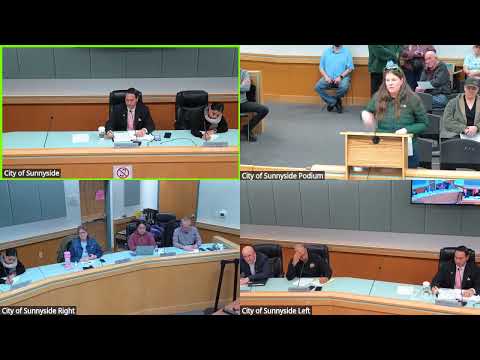
Sunnyside City convened a public forum on animal-control that drew local rescuers, volunteers and city and county officials to discuss rising numbers of stray and dumped animals and next steps for enforcement and care.
City Manager Mike Gonzales opened the meeting, saying he did not "expect to solve the problem tonight" but that the session was a first step to gather stakeholders and options. Gonzales said Councilor Vicky Frausto pushed for the meeting because residents and rescuers had been raising concerns.
The forum brought together independent rescuers and nonprofit clinic staff who described high caseloads and limited shelter capacity in Sunnyside and Yakima County. Ruby Medina, an independent rescuer who coordinates with multiple partners, said rescuers pulled roughly "250 dogs" from Sunnyside alone over the past year and that local groups are overwhelmed. Deb Nelson, clinic coordinator at Valley Spay and Neuter (associated with Yakima Valley Pet Rescue), described a high-volume spay-and-neuter effort that runs multi-day clinics doing about 60 animals per day and aiming for roughly 500 surgeries per month.
Why it matters: speakers said the problem crosses city lines, with animals moved between city and county areas and many municipalities lacking holding facilities. Rescuers urged more enforcement of existing Washington statutes (RCWs) and local ordinances, expanded low-cost spay-and-neuter and vaccination access, and a shared holding or kennel solution so municipalities can transfer animals to rescues rather than leaving them on the streets.
What stakeholders proposed and requested
- Enforcement and accountability: Multiple speakers urged stricter enforcement of laws already on the books. At the forum, participants said breeding and sales without licensing are illegal in Washington but poorly enforced, and that fines, citations or administrative measures (including license suspension) could deter repeat offenders.
- More spay/neuter and vaccine access: Rescue leaders and clinic staff asked for more frequent, locally available low-cost or free clinics. Chrissy of Hope for Huskies said "Spay and neuter is big," and urged periodic free clinics and more vaccination opportunities to prevent costly medical emergencies and contagious diseases such as parvovirus.
- Shared holding facilities and coordinated transports: Rescues described a bottleneck when local facilities are full. Participants pointed to Prosser's small holding kennels and Benton-Franklin Humane Society as existing regional partners willing to accept transfers; speakers urged Sunnyside and neighboring cities to pursue interlocal arrangements so animals can be housed temporarily and moved to rescues outside the valley.
- Volunteer network and municipal coordination: Derek Broughton, Sunnyside community economic development director, said the city consolidated animal control into code enforcement after the previous animal-control officer left and planned training starting in March. Derek said he is working to set up a volunteer network for non-dangerous stray response in the next two to three months and asked community rescuers to join coordination efforts.
Public-safety handling and dangerous dogs
Sunnyside Police Commander Johnny Guzby (Commander, Sunnyside Police Department) described the department's statutory duty to respond to dangerous-dog incidents and said officers are trained to use catch poles. "Our goal is to catch the dog," Guzby said, and dangerous dogs that have attacked are transported to humane organizations when appropriate. He and other officials emphasized that dangerous animals should not be handled by untrained volunteers.
Resources and third-party partners
Speakers named several regional resources already involved: Yakima Valley Pet Rescue (YVPR), Valley Spay and Neuter, Benton-Franklin Humane Society, Tracy Animal Services (City of Pasco), and a national non-profit that offers investigative and prosecution support—Pasado's Safe Haven— which residents said has offered legal help and camera monitoring at known dumping sites. Several attendees offered to coordinate transports to rescues outside the valley; Dwayne Rundgren and other rescuers described regular long-distance transports and use of Petfinder-style regional networks to place animals.
Next steps and commitments
City staff and council members agreed to keep the conversation going and to pursue several near-term actions: compile contact information for local rescuers and clinics on a city webpage, explore an interlocal agreement with neighboring municipalities for shared holding capacity, pursue enforcement of existing city ordinances and RCWs, and form a stakeholder committee to meet regularly. City Manager Gonzales said he will reach out to Commissioner Curtis and other valley cities to expand the stakeholder group. Derek said he will circulate his contact information and begin organizing local volunteers and meetings.
No formal votes or council actions were taken at the forum; participants described proposals and next steps and asked staff and council members to pursue follow-up work and additional meetings.
Community perspective and recurring concerns
Rescuers and residents stressed three recurring themes: (1) a shortage of holding space and foster homes, (2) high medical costs for sick or injured animals, and (3) weak enforcement of breeding and sale regulations that speakers said fuels commercial backyard breeding and dumping. Speakers urged multilingual outreach (including Spanish-language materials) and more targeted community education about resources and legal obligations.
Ending note
Organizers closed by asking attendees to sign a contact list so staff can convene follow-up meetings. City Manager Mike Gonzales said the city will gather the contacts and "reach out to my colleagues and the other cities in the valley" to pursue countywide solutions.