Get Full Government Meeting Transcripts, Videos, & Alerts Forever!
Get email alerts on the Fbi Director Nomination topic
No spam. Unsubscribe anytime.
Senate Judiciary Committee debates Kash Patel nomination amid whistleblower allegations; roll call begun, final committee outcome not recorded
Summary
The Senate Judiciary Committee debated the nomination of Kash Patel to be director of the Federal Bureau of Investigation and began a roll-call vote on the nomination, with Democrats sharply criticizing his record and Republicans defending him; the transcript does not include the final committee tally.
The Senate Judiciary Committee debated the nomination of Kash Patel to be director of the Federal Bureau of Investigation and began a roll-call vote on the nomination, with Democrats raising whistleblower allegations and concerns about a wave of recent personnel changes at the FBI and Republicans saying Patel will restore the agency's focus on crime and national security.
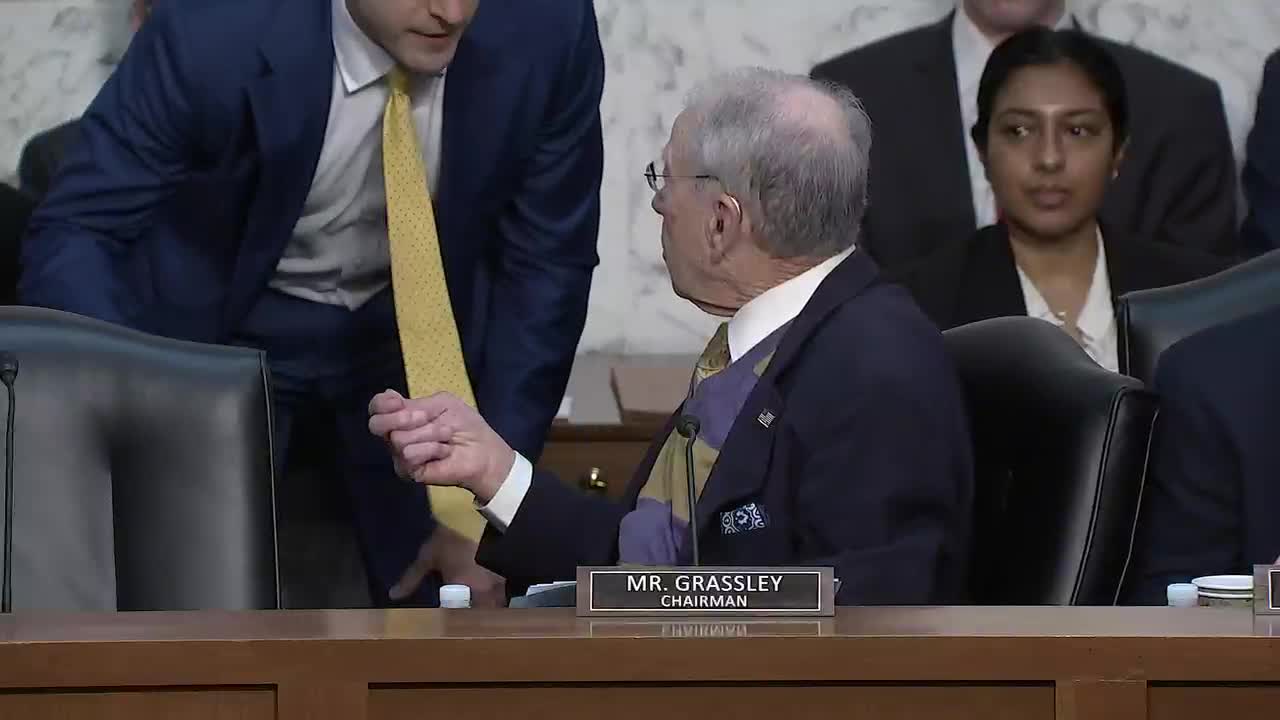
The nomination was placed on the committee agenda after Democrats exercised a seven-day hold last week; Chairman Chuck Grassley opened the session by noting, "So today is the day that we vote on this nominee." Committee members then engaged in extended, partisan debate that included multiple whistleblower statements presented by Democrats and defenses of Patel's law-enforcement and national-security credentials by his supporters.
Why it matters: Committee debate centered on whether Patel, a political appointee and former White House staffer, would use the FBI as an instrument of political retribution or would instead restore what supporters call the agency's core mission. Democrats cited multiple whistleblowers who say FBI employees suffered retaliatory security-clearance suspensions and other personnel actions; Republicans said the Bureau needs reform and that Patel will push agents out into the field to fight violent crime and transnational crime.
Durbin, the committee's senior Democrat who led many of the criticisms, said whistleblowers have described "a new era of accountability and true whistleblower protection to the FBI [which] is long overdue" and argued that a private citizen directing removals would be improper. Durbin pressed the point that Peterson's and other whistleblowers' accounts show career employees were sidelined, and warned that the purge had "greatly weakened the FBI's ability to protect the country from national security threats." He also cited a statutory limit on FBI directors' terms, noting Congress set the director's term at 10 years to protect the post from politics.
Senator Sheldon Whitehouse summarized his objections in stark language, saying Patel's public statements and behavior are disqualifying: "This guy is a flagrant extremist with appallingly bad judgment." Whitehouse and other Democrats pointed to Patel's public comments, a so-called "enemies" or "deep state" list in a published book, recordings he helped produce related to individuals incarcerated for Jan. 6 offenses, and his invocation of the Fifth Amendment in a grand-jury matter as reasons he lacked the impartiality and temperamental fitness needed for the post.
Republican supporters including Senator Mark Moody argued Patel will improve mission focus at the Bureau, saying agents want "to get back to doing their jobs of going after multi-jurisdictional criminals," and defended his federal experience in counterterrorism and national-security roles. Moody told the committee, "If that is true, he is out for himself as an American," regarding criticism that Patel is motivated by personal or partisan grievance.
What witnesses and whistleblowers said: Democratic senators read aloud multiple whistleblower statements contained in committee materials alleging retaliation, suspension or revocation of security clearances, forced early retirements, and lost wages. Quotations presented in the hearing described instances where staff alleged their clearances were suspended after raising concerns or for perceived political views. Committee Democrats urged a DOJ inspector-general review of the personnel moves and said the committee had received letters and interviews alleging misconduct by specific FBI officials.
Process, questions and unresolved items: Several Democratic senators said Patel declined to answer routine committee questions about whether he would resign rather than carry out unconstitutional orders, and raised concerns about undisclosed foreign ties and financial stakes cited in documents provided after the hearing. Senators on both sides referenced Patel's public media appearances and writings as evidence of his views about the Bureau. Multiple speakers asked the nominee to be recalled to answer follow-up questions; committee Democrats said they had asked the inspector general to investigate allegations that Patel, as a private citizen, directed personnel moves.
Vote and procedural notes: Chairman Grassley called a roll-call vote to favorably report the nomination of Kash Patel to the full Senate. The clerk began calling the roll in committee; the transcript contains partial roll-call entries (for example, "Cruz. Aye," "Holly. Aye," "Tillis. Aye," and "Whitehouse. No") but the committee transcript provided here does not include a complete vote tally or a recorded final outcome. Committee members also noted the HALT Fentanyl Act item was held over to the next meeting.
What remains next: The committee's action will determine whether the nomination proceeds to the full Senate. Members on both sides urged additional oversight steps: Democrats seeking further review of the whistleblower allegations and related personnel actions, Republicans pressing for reforms to the Bureau's focus and organization. The transcripted meeting ended with members preparing for a roll-call vote and the chairman adjourning the hearing.