Lifetime Citizen Portal Access — AI Briefings, Alerts & Unlimited Follows
JFAC advances multiple appropriations and enhancements; ombudsman funding fails in House
Loading...
Summary
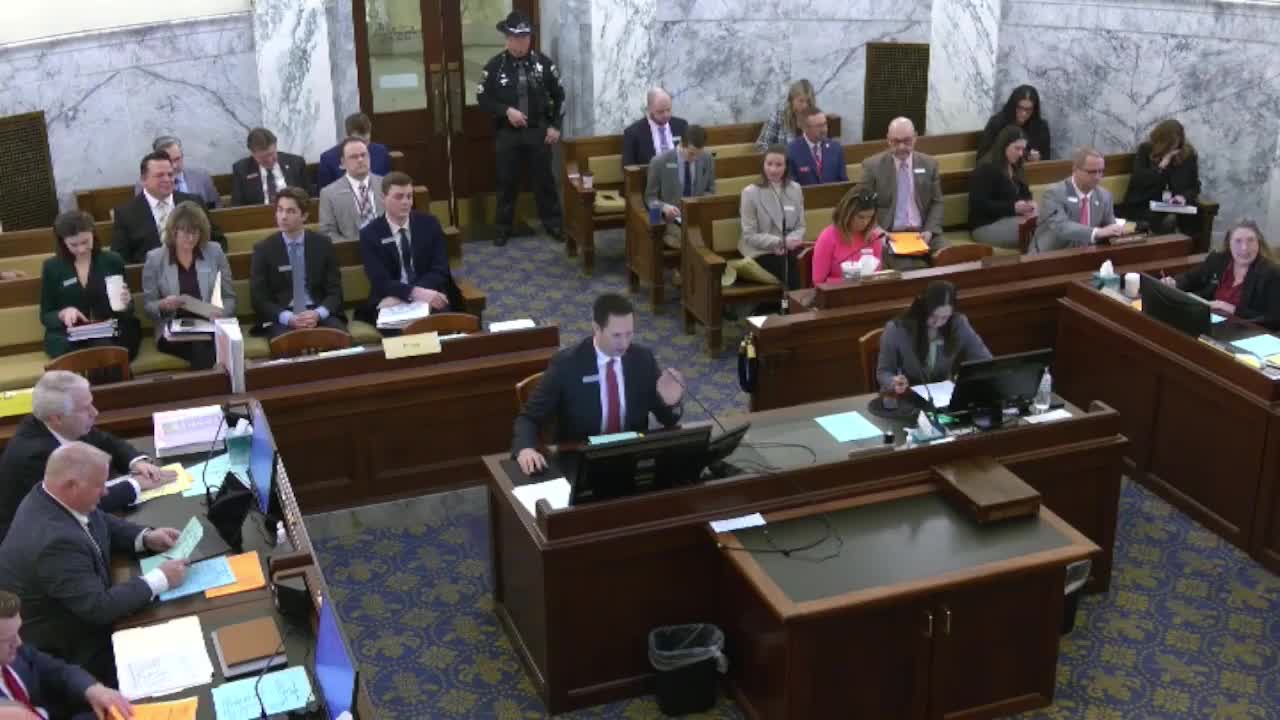
The Joint Finance‑Appropriations Committee (JFAC) on Feb. 14 advanced a series of supplemental appropriations and fiscal‑year 2026 budget enhancements across several state agencies while rejecting a separate request to fund a new Office of Health and Social Services ombudsman in the House.
The Joint Finance‑Appropriations Committee (JFAC) on Feb. 14 advanced a series of supplemental appropriations and fiscal‑year 2026 budget enhancements across several state agencies while rejecting a separate request to fund a new Office of Health and Social Services ombudsman in the House.
The committee voted to approve supplemental funding and one‑time appropriations for the Military Division to reimburse hazardous‑materials cleanup costs, finish public‑safety vehicle installations, and upgrade IT infrastructure. It also approved the division’s FY2026 enhancement package that includes funding for hazardous materials regional response teams. The committee approved similar supplemental or enhancement requests for Veterans Services, the Department of Agriculture, the Department of Finance, the Department of Insurance, the State Board of Education special programs, health education programs and the State Independent Living Council. A motion to provide an initial $50,000 general‑fund allocation for a Health & Social Services ombudsman failed to get the necessary support in the House.
Why it matters: the motions recorded Tuesday convert prior policy requests and fiscal notes into committee recommendations that will be included in JFAC’s budget bills. Several approvals add one‑time capacity (vehicle installations, IT upgrades, hazmat equipment) while other votes add ongoing positions and program funding that affect agency staffing and operations in FY2026.
Summary of analyst presentations and key remarks Keith Bybee, Division Manager of Budget Policy Analysis for the Legislative Services Office, opened with a general fund daily update and highlighted bills “under the category titled APP for appropriation,” noting those are measures that carry fiscal notes and may require additional appropriations if enacted. “The bills that I’m gonna highlight for the committee are the ones under the category titled APP for appropriation,” he said.
Frances Lippitt, a budget and policy analyst with Legislative Services, presented the Military Division packet and walked the committee through specific supplemental and FY2026 enhancement requests, including a recommended $8.6 million transfer to fund hazardous materials regional response teams distributed to local fire departments.
Representative Petzke, who carried several of the Military Division motions, declared a conflict before one vote: “I just need to declare a rule of 80 on this one as I serve on the board of directors of a company that supplies some of this equipment.” Representative Petzke also pressed for structural changes in how small line‑item requests are presented, saying of small fractional FTP requests that “it is just absolutely impossible for us to determine what to do with a request for 0.03 of an FTP.”
Representative Price announced she would vote against the ombudsman motion, citing concerns about pay grade and program growth: “I am going to vote no for this budget … being a brand new program and us increasing it already just sends concerns about this growth of this program already.”
Votes at a glance (selected formal actions recorded in the transcript) - Hazardous‑materials deficiency warrant (Military Division): one‑time appropriation and transfer of $34,200 from the general fund to the Hazardous Substance Emergency Response Fund for FY2025. Motion by Senator Ward Engelking; second by Representative Petzke. Vote: unanimous (20 ayes, 0 nays). Recommendation: due pass.
- Military Division — public safety communications supplemental (FY2025): one‑time appropriation of $540,001 from the general fund for contract and installation support to place Idaho State Police vehicles into service. Motion by Senator Ward Engelking; second by Representative Handy. Vote: unanimous (20 ayes, 0 nays). Recommendation: due pass.
- Military Division — IT infrastructure upgrade (FY2025): one‑time appropriation of $759,200 from the general fund to upgrade IT infrastructure and create an independent network for public safety communications. Motion by Representative Petzke; second by Senator Ward Engelking. Vote: Senate 9 ayes, 1 nay; House unanimous — combined total 19 ayes, 1 nay. Recommendation: due pass.
- Military Division — FY2026 enhancements (network administrator, replacement items, hazmat equipment, IT hardware): total net increases across funds and a separate motion to transfer $8,600,000 from the State Emergency Relief Fund into the division’s miscellaneous revenue fund for hazmat regional response teams. Motion to approve FY2026 package by Representative Petzke; second by Senator Ward Engelking. Vote on package: Senate 9 ayes, 1 nay; House unanimous — total 19 ayes, 1 nay. Motion to transfer $8,600,000: same movers; vote 19 ayes, 1 nay (Senate 9/1; House unanimous). Recommendation: due pass.
- Division of Veterans Services — FY2026 maintenance and enhancements: motions to add requested transfers, replacement items, IT, and reappropriation authority for federal construction grants (Boise and Lewiston veterans homes). Motion carried (Senate 9 ayes, 1 nay; House unanimous) total 19 ayes, 1 nay; recommendation: due pass.
- Department of Agriculture — deficiency warrant for exotic species monitoring and control (FY2025): one‑time appropriation and transfer of $1,724,300 from the general fund to the Pest Control Deficiency Fund. Motion by Representative Handy; second by Senator Hart. Vote: unanimous (20 ayes, 0 nays). Recommendation: due pass.
- Department of Agriculture — FY2026 enhancements (investigator pay structure, CEC change for inspectors, replacement items, IT hardware): motion carried (Senate 8 ayes, 1 nay, 1 absent; House unanimous) — total reported 18 ayes, 1 nay, 1 absent/excused. Recommendation: due pass.
- Department of Finance — FY2026 enhancements (staffing additions: 5 FTP approved, dedicated funds): motion by Senator Hart; second by Representative Galaviz. Motion approved (Senate 8 ayes, 1 nay, 1 absent; House unanimous) — total 18 ayes, 1 nay, 1 absent/excused. Recommendation: due pass.
- Department of Insurance — FY2026 enhancements (staff actuary, regulatory compliance specialist, state fire marshal compensation increase, replacement items): motion by Representative Furness; second by Senator Cook. Motion approved (Senate 8 ayes, 1 nay, 1 absent; House unanimous) — total 18 ayes, 1 nay, 1 absent/excused. Recommendation: due pass.
- State Board of Education — Special Programs FY2026 package (several small program enhancements including rural educator incentive funding): motion carried (Senate 8 ayes, 1 nay, 1 absent; House unanimous) — total 18 ayes, 1 nay, 1 absent/excused.
- Health education programs (residency and fellowship funding requests across Idaho medical education programs): motion carried (Senate 8 ayes, 1 nay, 1 absent; House unanimous) — total 18 ayes, 1 nay, 1 absent/excused.
- State Independent Living Council — fund shift for health benefits and CEC (net zero budget impact via general fund/dedicated fund adjustment): motion carried (Senate 9 ayes, 1 nay; House 9 ayes, 0 nays, 1 absent) — total 18 ayes, 1 nay, 1 absent/excused.
- Licensing & Certification (Department of Health & Welfare) — FY2025 and FY2026 intent language: committee accepted transfer‑exemption language that allows Licensing & Certification to transfer personnel dollars to operating for contract nurses and required a report (and draft legislative language if transfer appears warranted) on potential transfer of the program to the Division of Occupational and Professional Licenses (DOPL). A roll call motion to accept the FY2026 language passed after an objection to an earlier unanimous‑consent request. Final recorded vote: Senate 8 ayes, 2 nays; House 8 ayes, 0 nays, 2 absent — total 16 ayes, 2 nays, 2 absent/excused. Recommendation: due pass.
- Department of Health & Welfare — Division of Indirect Support Services (program maintenance and replacement items, plus clear language requiring a vehicle‑fleet utilization report): motion carried (Senate 9 ayes, 1 nay; House 8 ayes, 0 nays, 2 absent) — total 17 ayes, 1 nay, 2 absent/excused. The language requires a December 15 report to JFAC on vehicle utilization and fleet counts.
- Office of the Health & Social Services Ombudsman — FY2026 request ($50,000 general fund for salary increases): motion to appropriate $50,000 passed the Senate but failed to carry in the House. Final tally reported: Senate 8 ayes, 2 nays; House 5 ayes, 2 nays, 3 absent/excused. The motion did not pass because the House did not provide a majority affirmation; the item will be considered again later.
Context and next steps Most actions passed without controversy; several carried unanimous or near‑unanimous tallies. The committee’s recommendations now move into the broader JFAC bill drafting and negotiation process where amounts and language may be adjusted before final legislative action. Items with interagency dependencies (federal construction reappropriations, transfers from continuously appropriated emergency funds, or transfer‑exemption language tied to specific program operations) will require follow‑up from staff and affected agencies to meet reporting conditions and implementation timelines.
Ending Committee members thanked analysts and staff for preparing packets and for the committee’s work. The chair closed the session and adjourned until the committee’s next scheduled meeting.