Get email alerts on the Public Health Environmental Health topic
No spam. Unsubscribe anytime.
Environmental health director outlines radon testing, soil‑testing program and geo‑permitting issues
Summary
County environmental health staff told supervisors they will continue radon outreach, are expanding soil-analysis work but face a potential code change requiring three borings per septic site, and have ongoing problems integrating geo-permitting with the zoning office.
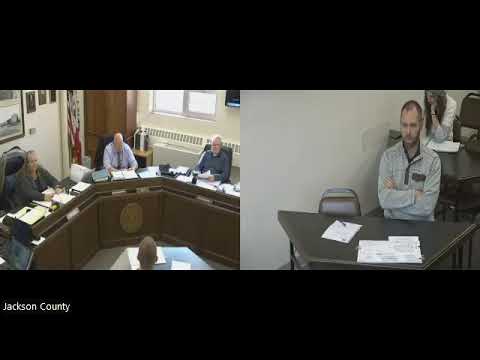
Jackson County environmental health staff on Feb. 11 reviewed 2024 work and detailed priorities for 2025, including radon awareness outreach, a revived soil-analysis program for septic permitting and continuing rollout problems with a new geo-permitting system.
The director said the department promoted radon awareness last month and is offering test kits to the public. Test-kit pricing is $20, with an extra $15 fee when staff set up the kit at a home. Staff plan to distribute kits and offer free water testing and radon kits through a public outreach event with the Women Landon Legacy organization in spring (date not yet set).
Soil testing and septic permitting were a major part of the report. Environmental health staff resumed a soil-analysis program that uses a contractor to dig trench profiles and prepare a soil-profile report; the county currently charges $400 for that analysis when outside contractors perform the work. The director told supervisors she expects to propose increasing that fee (she suggested $500 or $550 as examples) if the county takes on more of the service to avoid long application delays for septic permits. The board was told a state code change under consideration would require three borings per site; staff said the current method (bench trenches) would be destructive if duplicated across three borings and that buying an auger/probe would make the work more efficient. The director said she has requested a probe purchase and is checking with Secondary Roads for possible vehicle support; Secondary Roads staff (Jayden) indicated he would check on vehicle availability.
Staff also reported continuing problems with the county’s geo-permitting system. The environmental health permits have been live for about a year but still have operational bugs (lost inspections, dead application links). Zoning’s geo-permit rollout is pending; the environmental health director said the two systems must be prototyped together and undergo QA testing to create a combined workflow. IT and zoning staff were reported to be working on fixes and a QA meeting was scheduled the morning after the board meeting.
On nuisance and complaint handling, environmental health staff explained that nuisance enforcement has primarily been handled by zoning in recent years; public-health staff will be consulted when a case clearly raises a health issue. The director said she will continue coordinating with zoning and code enforcement staff when needed.
Why this matters: Radon and water testing provide public-health data and consumer services; soil-analysis changes and a required code change could materially affect septic-permit timelines and applicants’ costs; and geo-permit functionality affects multiple permitting workflows across county departments.
What’s next: Staff will follow up on the probe purchase request, coordinate with Jayden on vehicle availability, continue QA work on geo-permitting with zoning and IT, and schedule the community radon/water-testing outreach in spring. The director told supervisors she expects current grants to draw down faster than in prior years because of administrative reimbursement changes for water testing.
AI generated
The text on this page is AI generated. Summaries, highlights, analysis, and video transcripts are all produced from the original source material.
AI can make mistakes, so if you spot one, and we will fix it for everyone.
Note: the source content is unaltered by us. Any content source we link to, be it a video, an audio recording, or a document, is presented exactly as its publisher released it. That publisher is usually a government body, sometimes an individual official or another organisation.