Get email alerts on the Comprehensive Planning topic
No spam. Unsubscribe anytime.
Spokane County opens comprehensive‑plan placemaking workshop; climate element, zoning rewrite on agenda
Summary
Spokane County planning staff and consultants led a community placemaking workshop to gather public input on a 2026 comprehensive‑plan update that will include the county’s first climate element and a rewrite of development regulations, county officials said.
Spokane County planning staff and a consultant team hosted a public “placemaking” workshop to gather community input for the county’s 2026 comprehensive‑plan update that will include a legally required climate element and a major rewrite of development regulations.
The meeting, led by Spokane County Planning Director Scott Chesney and convened while county commissioners were in Olympia, focused on how the county should shape new neighborhoods, integrate climate resiliency and coordinate infrastructure investments as growth continues in and around current urban growth areas.
County staff said the comprehensive plan — last substantially written in 2001 and updated unevenly since — will be treated as a chance for a near “clean sheet” rewrite. “We want to learn how to build neighborhoods instead of just permitting subdivisions,” Chesney told the workshop. The rewrite will address the zoning code, subdivision ordinance, critical areas and shoreline management regulations, staff said.
Why it matters: Washington state law now requires counties that are fully planning under the Growth Management Act to include a climate element, and Spokane County officials said the element will be integrated throughout the plan rather than treated as an add‑on. Meg (Cascadia Consulting), who described her firm’s role, said the climate element will “be informed by data, looking at climate projections” and will aim to make the county more resilient while complying with state requirements. Staff said they are seeking a six‑month statutory extension to complete the work.
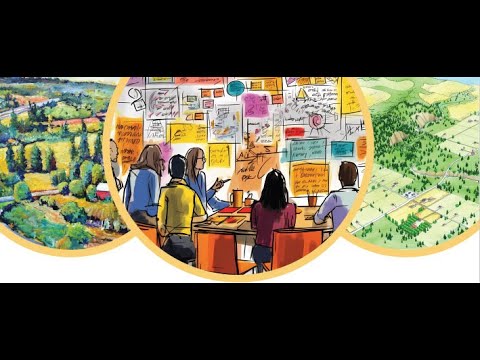
Workshop activities included a short presentation of placemaking principles, an interactive visual‑preference survey using photographs and aerial images, and table map exercises where attendees placed green stars on preferred features and red Xs on outcomes to avoid. Consultants and county planners described four focus interchange areas where the most intense development pressure is expected, and asked attendees to prioritize “must‑have” features for future development such as connectivity, stormwater management and neighborhood amenities.
Several consultants and county staff introduced the outreach plan and next steps. Bob Baker (Baker Architecture), Matt Covert (senior planner with FAS|TE), and Tom Parker (communications lead) were among those identified as part of the consultant team helping run the exercises and gather input. Staff said they will summarize the map exercises and survey results for the planning commission and planning groups, and return for follow‑up public sessions. Chesney told attendees the team will brief the Board of County Commissioners and that the first formal board briefing is scheduled for Monday, Feb. 24.
Attendees included residents, neighborhood council members and long‑time county land‑use professionals who were asked to mark priorities for streets, parks, trail connections and design features. The exercise produced a mix of preferences across images of traditional main streets, grid‑based neighborhoods, and more auto‑oriented commercial corridors; county staff said that mix will inform draft policies and the development‑regulation rewrite.
The workshop concluded with staff asking attendees to leave marked maps and promising a public summary and more sessions in the coming weeks. Chesney said staff will take written comments and incorporate them into the next round of plan materials to be presented to decision makers.
AI generated
The text on this page is AI generated. Summaries, highlights, analysis, and video transcripts are all produced from the original source material.
AI can make mistakes, so if you spot one, and we will fix it for everyone.
Note: the source content is unaltered by us. Any content source we link to, be it a video, an audio recording, or a document, is presented exactly as its publisher released it. That publisher is usually a government body, sometimes an individual official or another organisation.