Get Full Government Meeting Transcripts, Videos, & Alerts Forever!
Get email alerts on the Mastery Framework Grants topic
No spam. Unsubscribe anytime.
Fargo senator seeks $500,000 for school mastery framework training grants
Summary
Senate Bill 2263 would allocate one‑time funds to let school teams pay stipends and buy time to design mastery/competency‑based education frameworks; proponents said lack of time, not lack of will, prevents more districts from adopting mastery models.
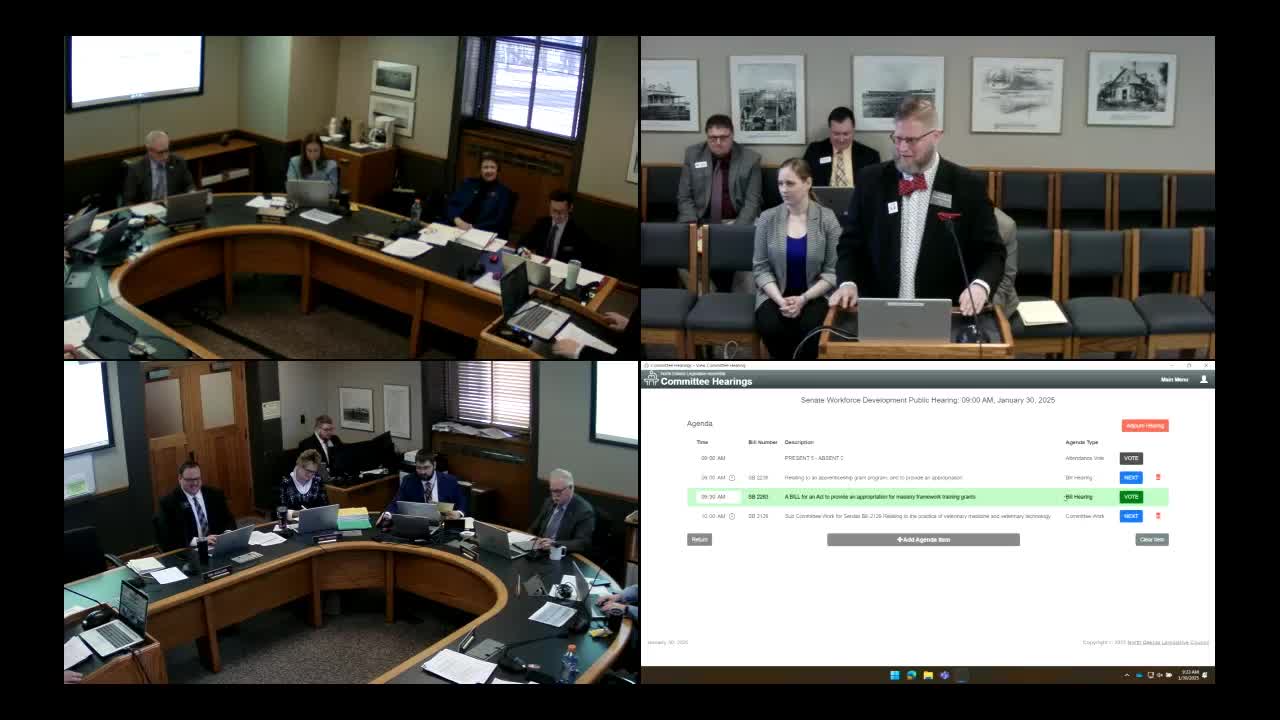
Sen. Ryan Ronberger, R‑District 10, told the Senate Workforce Development Committee he sponsored Senate Bill 2263 to provide a one‑time appropriation of $500,000 to help school districts develop mastery‑based education frameworks. "The purpose of SB 2263 is to support school district teams in developing and implementing mastery based education frameworks," Ronberger said, adding the grants would pay stipends for teachers to work additional days on innovation work.
Why it matters: Supporters said North Dakota law already permits mastery frameworks as an alternate graduation pathway but that too few districts have implemented the frameworks because school teams lack paid time to do the deep collaborative work required. They said the proposal would fund teacher teams to design competency‑based models that other districts could reuse.
Mark Vollmer, former superintendent and K‑12 Coordination Council member, said the bill would leverage in‑state talent and avoid expensive outside consultants. Dr. Sarah Ricks, instructional coach at Dickinson Middle School and chair of the support and innovation subcommittee, told the committee a recurring barrier is time: teams need time "without students present" to design mastery frameworks and personalized learning models, and the grant would "buy the time" by paying teachers for extra days outside their contract.
The bill would allow each school team to request up to $25,000 to fund up to 10 additional working days for a district team; districts may apply multiple times but could not receive more than $75,000 in total. Prioritization would favor districts that have completed leadership training and demonstrated readiness. Supporters said $500,000 could fund roughly 20 school teams, creating a set of models across rural and urban districts that others could adopt.
Department of Public Instruction staff and other witnesses urged accountability measures: districts would report results to the Department and share finished frameworks statewide. Witnesses noted previous philanthropic pilots and district investments in personalized learning but said the requested appropriation would expand participation to schools that lack private grant funds.
Committee members asked about safeguards if districts take funds but do not complete implementation; sponsor Ronberger said accountability and reporting to the Department of Public Instruction could be written into program rules, and he was open to requiring repayment in case of non‑completion. The hearing included detailed discussion about how mastery frameworks differ from routine professional development and how the grants would aim for targeted work rather than general PD.