Lifetime Citizen Portal Access — AI Briefings, Alerts & Unlimited Follows
Interior nominee emphasizes "energy dominance" and tribal engagement in Senate hearing
Loading...
Summary
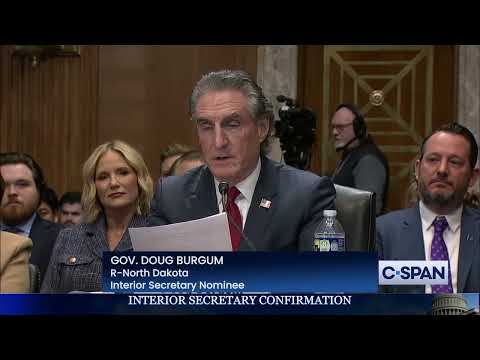
The nominee for secretary of the interior, identified in the hearing as the governor of North Dakota, told the Senate Committee on Energy and Natural Resources that he would support the administration's goal of "energy dominance" and highlighted his state-level management experience and tribal engagement.
The nominee for secretary of the interior, identified in the hearing as the governor of North Dakota, told the Senate Committee on Energy and Natural Resources that he would support the administration's goal of "energy dominance" and stressed his experience managing state land, water and energy programs.
In an opening statement to the committee, the nominee described growing up in Arthur, North Dakota, working in the family's grain elevator and later in the private sector before being elected governor in 2016. "If given the opportunity to serve as a secretary of interior, I'll bring those experiences and those lessons learned to the leadership of the tens of thousands of dedicated professionals within the Department of Interior," the nominee said.
Why it matters: the secretary of the interior oversees federal public lands, natural-resource agencies and many programs that affect energy development, tribal relations and conservation. The nominee framed his approach around expanding U.S. energy production while maintaining environmental protections and working with tribal nations.
The nominee listed several aspects of his background he said prepared him for the role. He said he worked his way through North Dakota State University, earned an MBA at Stanford, and helped grow a software company called Great Plains into a global firm serving about 140,000 businesses in more than 100 countries and employing about 2,000 people. He also described inheriting "160 acres of farm ground" from his father and said he had worked jobs "that required showering at the end of the day, not the beginning of the day." The nominee said he has three children and that his wife, Catherine Bergham, attended the hearing.
Describing his state-level responsibilities, the nominee said that as governor he chaired the North Dakota Land Board, which manages state land and mineral assets to support a public-education endowment, and the North Dakota Industrial Commission, which oversees 16 agencies related to energy research, geologic resources, production and transmission. He also said the governor serves as chair of the state water commission, which he described as overseeing "$1,000,000,000 of dollars of water resources and projects." He said those duties frequently intersected with Interior Department bureaus.
On tribal relations, the nominee said North Dakota shares geography with five sovereign tribal nations and that state-tribal relationships "have sometimes been challenged, but the current partnership is historically strong" because the state prioritizes "tribal engagement through mutual respect, open communication, collaboration, and a sincere willingness to listen." He said he was "grateful for the many tribal nations both in and outside North Dakota for expressing their support for my nomination." These remarks were presented as his account of state practice; the committee did not take action on any tribal agreements during the session.
Energy policy was a central theme. The nominee framed "energy dominance" as central to American prosperity, household affordability and national security and said U.S. production is "cleaner, smarter, and safer than anywhere in the world." He argued that restricting U.S. energy production shifts supply to countries he named and said the administration's approach would reduce inflation and bolster national security while "championing clean air, clean water, and protecting our beautiful lands." The nominee also referenced the Theodore Roosevelt National Park and a planned Theodore Roosevelt Presidential Library Museum near Elkhorn Ranch.
The remarks in this hearing were an opening statement; the committee's oath and a brief question-and-answer sequence preceded and followed the statement. The nominee concluded by thanking committee members and saying he looked forward to questions.
Votes or formal actions: none recorded in the hearing transcript provided.