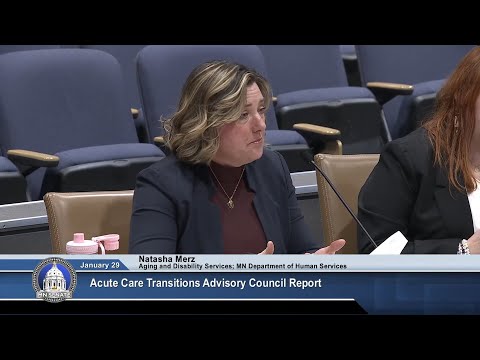
DHS outlines PACE implementation steps; providers urge equitable rate structure and regional access
Summary
DHS presented its PACE implementation and actuarial analyses, said a state plan amendment and CMS approvals would be required, and solicited provider interest through an RFI. Testimony from a national PACE operator urged nuanced capitated rates and emphasized PACE's ability to serve rural and culturally specific populations.
The Department of Human Services briefed the committee on PACE (Program of All‑Inclusive Care for the Elderly) implementation, actuarial work and an RFI to gauge provider interest. DHS said PACE would require a state plan amendment with the Centers for Medicare & Medicaid Services, that PACE serves people 55 and older who meet nursing‑facility level of care, and that the model uses a per‑member‑per‑day capitated payment covering Medicare and Medicaid benefits.
Assistant Commissioner (presenting DHS analysis) said the department completed an implementation analysis and actuarial review as directed by the legislature and issued a request for information to potential providers; RFI responses were due February 28. DHS said administrative resources and a state readiness review would be required and that timeline estimates (a best‑case implementation date cited in the report was January 1, 2027) depend on CMS review, provider readiness, and state administrative capacity.
Provider testimony
Mary Austin, a registered nurse and CEO of Bold Age PACE (a multistate PACE provider), called PACE "life changing" for older adults and caregivers and urged Minnesota to adopt an equitable, nuanced Medicaid capitated rate that accounts for the program's high‑acuity population. "PACE puts its arms around its members," Austin said, describing integrated care, transportation and the social supports that reduce hospitalizations and nursing‑home placements.
How PACE fits in Minnesota
DHS noted Minnesota already operates integrated dual‑eligible products (MSHO) and that PACE would be a distinct option that can fully coordinate Medicare, Medicaid and waiver services for eligible adults 55+. DHS estimated roughly 25,000 seniors in Minnesota meet criteria comparable to PACE eligibility under existing programs. DHS staff emphasized the need for detailed fiscal analysis and said any capitation structure must be less than the state's expected spend for comparable enrollees.
Costs, timeline and next steps
DHS staff told senators they can compile more detailed examples from other states, provide actuarial detail and pursue a fiscal note if the committee directs. DHS signaled the need for legislative appropriations to fund administrative start‑up and data work, and warned that initial spending may increase in some accounts as individuals move from uncompensated or hospital‑borne costs into appropriate community services.
Ending
Committee members expressed interest in further analysis of savings and rates, rural access and timeline tradeoffs. DHS asked for direction on technical assistance and said it will compile additional materials and respond to RFI returns to inform possible next steps.
AI generated
The text on this page is AI generated. Summaries, highlights, analysis, and video transcripts are all produced from the original source material.
AI can make mistakes, so if you spot one, and we will fix it for everyone.
Note: the source content is unaltered by us. Any content source we link to, be it a video, an audio recording, or a document, is presented exactly as its publisher released it. That publisher is usually a government body, sometimes an individual official or another organisation.