Get email alerts on the Transportation Funding topic
No spam. Unsubscribe anytime.
Planning board seeks clearer, more predictable process for developer multimodal contributions
Summary
Board members asked staff to explore a predictable method for securing contributions toward the city's multimodal ("freebie") system during development review, including whether impact fees or exactions can cover a local circulator or other city multimodal needs.
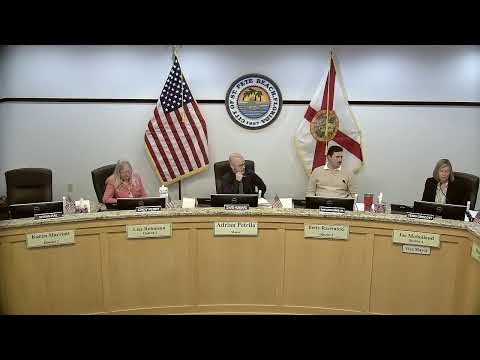
City planning board members discussed Jan. 27 the difficulty of securing predictable multimodal contributions from developers and asked staff to explore options to make the process more transparent and repeatable.
Members said small projects have not consistently been required to contribute to the city's multimodal transportation services—the local circulator commonly called the 'freebie'—and that requests for contributions have sometimes been negotiated at commission hearings rather than determined through an objective formula. One board member asked whether city-level impact fees or a pro-rata approach could produce a predictable fee schedule so developers and staff know what to expect when projects are evaluated.
Planning staff said the city will soon begin an impact-fee evaluation for multiple service types, including transportation, and noted the county is also updating its multimodal impact fee. Staff explained legal limits on exactions require proportionality and a showing that a requested contribution is roughly related to a project's impacts. Staff said the city has more flexibility when projects seek units from the limited density pool, allowing a higher case-by-case contribution tied to the special benefits those units confer.
Staff noted the difference between a one-time impact fee and an ongoing funding need to support a local circulator. Board members said an ongoing usage or operating fee is harder to impose during development review and that property taxes or other recurring revenue sources are the typical avenue for sustained service funding.
The board asked staff to examine whether the upcoming impact-fee study could incorporate a local multimodal component or provide tools to better quantify a project's expected trips and the resulting cost per trip for circulation services, rather than relying on ad hoc agreements at the time of commission approval.
No formal action was taken; staff confirmed an impact-fee evaluation is forthcoming and that staff will look at multimodal costs and legal constraints on exactions.
AI generated
The text on this page is AI generated. Summaries, highlights, analysis, and video transcripts are all produced from the original source material.
AI can make mistakes, so if you spot one, and we will fix it for everyone.
Note: the source content is unaltered by us. Any content source we link to, be it a video, an audio recording, or a document, is presented exactly as its publisher released it. That publisher is usually a government body, sometimes an individual official or another organisation.