Lifetime Citizen Portal Access — AI Briefings, Alerts & Unlimited Follows
Needham steering committee moves to redesign town seal, favoring river/High Rock landscape and a silhouetted canoe
Loading...
Summary
The Town of Needham steering committee discussed replacing a transactional depiction on the town seal with a landscape showing the Charles River, High Rock and a silhouetted Native American canoe, and agreed to request simplified mockups from an illustrator for further review.
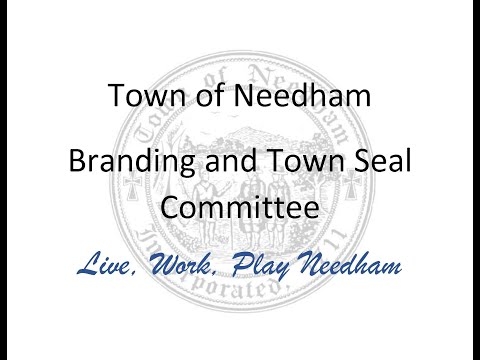
The Town of Needham Branding and Town Steering Committee on Jan. 21, 2025 discussed redesigning the municipal seal to remove an image participants described as a transactional scene between settlers and Native Americans and instead favor a landscape showing the Charles River, High Rock and a small silhouetted canoe.
Committee members said the current seal’s foreground, which appears to show a land transaction, felt “off” or “hurtful,” and recommended dialling back explicit transactional imagery while retaining recognition of Indigenous presence on the land. Amber, Steering Committee member, summarized the group’s view: “there was something just off with it … the depiction of that the transaction that really didn't need to be necessary.”
Why it matters: the town seal is the official mark used on municipal documents such as appointments and town meeting warrants, and several committee members said the design should be identifiable as Needham without perpetuating an image some residents find offensive. As Louise Miller, Steering Committee member, noted, “the purpose of the town seal really is to seal official documents so people know that this is an official document.”
Discussion details: Participants repeatedly returned to three recurring elements they said would make the seal distinct to Needham: the Charles River, High Rock and a small canoe in silhouette. Gloria, Steering Committee member, said a canoe silhouette “says truthfully what we know about our past” without attempting to tell the whole, contested story. Several members emphasized composition choices: a three-quarter (not full-profile) canoe angled slightly toward the viewer, a log canoe form rather than a modern craft, reed or marsh detail in the foreground, and no sun, moon or overtly illustrative skies.
Committee members also discussed alternatives and distinguishing marks: some suggested using an incorporation date or a simple monogram (a circled “N”) if a pictorial seal proved divisive. Multiple speakers asked that High Rock be recognizable in the background and that the river read as the Charles River rather than a generic lake. The group discussed precedents such as municipal seals that use pastoral scenes rather than explicit historical encounters.
Design process and next steps: the committee agreed to ask the illustrator to produce simpler, sketch-style mockups (described in the meeting as “stickfiggery” or hand-sketch level) rather than polished final art, and to circulate those images by email for feedback before the next meeting. Participants said the sketches should keep the Indigenous figure small and in silhouette—visible but not the sole focal point—and avoid detailed facial features or ceremonial regalia unless historically verified. Amber said she had gathered photographic references for log canoes and headdresses to guide an illustrator’s work.
Formal action and close: the committee did not adopt a final new seal design at the meeting. Members moved to adjourn and approved the motion by roll call; the meeting was recorded as adjourned on a unanimous vote.
Ending: Committee members asked staff to produce the simplified mockups and to distribute them to committee members ahead of the next meeting so feedback can inform a subsequent draft.