Get Full Government Meeting Transcripts, Videos, & Alerts Forever!
Get email alerts on the State Housing Legislation topic
No spam. Unsubscribe anytime.
Milwaukee committee tells state relations staff to support TIF extension but oppose limits on local zoning in GOP housing package
Summary
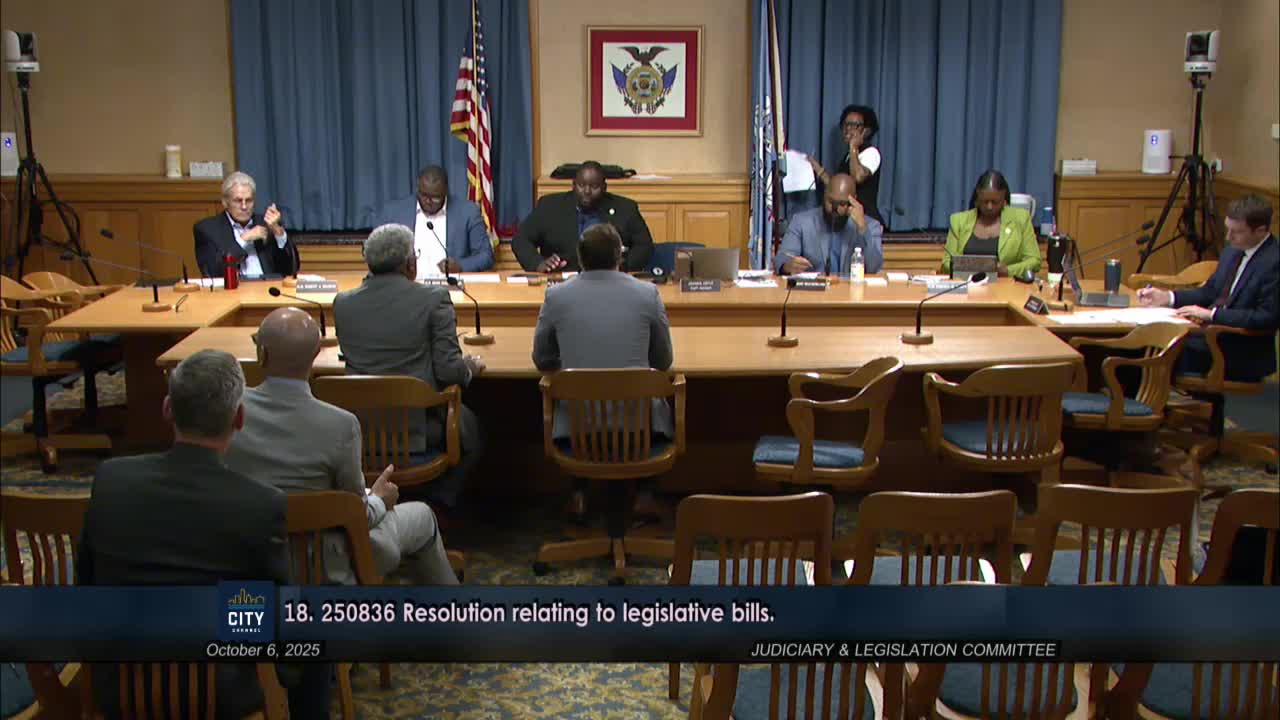
Milwaukee’s Judiciary and Legislation Committee on Oct. 6 directed city legislative staff to support a TIF extension but oppose state bill language that would limit local zoning control, and to seek technical amendments if the Republican housing package moves forward in Madison.
Milwaukee’s Judiciary and Legislation Committee on Oct. 6 debated a multi‑bill state housing package and instructed city legislative staff to take a nuanced position: register as “other,” express support for a tax incremental financing (TIF) extension that would boost local housing investment, and oppose provisions that would curtail local zoning authority.
Why it matters: The bills — introduced rapidly at the state level — could reshape how municipalities plan and approve housing. A TIF extension would increase local funding available for affordable‑housing programs; other provisions would add binding requirements to comprehensive plans and, in some cases, limit local zoning discretion.
Committee summary and direction City Intergovernmental Relations Director Jordan Primico and legislative affairs staff briefed the committee on a cluster of bills advancing in Madison, including measures tied to accessory dwelling units (ADUs), comprehensive plan changes, and a TIF extension (identified in materials as AB453). Primico said the TIF language aligns with a top city priority (a requested 1–3‑year extension), while other provisions in the same bill could “remove local zoning control” in ways the city opposes.
After hearing technical analysis from Department of City Development staff, the committee instructed Intergovernmental Relations Division (IRD) to register the City of Milwaukee position on AB453 and related bills as “other” with a written comment: the city supports a TIF extension but opposes reductions in local zoning authority. Chair Alderman Deandre Jackson and IRD noted the city will continue to press for technical fixes and funding or timing adjustments if legislation moves forward.
Key staff findings presented - DCD staff said AB453 would require municipalities to set parcel‑level density targets in comprehensive plans and to approve rezoning requests if they conform to those plan densities unless a public‑health, safety or infrastructure exception applies. The bill’s effective date is January 1, 2028, and it would require substantial planning updates. - The same package contains a TIF extension that DCD and IRD view as valuable for local housing investment; the bill’s version on the table extended TIF expiration by one to two years (city had sought one to three years). - DCD recommended that, if the package advances, the city pursue technical amendments (funding to implement new planning work, longer effective dates and timing fixes, protections against increased legal exposure, and carve‑outs for first‑class cities where appropriate).
ADUs and zoning preemption Committee members were briefed on AB449, a related bill that would require every municipality to allow ADUs. City staff said Milwaukee’s recently adopted local ADU ordinance already addresses many design issues but noted one major conflict: the state bill would preempt a local owner‑occupancy requirement Milwaukee had inserted in its ADU ordinance. Committee members directed IRD to register opposition to the ADU bill as drafted while offering support if a first‑class‑city carve‑out were inserted.
Other bills in the housing package Committee staff summarized several companion bills that would adjust state housing tax credits, create a workforce home loan program, authorize limited condominium conversion grants, and create a new residential TID classification (which DCD said is unlikely to be used by Milwaukee since it currently uses other TID categories). The committee generally supported technical fixes to the low‑income housing tax credit and recommended support for the workforce home‑loan pilot but flagged rural set‑asides and details for future discussion.
Quotes from the meeting DCD Director Sam (last name given in testimony) told the committee, in summary, that the package is “carrots and sticks”: it would double local TIF capacity (a major gain) while also imposing new planning and rezoning constraints. He told members, “we don’t want to ignore the way that this would advance one of our key local priorities,” but urged the committee to seek technical adjustments.
What the committee decided The committee approved staff’s recommendation to register the city’s position on AB453 (and related housing bills) as “other,” and to make clear in the registration that the city supports a TIF extension but opposes reductions in local zoning control. Members asked IRD and DCD to pursue technical amendments, to request funding or extended time to implement any new comprehensive‑planning mandates, and to continue direct engagement with legislators in Madison.
Next steps IRD will file the city’s registrations with the Legislature and continue discussions with Milwaukee’s delegation in Madison. Some bills in the package were expected to reach the Assembly floor quickly; the committee noted the Senate’s limited fall floor days increase urgency.
Source: Oct. 6, 2025 meeting of the Judiciary and Legislation Committee; presentations from Intergovernmental Relations Division and Department of City Development.