Get AI Briefings, Transcripts & Alerts on Local & National Government Meetings — Forever.
House study committee hears experts on public‑health funding, workforce and program sustainability
Summary
At a House study committee meeting on funding for the state's public health system, lawmakers heard presentations from academics, national policy groups, accrediting officials and nonprofit and private‑sector partners who warned that federal grant volatility, workforce shortages and uneven county capacity threaten core services.
At a House study committee meeting on funding for the state's public health system, lawmakers heard presentations from academics, national policy groups, public‑health accrediting officials and nonprofit and private‑sector partners about how to sustain and modernize services.
Experts said the core challenge is funding instability — a mix of time‑limited federal grants and uneven local financing — that undercuts recruitment and retention of local public‑health staff and the delivery of foundational services. Jessica Schwind, Institute Director at the Institute for Health Logistics and Analytics at Georgia Southern University, told the committee "the basic idea behind the return of investments is program cost versus economic benefits," and urged legislators to consider evidence about which preventive programs produce measurable savings over time.
The presentations outlined three policy approaches that multiple witnesses endorsed: (1) define and fund a baseline of foundational public‑health services so every community has access to minimum capabilities; (2) invest in workforce stabilization and credentialing (including community health workers); and (3) use existing state authorities and revenue streams — including Medicaid policy changes and one‑time settlement or federal transition funds — to make funding more predictable.
Why it matters: Presenters stressed that public health investments can produce multipliers across health care and the economy. Schwind summarized national return‑on‑investment findings for widely used public‑health interventions — for example, childhood immunizations and tobacco control — and said those studies show direct health‑care savings plus broader productivity gains. Leah Chan, director of health justice at the Georgia Budget and Policy Institute, told the committee Georgia's total per‑person public‑health funding has fallen over the last decade when federal and state dollars are combined, and that the state relies heavily on federal grants that are increasingly volatile.
Key details from presenters
- Defining a baseline and funding it: Kelly Hughes, associate director in the health program at the National Conference of State Legislatures, reviewed state examples of defining and funding a core package of governmental public‑health services, often called Foundational Public Health Services (FPHS). She described Indiana's voluntary Health First program, which pairs state funding with county matches to support 14 core services; Massachusetts' SAFE program, which moved from grants to mandatory standards in SAFE 2; and other states that used phased legislation, regional collaboratives and performance metrics.
- Accreditation and system modernization: Rena (Public Health Accreditation Board) described accreditation and related tools as a means to measure performance and support system transformation. She noted PHAB standards are aligned with the 10 Essential Public Health Services and the FPHS framework and that several Georgia health departments are already accredited. PHAB also offers a readiness assessment, workforce and cost tools, and a "pathways" recognition for smaller or less‑resourced departments.
- Workforce and community health workers (CHWs): Natasha Taylor of Georgia Watch outlined the role of CHWs as trusted, nonclinical members of care teams who address social determinants and reduce avoidable emergency use. She described a 2021 DPH effort that trained CHWs and produced tens of thousands of referrals and broad outreach, and urged the committee to pursue certification, Medicaid reimbursement pathways and stable state funding for CHWs.
- Maternal and early‑childhood services: Callan (Kalyn) Wells of GEEARS focused on Babies Can't Wait and home‑visiting programs. She recommended Medicaid billing and enrollment changes to allow Babies Can't Wait service coordinators and special instructors to receive Medicaid reimbursement (rather than relying on block grants), recommended simplifying provider enrollment with care management organizations and suggested using CHIP and other flexible federal funds where allowable.
- Prescription drug monitoring and overdose prevention: Jacob Cooper of Bamboo Health described Georgia's robust prescription‑drug monitoring program (PDMP) and proposed near‑term enhancements to increase clinical actionability: adding nonfatal overdose records to PDMP views, surfacing interruptions of medication for opioid use disorder (MOUD) so clinicians can intervene, and prompting co‑prescription of naloxone when indicated. He urged lawmakers to help unlock opioid settlement and rural‑health transformation funds to expand features.
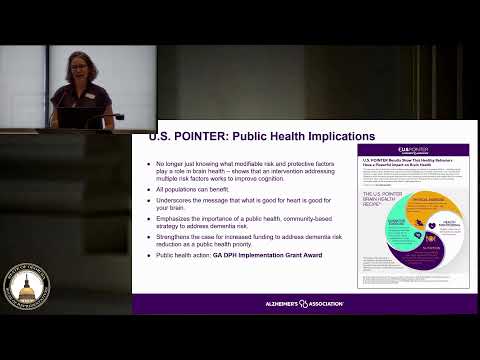
- Data and disease‑specific programs: Nancy Petra of the Alzheimer's Association described how state investments built a dementia data registry and secured CDC BOLD (Building Our Largest Dementia infrastructure) funding to expand community–clinical linkages, telehealth memory assessment clinics, and public awareness campaigns such as the "Think About It" initiative.
Committee reaction and follow‑up directions
Committee members pressed presenters on county‑level funding formulas, the ability of local health departments to enter shared‑service arrangements with FQHCs and hospitals, and options for per‑capita or vulnerability‑adjusted funding. Kelly Hughes offered to provide per‑capita and vulnerability calculation resources; Department of Public Health staff indicated they already maintain master agreements with local departments and help coordinate district operations.
What's next: Witnesses encouraged the committee to consider a data‑driven approach: use readiness/capacity and cost assessments (PHAB or adapted tools) to identify gaps, then align state funding formulas, performance metrics and targeted workforce incentives (for example for hard‑to‑fill environmental health and nursing roles). Several presenters suggested the General Assembly consider state policy changes to allow Medicaid to more sustainably reimburse certain public‑health services (case management, CHWs, home visiting components) and to direct one‑time settlement or federal transition funds to scale persistent program features rather than short‑term positions.
Ending: Lawmakers concluded the meeting with a short break and signaled that the committee's report will incorporate many of the data and policy tools presented. The hearing adjourned without formal votes or adopted actions.