ARB reviews proposed RIA‑29 form‑based code changes; asks staff for more analysis on trees and lighting
Summary
Albemarle County planners presented proposed revisions to the RIA‑29 form‑based code related to entrance‑corridor guidelines. The board generally supported the direction but requested additional analysis on tree sizes and lighting coordination before voting on recommended text changes.
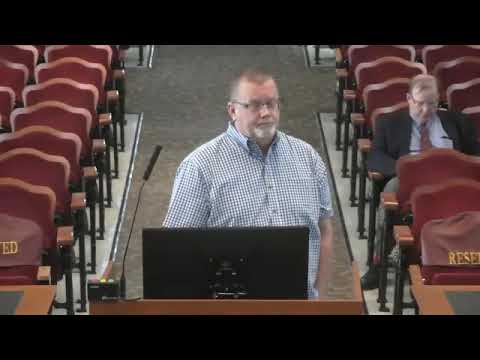
Albemarle County senior planner Mariah Gleason presented proposed revisions to the RIA‑29 form‑based code at the Architecture Review Board meeting on Oct. 6, focusing on changes that align the code with the county’s entrance‑corridor design guidelines and the zoning modernization effort.
Gleason told the board the proposed edits include a reconfiguration of the character‑area map to concentrate commercial “core” areas at existing shopping centers, new glass standards for windows and doors to align with the entrance‑corridor guidance, clarified permitted facade materials (with an explicit 15 percent cap for accent materials), a consolidated landscape and lighting section, minimum parking canopy goals to reduce urban heat island effects, and new dumpster‑screening and loading standards. “Form based codes are a type of zoning that focuses on the size, shape, and relationship of the building to streets and sidewalks instead of the land use,” Gleason said during the presentation.
The proposed character‑area map narrows the code’s commercial core to three existing shopping centers so that pedestrian‑focused destination streets are located where retail activity already concentrates rather than along high‑speed Route 29 and Berkmar/Bridal Road corridors, Gleason said. The change also limits where the code will require retail and reduces the total area where those commercial requirements apply.
Board members generally supported the approach but raised specific concerns that staff agreed to research further. Several members questioned the proposal to shift from large street trees (50–70 foot mature height per the county planting list) to smaller medium and small trees on tighter urban streets, saying larger trees can provide meaningful canopy and shade. Members also asked staff to confirm delivery of lighting standards with VDOT and other right‑of‑way authorities and to clarify how pedestrian versus vehicular lighting responsibilities would be coordinated and maintained.
Board member Frank Stoner asked how the optional nature of the RIA‑29 zoning would interact with existing large‑format retail parcels and whether the county’s long‑range strategy would reasonably encourage change on those parcels; Gleason said staff has reached out to some owners and that the mapping and standards are intended to guide long‑term change rather than force immediate redevelopment.
After discussion the board did not adopt the revisions at the Oct. 6 work session. Instead, members agreed the next step is for staff to return with additional analysis on tree selection and lighting coordination; staff and members noted that a subsequent work session or meeting could convert into a motion if the board wishes.
Gleason told the board the form‑based code project is slated to finish in March (year not specified in the presentation) and that staff is concurrently working to replace Street View images in the entrance‑corridor addendum with staff‑shot photographs to avoid copyright issues. The board directed staff to return with the additional information and more precise draft language on the topics raised.
AI generated
The text on this page is AI generated. Summaries, highlights, analysis, and video transcripts are all produced from the original source material.
AI can make mistakes, so if you spot one, and we will fix it for everyone.
Note: the source content is unaltered by us. Any content source we link to, be it a video, an audio recording, or a document, is presented exactly as its publisher released it. That publisher is usually a government body, sometimes an individual official or another organisation.