Get Full Government Meeting Transcripts, Videos, & Alerts Forever!
Get email alerts on the Bird Window Collisions topic
No spam. Unsubscribe anytime.
Audubon members urge homeowners, building managers to reduce bird-window collisions
Summary
Members of the Audubon Society of Kalamazoo told city officials and residents that bird-window collisions are common during migration and described simple, low-cost ways to reduce fatalities, including screening windows and applying patterns that break reflections.
Members of the Audubon Society of Kalamazoo told city officials and residents that bird-window collisions are a frequent, preventable cause of bird deaths and described simple, low-cost measures to reduce collisions.
The concern is widespread during migration seasons, the speakers said, and many collisions occur because birds cannot see glass. "Birds cannot see glass, which is why bird collisions are such a problem, killing a billion birds a year in The United States," said Bella, a board member of the Audubon Society of Kalamazoo.
The Audubon representatives said collisions peak in spring and fall when migrating birds unfamiliar with local surroundings strike reflective windows. "We see collisions happen the most during spring and fall migration," said Gail Walter, retired veterinary pathologist and vice president of the Audubon Society of Kalamazoo. "This puts a lot of birds visiting the area as they're migrating through, and they're unfamiliar with the territory. And oftentimes, that's when they collide with windows."
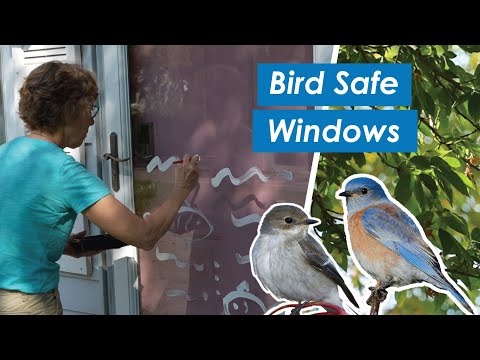
Speakers recommended breaking up reflections on glass so birds perceive windows as barriers rather than open flight paths. Walter said patterns that leave no space larger than about 4 inches by 4 inches and insect screens are effective. "What we need to do is create some pattern in or on or in front of the window that doesn't leave any space bigger than about 4 inches by 4 inches that alerts a bird that this is a solid object and not a passageway," she said. The presenters noted that commercially available products and do-it-yourself options exist to reduce collisions; they also said many existing home insect screens already reduce strikes.
Justin Gish, sustainability planner for the city of Kalamazoo, said the city's community sustainability plan includes protecting the natural environment for urban resilience and that the city partners with organizations such as the Audubon Society to identify problem locations and mitigation strategies. "One of the goals of that plan is to protect the natural environment for urban resilience," Gish said. "We do that by partnering with groups like the Audubon Society to try to figure out where birds are having some trouble, figure out ways to mitigate that."
Gish offered city help for residents and building managers seeking guidance. "If you have any questions, you can contact me through 311 or email me directly at gishj@kalamazoocity.org," he said.
The presenters emphasized that birds that appear stunned after a collision often die later from internal injuries or predation, even if they fly away, and urged property owners to inspect windows and consider mitigation steps during migration periods.
The remarks focused on public education and voluntary mitigation; no formal city action or funding request was recorded in the remarks.