Get Full Government Meeting Transcripts, Videos, & Alerts Forever!
Get email alerts on the Value Based Care Ccn topic
No spam. Unsubscribe anytime.
Connected Care Network signs value‑based deal with WellPoint; FQHC leaders say early gains in preventive care
Summary
The DC Connected Care Network said it signed a first multi‑year blended savings agreement with WellPoint DC and reported early increases in preventive screenings and outreach among seven Federally Qualified Health Centers.
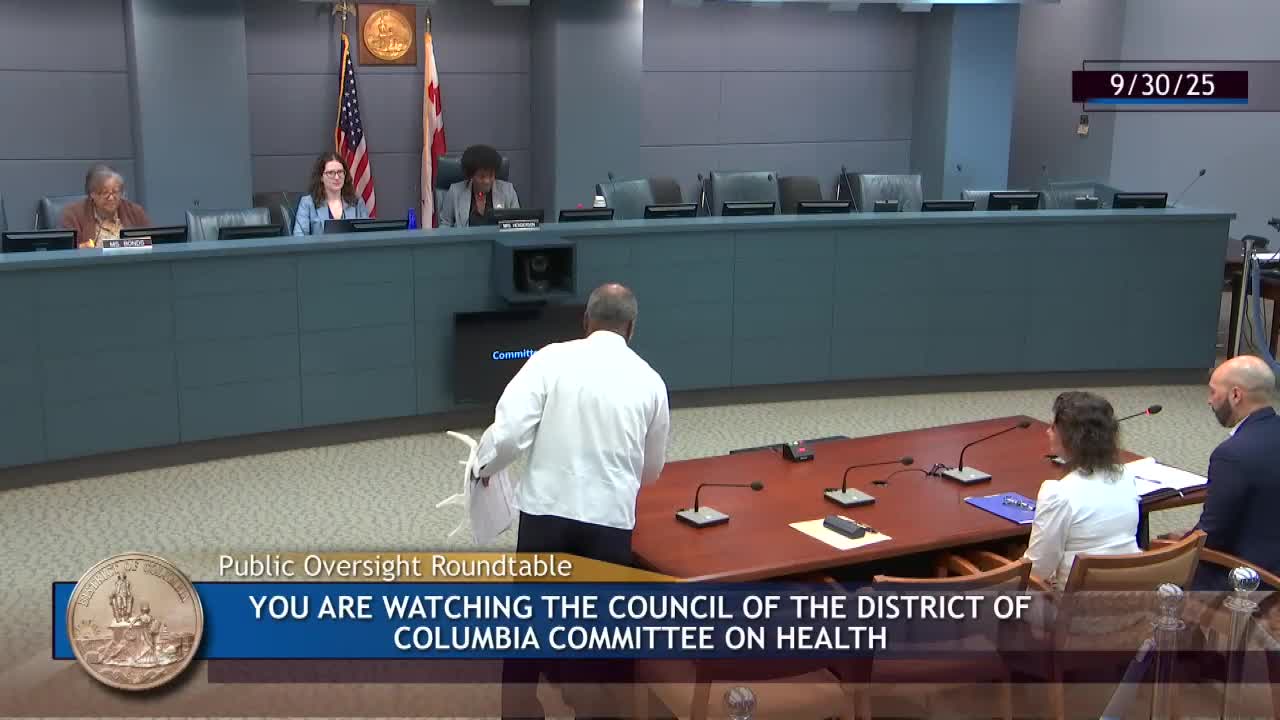
Charles Rosato, vice president of network operations for the DC Connected Care Network, told the Committee on Health that CCN’s first year focused on building data sharing, communication and trust across seven Federally Qualified Health Centers (FQHCs) and community partners.
Rosato said the CCN is responsible for attribution and care pathways for more than 121,000 DC Medicaid beneficiaries attributed to participating health centers. The group has been working with CRISP and the DC Primary Care Association to unify electronic health record views and create physician‑led advisories to design care pathways and negotiate value‑based contracts.
Rosato said the CCN signed a multi‑year blended savings arrangement with WellPoint DC in 2025 that includes quality measures and cost‑savings targets. Early results include increased preventive screening rates across pediatric and adult populations and improved outreach and follow‑up for chronic disease care.
Patricia Quinn of the DC Primary Care Association supported the network’s approach and recommended policy changes such as centralized credentialing and stronger third‑party liability rules modeled after Maryland to reduce administrative burden on community health centers. She told the committee that centralized credentialing and clearer MCO requirements on third‑party payers could substantially lower billing and credentialing friction.
Why this matters: CCN’s initial performance suggests FQHC integration and value‑based contracting can increase preventive care and support primary care as the “quarterback” for Medicaid patients, potentially reducing avoidable emergency care and overall costs.