Get Full Government Meeting Transcripts, Videos, & Alerts Forever!
Get email alerts on the Doula Benefit Implementation topic
No spam. Unsubscribe anytime.
Doulas say Medicaid benefit hampered by credentialing, billing and delayed payments
Summary
Local doulas told the Committee on Health that DC’s Medicaid doula benefit is difficult to access because of long credentialing times with DHCF and individual MCOs, inconsistent billing rules across plans and unpaid claims that forced some providers to stop services.
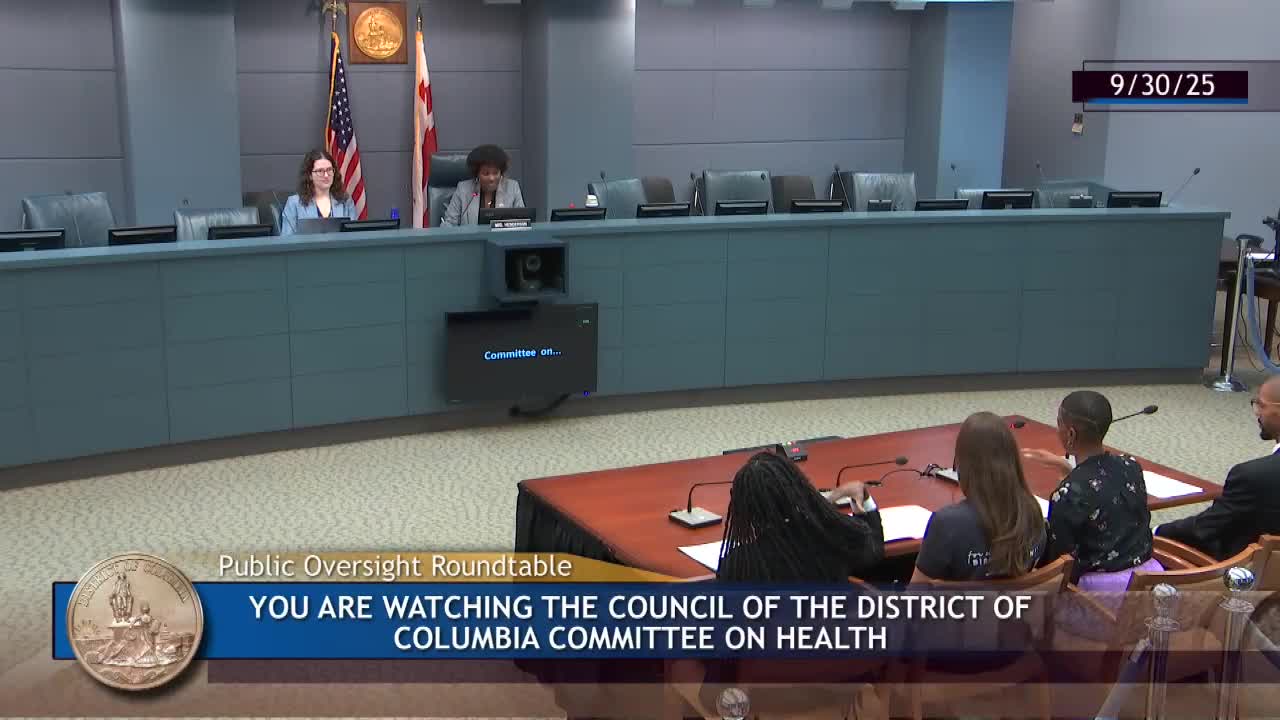
At a Sept. 30 roundtable, multiple doulas described administrative obstacles that they say are limiting the District’s Medicaid doula benefit and constraining service to birthing parents.
Crystal Jackson, owner of Aqui Grama Doula Services and co‑lead of the Doula Learning Action Collaborative, told the Committee on Health she spent about a year enrolling with DHCF and then months attempting to contract with MCOs. “After a lengthy process, I did establish a contract with two other MCOs, which took about six months,” Jackson said. She reported that she has not received reimbursement for services delivered since March and has paused a WellPoint contract because of nonpayment.
Gina Vallow, owner of BirthingKind, testified that she began credentialing with three of the four MCOs 18 months ago and still cannot operate reliably as an in‑network provider. Vallow described inconsistent rules across plans, lost paperwork and one contract that omitted postpartum care codes, producing thousands of denied postpartum claims. “That is not an abstract administrative problem. It is direct interruption of life‑saving support,” she said.
Doulas and council members recommended several fixes: a single centralized credentialing process, clear publicly available billing guidelines for doula services, service‑level agreements (SLAs) for credentialing and payments with automatic interest or penalties for late payment, automatic reprocessing and retroactive payment when denials stem from roster or contract errors, and quarterly public reporting of credentialing and payment metrics.
MCO leaders acknowledged doula credentialing posed special challenges because doulas are certified rather than licensed clinicians and require nonstandard documentation in some systems. MedStar Family Choice said its average processing time for credentialing is about 28 days where applications are complete; AmeriHealth Caritas and WellPoint said missing CAQH or state documentation commonly extends timelines. Several plans said they would engage if the council or DHCF develops a centralized credentialing mechanism and requested involvement in the design to preserve NCQA reporting workflows.
Councilmember Henderson and others pressed the CEOs to help resolve individual unpaid claims. Henderson noted she sponsored the law that created the Medicaid doula benefit and expressed frustration that a four‑year effort still faces operational “kinks” that curtail postpartum support during a maternal health crisis.
Why this matters: the doula benefit was intended to expand maternal supports and reduce disparities. Doulas testified that administrative barriers and payment uncertainty reduce small provider participation and can interrupt postpartum care for Medicaid enrollees.