Lifetime Citizen Portal Access — AI Briefings, Alerts & Unlimited Follows
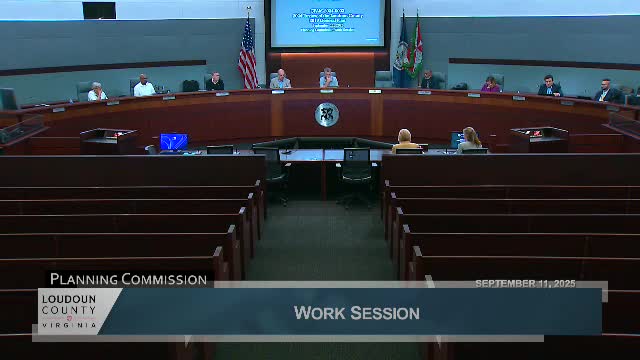
Planning Commission recommends 2019 general plan update (CPAM 2024‑3) with edits on infill, open space and universal‑design language
Loading...
Summary
The commission voted to recommend the countywide 2019 general plan review (CPAM 2024‑3) to the Board, endorsing refined definitions for infill, a clarified open‑space definition, and language changes to ‘encourage’ (rather than require) universal‑design features, while noting active‑recreation/floodplain policies will be addressed separately.
The Loudoun County Planning Commission voted Sept. 11 to transmit a recommendation to the Board of Supervisors to approve CPAM 2024‑3, the 2024 review of the 2019 general plan, with staff’s red‑line edits and additional refinements discussed at the work session.
Rebecca King, the County project manager for the CPAM, reviewed key edits staff proposed following earlier commission guidance. Changes include: a preferred density range of 8–12 dwelling units per acre in suburban compact neighborhood areas that adjoin lower‑density suburban neighborhoods (the place type still lists the full 8–24 range); clarifying the general‑plan definition of open space to emphasize active, passive and natural open spaces rather than leftover buffers; and replacing a draft directive to “incorporate universal design features into all residential development” with language that would “encourage” universal design.
King also summarized staff proposals to add policy support for future zoning ordinance amendments (ZOAMs) that would: define infill thresholds (20 acres countywide; 10 acres in the suburban policy area; 3.5 acres in the urban policy area); explore land‑in‑lieu flexibility for single‑family detached districts and options for adaptive reuse of underused office and commercial buildings in several suburban commercial zoning districts.
Commissioners raised a number of clarifying questions. Commissioner Jasper and others asked whether the recommended suburban compact neighborhood density preference would prevent the county from approving lower densities; staff replied the general plan is policy guidance and does not set mandatory minimums. Several commissioners asked that the plan’s compatibility language on building height be clarified to reference both existing and approved nearby development; staff agreed to edit the phrasing.
The commission also debated “universal design” language. Some commissioners asked for a narrower or measurable standard (for example, a percentage of units), while staff said the edit to “encourage” was intended to extend accessibility best practices beyond multifamily, where many elements are already required by building code, without creating regulatory mandates in the plan. The commission did not adopt an additional numeric requirement and left the “encourage” change in place.
On the narrow but politically sensitive issue of active recreation in major floodplains, King said Building and Development is preparing a separate report and will present recommended policy language to the Board on Oct. 7; the CPAM will not change that separate process. Several commissioners asked staff to coordinate the CPAM edits with that active‑recreation review.
Vice Chair Miller moved and Commissioner Barnes seconded a motion to recommend approval of the CPAM with the commission’s requested language clarifications (including the building‑height reference to existing and approved development). The motion passed on a recorded vote with seven in favor, one opposed (Commissioner Myers) and one absence (Commissioner Frank).
Why it matters: The CPAM makes countywide policy changes that guide future rezonings, infill decisions and potential zoning ordinance amendments. Commissioners emphasized the need to balance clarity for applicants with flexibility for local decision‑making, and asked staff to follow up on floodplain/recreation policy work separately.