Lifetime Citizen Portal Access — AI Briefings, Alerts & Unlimited Follows
Cedar Park considers ordinance to let city pass through card and online fees, effective Jan. 1, 2026
Loading...
Summary
City staff presented a first reading of an amendment to Cedar Park’s code to allow pass‑through assessment of debit and credit card fees (capped by state law) and an online transaction fee; staff recommended a 3.5% pass‑through and up to $2 per transaction with an effective date of Jan. 1, 2026.
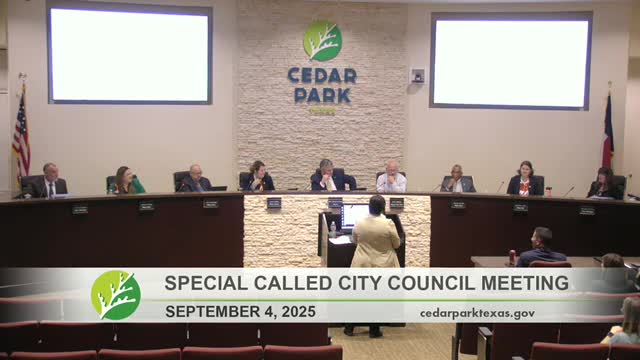
The Cedar Park City Council heard a first reading and public discussion on a proposed amendment to the city code that would allow the city to pass through debit and credit card fees to customers and to assess an online transaction fee.
Erica (city staff) explained the ordinance amendment is intended to clarify that the assessment applies to debit as well as credit cards and to establish fee limits in conformance with state law: “We propose a debit or credit card fee not to exceed 5% per state statute,” she said. She added staff’s current planning assumption is to assess a 3.5% fee, which reflects the city’s current credit card provider charge, and to adopt an online transaction fee of up to $2 per transaction (staff cited current court online fees at $1.50 and utility billing online transactions generally at $1).
Council members asked about alternatives and customer protections. Staff noted several customer options to avoid fees if the ordinance is adopted: paying by check or cash, using bank bill pay, or establishing ACH (automated clearing house) payments with the utility billing office. Staff said the city does not retain ACH routing numbers and tries not to keep customer banking data when using a voided check to set up ACH.
Why it matters: Staff estimated the city paid roughly $1,000,000 in merchant fees in 2024, mostly related to utility billing, and said passing through fees would free recurring dollars for other programs. Council members emphasized outreach and communication so residents can learn alternatives to avoid fees.
Timing and next steps The ordinance’s proposed effective date is Jan. 1, 2026, to allow time for public communication and operational changes. This item was a first reading; adoption, and any final fee levels, would come at a later meeting.
No vote to adopt the ordinance was taken at the meeting.