Lifetime Citizen Portal Access — AI Briefings, Alerts & Unlimited Follows
Mayor's rental bill would reshape TOPA exemptions, expand LRSP and press courts to move eviction cases faster
Loading...
Summary
A long hearing on the proposed Rebalancing Expectations for Neigbors, Tenants and Landlords Act focused on changes to the Tenant Opportunity to Purchase Act, an expansion of local rent subsidy rules and faster timelines for eviction cases — proposals that drew sharply divided testimony from tenants, nonprofit providers and developers.
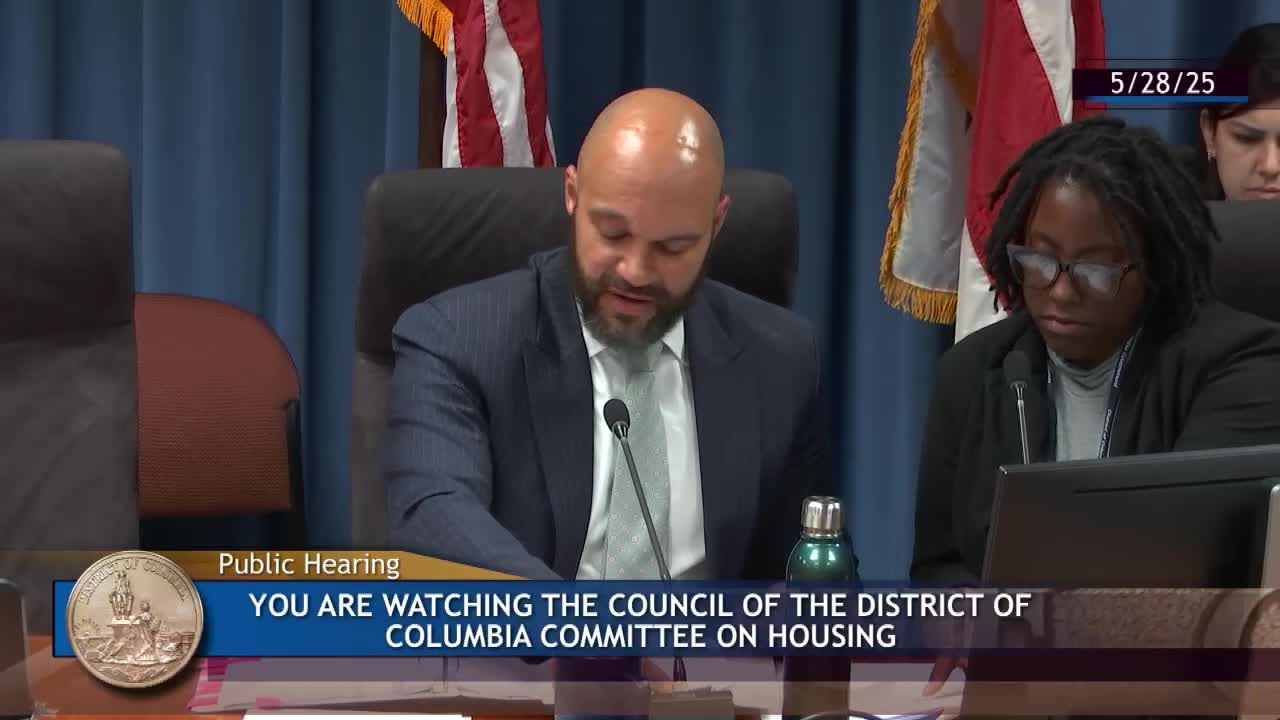
The Council—s Committee on Housing spent more than eight hours of public testimony on the mayor—s Rebalancing Expectations for Neighbors, Tenants and Landlords Act, a broad package that would change how the District applies the Tenant Opportunity to Purchase Act (TOPA), expand eligibility for local rental subsidies and alter the timeline and tools judges use in eviction cases.
Proponents from the development and finance community said the bill is needed to restore investment in new housing. "Investors are making it clear: business in the district is either too much of a hassle or too much of a risk," Evan Regan Levine of JBG Smith told the committee. He and other speakers said TOPA, in its current form, delays transactions and deters capital needed to build new units.
Opponents, including tenant advocates and public-housing groups, said the most important function of TOPA is preventing displacement and preserving affordability. "TOPA has been a lifeline for tenants, giving us a seat at the table when our homes were at risk," said Khadijah Hugginsale, a tenant leader in Shaw. She described using TOPA to keep her building affordable after a sale.
What the bill would do
The administration—s measure would:
- Create narrow TOPA exemptions for certain sales of newer, market-rate buildings (proposed: buildings built or substantially rehabilitated within roughly the last 25 years) and for properties that already carry long-term affordability covenants; the draft sets a 51%/80% test to identify market-rate stock and a 20-year minimum covenant for exempted affordable properties.
- Expand the Local Rent Supplement Program (LRSP) eligibility from households at 30% of area median income (AMI) to households up to 50% of AMI, a change the deputy mayor said would align the District with federal practice and broaden the pool of eligible households.
- Clarify and align some District low-income housing tax credit rules with the federal program, and add limited authority for the District to acquire and then dispose of vacant or blighted property on an accelerated timetable when it is necessary to preserve housing.
- Ask the courts to schedule initial rent-collection hearings faster and give judges clearer authority over protective orders and rent registry payments (the measure would generally require tenants to pay disputed rent into a court registry while a judge resolves the amount owed).
Why backers say change is needed
The administration and affordable housing developers cited sharp drops in investor interest and a marked increase in rent delinquencies since the pandemic as the immediate reasons for reform. "Without the changes currently proposed in this legislation, we may return to a period of disinvestment," William Rich of Calvary Real Estate Advisors said.
Christopher Donald, executive director of the District of Columbia Housing Finance Agency, told the committee the agency—s monitored portfolio shows deep financial stress: roughly 41% of its bond-financed properties were on an active watch list for covenant performance, and many properties have depleted reserves.
Why critics push back
Tenant advocates said the bill would remove important protections and hand developers and new owners too much power. "Taking access to that right away from anyone destabilizes communities and leads to housing insecurity," said Alexandra Johns, a tenant advocate who described TOPA as the tool that allowed tenants in some buildings to negotiate for repairs or to preserve affordability.
Several nonprofit legal services organizations warned specifically against provisions that would reduce tenants— notice timelines for eviction filings and that would allow an eviction case to be filed on the basis of an arrest or charge before a court determination. "These bills will strip tenants of their due process rights and common-sense eviction protections," Amanda Korber, a supervising attorney at Legal Aid, told the committee.
What—s next and where this could change
Deputy Mayor Nina Albert emphasized the package—s mix of reforms: preserving TOPA for those most likely to be displaced while clearing transaction friction for building types that have not produced tenant ownership. "We—re trying to preserve affordable housing and also to restore investment in production," she told the committee.
Members of the committee asked the administration for more detail about how the 51%/80% test would be calculated (by tenant incomes, rents, or both), how the District would verify and track exemptions, and how expanded LRSP eligibility would avoid —crowding out— households under 30% AMI. Several council members said they want to hold supplemental technical sessions before a markup, including more data on TOPA outcomes and lender behavior.
Ending
The hearing made clear the two core policy tensions: protecting long-term low-income residents and restoring confidence among investors needed to produce more housing. Supporters and opponents each said the other side—s approach would worsen the District—s housing distress; the committee indicated it would consider targeted edits before any final vote.
"TOPA must be reformed to revitalize and incentivize investment in the city," Horning's Andrew Vincent said. "But TOPA must also continue to center residents in places where displacement risk is real."