Lifetime Citizen Portal Access — AI Briefings, Alerts & Unlimited Follows
Council approves broad rental-reform bill after hours of debate and TOPA amendments
Loading...
Summary
The D.C. Council approved the Rebalancing Expectations for Neighbors, Tenants, and Landlords Rental Act (Bill 26‑164) on second reading after a marathon session of amendments addressing TOPA exemptions, tenant protections, DCHA board composition and narrow owner exemptions for 2–4 unit dwellings.
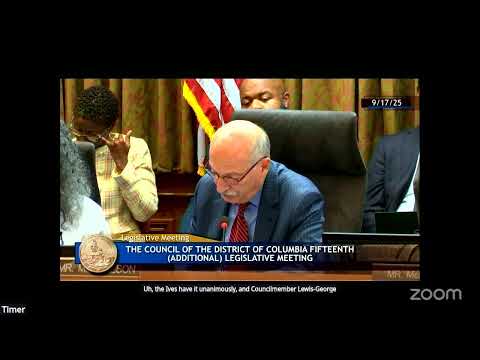
The Council voted to approve Bill 26‑164, the Rebalancing Expectations for Neighbors, Tenants, and Landlords Rental Act of 2025, after extensive debate and a series of amendments that changed how the Tenant Opportunity to Purchase Act (TOPA) and public-housing oversight are handled.
Council member Robert White, who led the bill’s presentation and moved an amendment-in-the-nature-of-a-substitute, framed the measure as a response to a mounting housing and eviction crisis. He cited steep declines in apartment permits and a backlog in eviction cases, saying the bill “is a step toward bringing fairness and stability to our housing market” and that it is the starting point for broader reforms. (Council member Robert White)
The Council accepted a set of substantive changes. Council member Nadeau and others won an amendment that preserves TOPA’s core protections while making targeted changes to reduce administrative friction — including restoring a defined cooling-off period and clarifying tenant definitions to include those without written leases. Nadeau said the revisions aim to “maximize consistency and predictability of transactions, encourage new investment… and preserve tenants’ ability to engage in good-faith negotiations.” (Council member Nadeau)
Members debated and voted on multiple amendments addressing competing goals: encouraging private investment, protecting tenants’ rights, and preventing displacement. Council members opposing some changes warned that certain incentives could raise the long-term cost of housing or create loopholes. Council member Robert White and others repeatedly emphasized the need for stronger measures to speed up development while protecting existing affordable housing stock.
One contested package of changes created a limited exemption for 2–4 unit dwellings owned by individual ‘‘mom-and-pop’’ landlords. Council member Bonds proposed the exemption; Council member Parker successfully added a cap so that an individual who owns more than two such properties would not benefit. The amended Bonds provision passed on a recorded roll call (10 yes, 3 no). The Council also approved other TOPA-related amendments, including adjustments for qualified purchasers and affordability-covenant rules.
The measure includes a set of provisions intended to strengthen resident participation at the D.C. Housing Authority: title 11 creates a nine‑member permanent DCHA board with two public-housing-resident elected seats and other statutory protections for residents facing conversions. The bill also adds procedural protections for victims of domestic violence in expedited public-safety eviction processes.
Votes on individual amendments were recorded in the transcript (for example, an earlier Nadeau amendment passed with eight yeses and five noes). After debate and roll-call votes on several change packages, the amendment-in-the-nature-of-a-substitute was approved and the bill proceeded to final passage as amended.
The council set follow-up paths in committee for implementation details and directed staff to finalize conforming technical edits. The legislation now moves toward enactment as the Council’s next steps include final drafting, any required executive action, and publication.
What’s next: The bill was approved on second reading as amended; council members and staff signaled additional implementation work to clarify administrative steps and oversight roles.