Lifetime Citizen Portal Access — AI Briefings, Alerts & Unlimited Follows
Council passes Rental Act as amended after hours of debate over TOPA, tenant protections and developer incentives
Loading...
Summary
After extensive amendments and roll-call debate, the Council approved the Rebalancing Expectations for Neighbors, Tenants, and Landlords (Rental Act of 2025) as amended. Key changes address eviction notice periods, D.C. Housing Authority oversight, TOPA exemptions and investor incentives; several high-profile amendments passed and others failed.
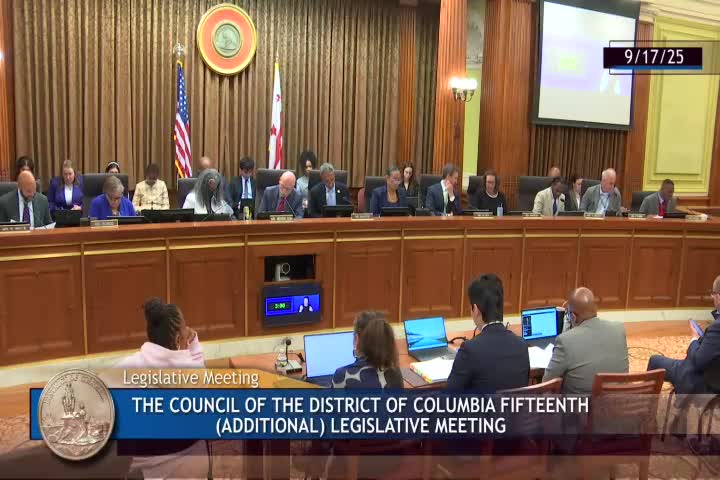
The Council of the District of Columbia on Sept. 17 approved the Rebalancing Expectations for Neighbors, Tenants, and Landlords Rental Act of 2025 (Bill 20‑6‑164) after extended debate and multiple roll-call amendments.
The measure, carried in the Council as the committee's amendment in the nature of a substitute, aims to change eviction timelines, clarify D.C. Housing Authority (DCHA) governance, and alter parts of the Tenant Opportunity to Purchase Act (TOPA). Councilmember Robert White, chair of the Committee on Housing, said the bill is a step toward fairness and stability in the city's housing market: "Final passage of the committee's A and S today isn't a silver bullet or a quick fix, but it is a step."
Why it matters: The legislation comes amid a stark housing supply shock and court backlogs the bill's proponents say are driving rent increases and investment withdrawal. The measure changes eviction procedures, creates new DCHA board structure provisions and revises TOPA exemptions that have generated sharp disagreement among council members and tenant advocates.
What changed and what passed - Eviction and court processes: The bill shortens some pre-filing notice timelines compared with prior law but retains protections for specified populations. Several amendments debated sought to restore longer notices for first-time delinquent tenants; those were defeated on roll calls. - TOPA and covenant exemptions: Councilmember Mary Nadeau and allies successfully moved an amendment that removed a proposed covenant exemption and reinstated a qualified purchaser program and cooling-off protections, arguing TOPA must remain a tenant empowerment tool. Nadeau argued: "TOPA is the bedrock component of tenant rights in the District Of Columbia." That amendment passed on a roll call. - DCHA governance: The bill includes provisions creating a nine‑member permanent DCHA board that, as amended in committee language, includes resident representation and further detail on resident roles. Debate over whether residents should directly elect some board members continued during floor debate.
Supporting details and council concerns Councilmembers split repeatedly on competing priorities: encouraging private investment versus preserving affordable housing and tenant rights. Supporters, including Councilmember Pinto, argued the changes are needed to unblock stalled construction and investor hesitation. Opponents, including Councilmember Robert White and Councilmember Trayon White, warned that some TOPA revisions and investor incentives could weaken affordability over time.
Several technical and process amendments were accepted on voice votes or roll calls; others failed. The Council debated safe‑harbor periods for TOPA applicability, qualified purchaser tax incentives, and a new narrow exemption for certain 2‑to‑4 unit conversions. Supporters said the smaller-unit exemption would help mom‑and‑pop owners and add housing, while critics warned it could be exploited by investors.
Quotations - Councilmember Robert White (Chair, Committee on Housing): "Final passage of the committee's A and S today isn't a silver bullet or a quick fix, but it is a step." - Councilmember Mary Nadeau (mover of TOPA amendment): "TOPA is the bedrock component of tenant rights in the District Of Columbia." - Councilmember Lewis George (on TOPA and power): "These changes to TOPA, at the end of the day, are about power. Who has it, who loses it, and who gets written out of the process entirely."
What happens next The bill passed the Council as amended on second reading and will follow the statutory transmittal to the mayor for signature or veto. Several council members said they plan additional permanent legislation and oversight hearings to monitor implementation, including DCHA board appointments and the Rental Housing Commission's rulemaking obligations.
Ending note Council members on both sides said the bill is an imperfect attempt to balance tenant protections with incentives to spur housing production. Several speakers urged follow‑up work on court scheduling backlogs, targeted tenant legal assistance funding, and monitoring of buyout practices to guard against unintended displacement.