Lifetime Citizen Portal Access — AI Briefings, Alerts & Unlimited Follows
Consultants recommend phased path to park conservancy; interim nonprofit programming urged
Loading...
Summary
Blue Point Planning told the Treasure Island Development Authority board that park activation and a phased nonprofit model are needed now, with a standalone park conservancy recommended by full build-out.
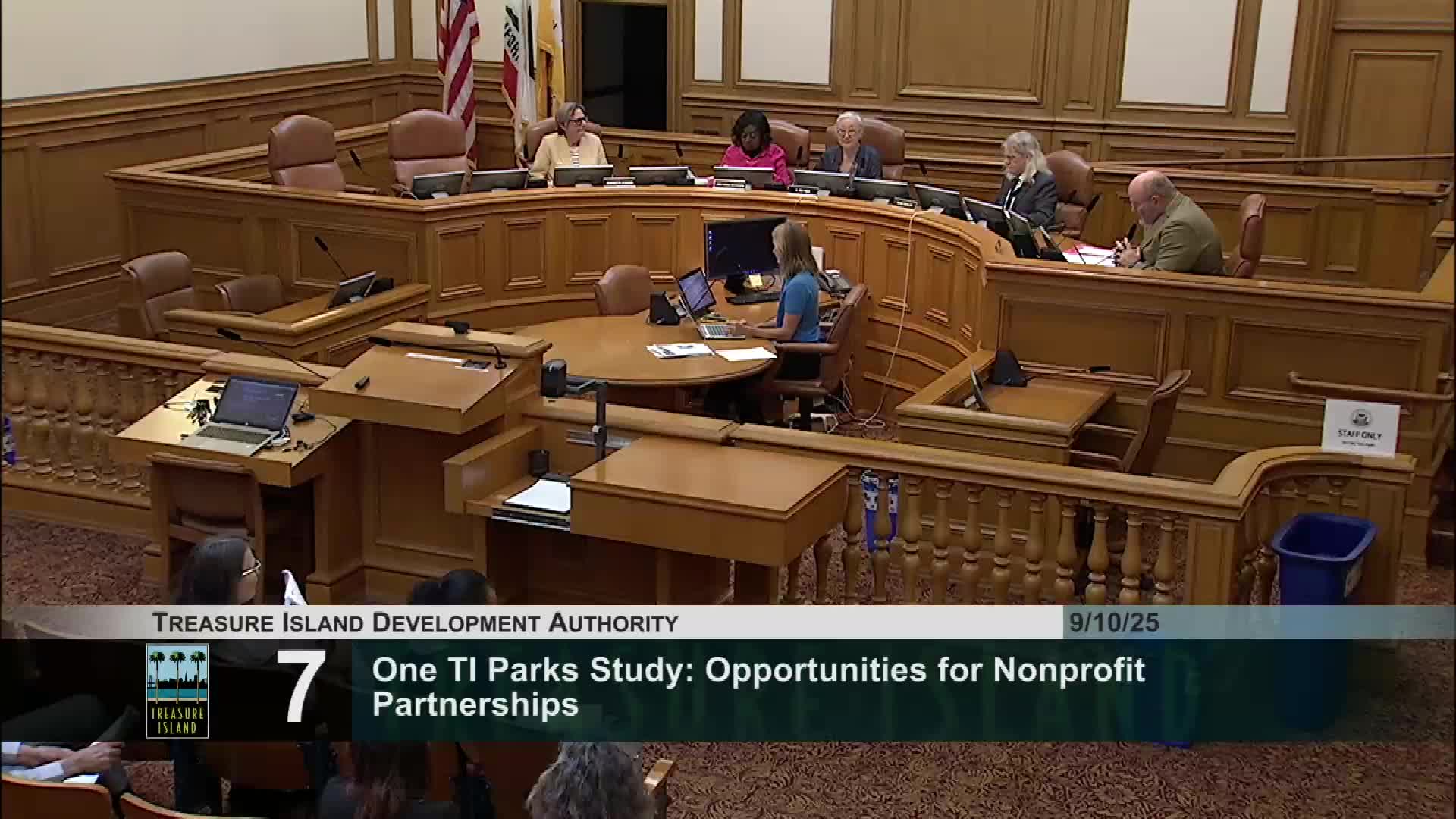
Treasure Island Development Authority board members heard on Sept. 10 that a phased approach to nonprofit partnerships is the fastest way to expand programming and fundraising for the island's growing park system. Consultants from Blue Point Planning recommended an interim governance model, a pilot programs manager and a three‑year ramp toward a standalone park conservancy at full build‑out.
The recommendation matters because the island's parks are intended to serve new residents, Bay Area visitors and tourists as housing and open space come online. Blue Point Planning estimated about 5,500,000 potential annual visitors at full build‑out and said nonprofit fundraising could supply roughly 5% of park revenue in peer cities.
Mindy Craig, lead consultant with Blue Point Planning, told the board the parks will require “consistent and ongoing activation” and that “by the time we're at full build out, we really think there's a standalone nonprofit will be essential.” She outlined a phased sequence: (1) an interim governance arrangement that leverages existing partners, (2) hiring a programs manager to pilot and coordinate activation, and (3) formation of a standalone conservancy with development of a fundraising board and staffing as the system stabilizes.
The presentation described programming and activation as core nonprofit roles — regular events, waterfront and family activities, marketing to regional tourists, volunteer coordination and fund development. Consultants recommended forming a 5–8 person working group including One Treasure Island, TIDA and San Francisco Recreation and Park Department staff to coordinate early steps. The consultants also reviewed national precedents such as the Golden Gate National Parks Conservancy and Governors Island to illustrate funding and governance models.
One Treasure Island staff reported existing local programming efforts: “Our first cohort of the construction training program started Sept. 1. We have 12 participants and our graduation date is Oct. 11,” said Nela Gonsalves of One Treasure Island.
Public commenters and several board members emphasized arts and maritime uses as distinct island strengths to fold into any nonprofit mission. The Treasure Island Sailing Center urged that Clipper Cove and water‑based programming be explicitly included in park activation plans.
Next steps recommended by the consultants are immediate: secure start‑up funding for a programs manager, launch pilot programming this season, create the working group and return to the board with a governance plan and three‑year action steps toward a long‑term conservancy.
Board deliberations during the meeting did not produce a formal vote on this report; the presentation was informational and staff and consultants will return with more detailed proposals and next steps.