Get AI Briefings, Transcripts & Alerts on Local & National Government Meetings — Forever.
House committee hears bill to reinstate 'open-and-obvious' rule for premises liability
Loading...
Summary
The Michigan House Judiciary Committee heard testimony on House Bill 4582, which would restore the "open and obvious" doctrine in premises liability law; business groups urged passage citing rising litigation costs, while trial lawyers warned the change would reduce protections for vulnerable people.
The Michigan House Judiciary Committee heard testimony on House Bill 4582, which sponsor Rep. Nyer said would "restore the clarity and balance of Michigan premise liability law" that he described as disrupted by recent Michigan Supreme Court decisions.
Supporters — including the National Federation of Independent Business, the Michigan Chamber of Commerce and the Small Business Association of Michigan — told the committee HB 4582 would protect small businesses from a surge in slip-and-fall litigation and higher insurance costs. "For decades, long standing open and obvious doctrine has provided property owners ... no duty or protection to invitees for hazards that were blatantly apparent," Rep. Nyer said, offering examples such as a hole in a parking lot or a snow-covered sidewalk.
Amanda Fisher, Michigan state director for the National Federation of Independent Business, told lawmakers HB 4582 was "a step forward toward regaining a fair and reasonable standard in regard to premises liability." Fisher said the 2023 Michigan Supreme Court rulings eliminated the open-and-obvious doctrine "as a threshold issue in premises liability cases" and that change has forced judges and juries to engage in more detailed factual inquiries, increasing litigation costs.
Randy Gross, senior director of legislative affairs for the Michigan Chamber of Commerce, told the committee the change in doctrine has "resulted in increased litigation" and in higher premiums for members. Jacob Manning, advocacy and policy manager at the Small Business Association of Michigan, said SBAM surveys show small businesses are already stressed by rising costs and that additional liability exposure threatens to divert resources from operations.
The Michigan Association for Justice opposed the bill. Mitch Elbers, legal counsel for the Michigan Association for Justice, told the committee HB 4582 would "reduce the safety for guests and customers at commercial spaces in Michigan." Elbers said the judicially created open-and-obvious doctrine previously encouraged property owners to maintain safer premises and that some plaintiffs — including elderly or disabled people — would be disadvantaged if the statutory change re-created broad immunity for property possessors.
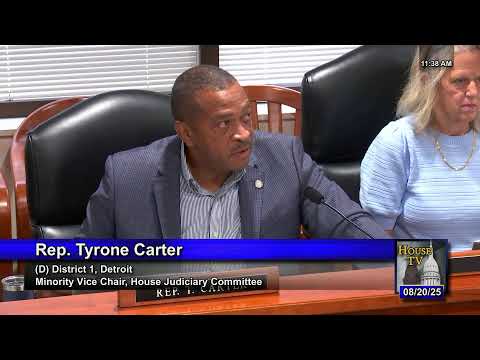
Committee members questioned the bill's scope. Rep. Harris pointed to a provision on page 3 that excludes conditions "inside a building or other structure on the premises," asking why interior hazards are treated differently. Rep. Nyer said the bill focuses on exterior conditions because outdoor environments involve more variables — for example, weather-related hazards — and that the sponsor is "willing to work" on potential changes to address interior conditions.
No formal committee vote on House Bill 4582 was recorded in the hearing segment provided; multiple business and trade groups submitted written support and several representatives offered in-person testimony during the hearing.
Because testimony diverged on likely effects, committee discussion focused on narrowing language and preserving remedies for truly negligent conduct while restoring an objective, early-dismissal standard for plainly visible hazards.