Lifetime Citizen Portal Access — AI Briefings, Alerts & Unlimited Follows
Council approves RFK Campus Redevelopment Act with environmental and transit conditions, and expanded community benefits
Loading...
Summary
After hours of amendments, the Council approved the Robert F. Kennedy Campus Redevelopment Act of 2025, setting the framework for the stadium, mixed‑use development, major environmental standards, transit funding and a community reinvestment fund. Key accountability and LEED language drew heavy debate.
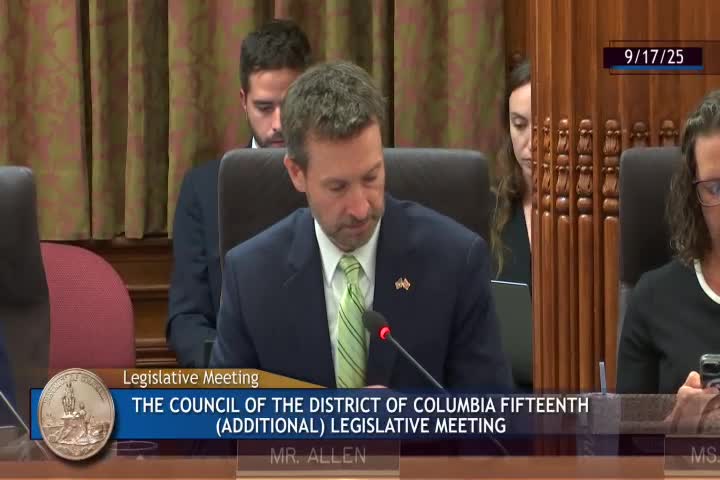
The Council of the District of Columbia on Sept. 17 approved the Robert F. Kennedy Campus Redevelopment Act of 2025 (Bill 20‑6‑288), the legislative package underpinning a new stadium and a multi‑acre mixed‑use neighborhood on the RFK site.
Chair Phil Mendelson introduced amendments tightening milestones, clarifying the Transportation Improvement Fund and adjusting language about green building: "The LEED language ... makes clear that LEED platinum certification must be a goal, not a requirement, given the many important features of this state‑of‑the‑art stadium," Mendelson said while explaining feasibility‑based wording on energy and building systems.
Why it matters: The legislation transfers Congressional land and authorizes a public‑private redevelopment expected to deliver thousands of housing units, new jobs and large public investments in transit and open space. The package also creates a Community Reinvestment Fund and a Community Benefits Oversight Committee intended to distribute resources to neighborhoods most affected by the project.
Major provisions and floor actions - Green building and site standards: The final ANS uses a feasibility standard for LEED‑related construction goals across stadium, commercial and residential construction to balance sustainability targets against design features such as an open concourse and translucent roof. - Transportation and parking: The Transportation Improvement Fund will support transit‑focused improvements, including Metro rail and Metro bus infrastructure and roadways directly related to public transit access. The Council required a DDOT report by 2032 on the need for any third parking garage and a mayoral feasibility study on emergency services, including an engine and ladder company site assessment by 2028. - Community reinvestment: Councilmember Felder secured language creating a Community Reinvestment Fund with dedicated inflows and directed uses for displacement prevention, small business support and neighborhood investment. The Council accepted a set of friendly and floor amendments that added youth sports team support and clarified oversight structures.
Accountability and penalties A number of council members pushed for stronger, earlier enforcement measures and financial penalties tied to missed development milestones. Councilmember Robert White proposed multiple accountability amendments ranging from annual penalties for missed deadlines to a long‑term clawback if large portions of the property remained undeveloped by 2050; the Council rejected the most extreme measures but approved a package that included penalties, milestone reporting, and higher transparency and reporting obligations.
Quotations - Chairman Phil Mendelson (on sustainability language): "LEED platinum certification must be a goal, not a requirement, given the many important features of this state of the art stadium." - Councilmember Robert White (on accountability): "If by 2050 the land is still not substantially developed, the district takes it back."
Votes and final outcome The Council voted to approve the bill as amended. The final recorded roll call on the permanent bill registered 11 yeses and 2 noes on the final passage roll call.
Next steps With Council approval the measure will be transmitted to the mayor and then the city and team will proceed to negotiate implementing agreements: a lease, a development and finance agreement, and a Community Benefits Agreement (CBA). The Council directed multiple reports and milestones to track progress and gave the mayoral team and DDOT deadlines for feasibility and transit planning. Councilmembers said they expect continued oversight during implementation to ensure the Council's environmental and community commitments are met.