Lifetime Citizen Portal Access — AI Briefings, Alerts & Unlimited Follows
Council approves RFK Campus Redevelopment Act after extensive amendments on community benefits and LEED language
Loading...
Summary
The D.C. Council approved the Robert F. Kennedy Campus Redevelopment Act on second reading after a long amendment process that revised LEED-related language, added reporting deadlines, and carved out a community reinvestment fund and CBA commitments; final roll call was 11–2 in favor.
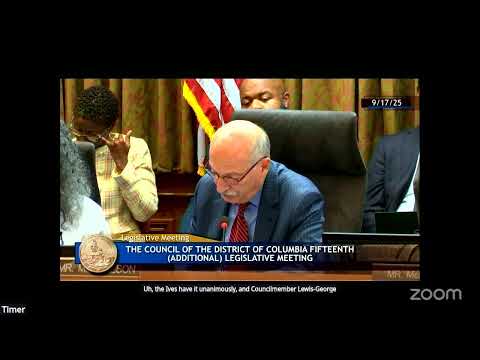
The Council approved the Robert F. Kennedy Campus Redevelopment Act (Bill 26‑288) on second reading after a series of oral and written amendments that adjusted environmental language, reporting timelines, and community-benefits structures.
Chair Phil Mendelson moved the amendment-in-the-nature-of-a-substitute and described revisions clarifying LEED language so that the stadium and associated development would be constructed "in a manner feasibly consistent with" LEED objectives rather than an absolute certification requirement. Mendelson emphasized the change reflects feasibility concerns for certain stadium features, such as a translucent roof, that can complicate LEED point calculations. (Phil Mendelson)
Council members spent significant floor time negotiating the structure and governance of the community benefits package. Council member Wendell Felder offered an amendment to direct $2 million annually from certain sports-facility fee streams into a new Community Reinvestment Fund targeted at Wards 5, 7 and 8; the chair accepted the amendment and it was incorporated into the bill as amended. Felder said the change aims to make long-term, sustainable investments in neighborhoods east of the Anacostia River. (Council member Felder)
Council member Robert White pushed several amendments focused on anti-displacement measures, accountability milestones, and stronger financial commitments (including an unsuccessful effort to add a $5 million home‑purchase assistance line tied to the fund). White argued for more immediate penalties and a larger community benefits agreement to preserve affordability and hold the team accountable for timely development. He framed his amendments as protections for residents who may be displaced by the project.
Other amendments clarified reporting requirements, directed DDOT and the mayor’s office to collaborate on parking and fire-service feasibility studies by specified dates, and added youth-sports supports and small expansions of CBA uses. Several amendments were debated and either accepted as friendly or rejected after recorded votes.
On the final roll-call vote the RFK Campus Redevelopment Act as amended passed 11–2, with the transcript recording two no votes. Council members supporting the bill highlighted commitments to open space, transit investments, planting and heritage-tree protections, zero-waste operations pledges from the team, and community-benefits oversight provisions intended to channel public and private investments into affected neighborhoods.
What’s next: The measure now moves to final enrollment and transmission; Council members noted that many implementation details (including the CBA document and development and finance agreements) will be negotiated after passage and that the Council expects ongoing reporting and oversight.