Lifetime Citizen Portal Access — AI Briefings, Alerts & Unlimited Follows
U.N. says aid deliveries to Gaza increased but remain far short of needs; malnutrition deaths reported
Loading...
Summary
The U.N. spokesperson said some aid missions reached Gaza, markets have seen price relief for some items, but severe shortages, malnutrition admissions and deaths continue and a ceasefire is needed to allow scaled assistance.
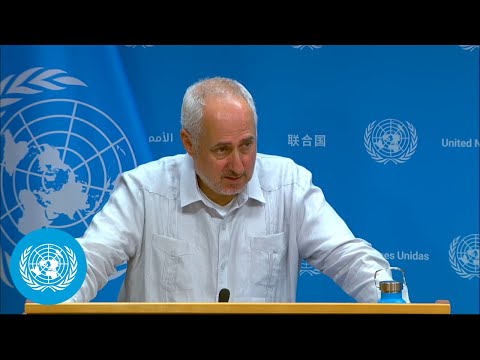
The United Nations spokesperson said aid flows into the Gaza Strip have increased compared with recent weeks but remain far below levels needed to meet the population's needs, and a ceasefire is "critically needed" to reach everyone in need.
The spokesperson said more than half of 15 coordinated missions with Israeli security authorities were facilitated, while others were canceled, denied, or impeded. "There is a bit more volume that we're seeing, but nowhere near what we had during the ceasefire," the spokesperson said.
Health and nutrition: the Gaza Ministry of Health reported that eight people, including three children, died of malnutrition and starvation in the previous 24 hours, the spokesperson said. The U.N. also reported that more than 340 children have been admitted for malnutrition treatment so far this year at Gaza nutrition centers; as of Aug. 5, 49 validated child deaths from malnutrition were reported, including 39 children under age 5.
The spokesperson said Runtisi Children's Hospital is one of five nutrition centers in Gaza and one of only two in Gaza City. The World Health Organization conducted refresher training at Runtisi focused on inpatient management of malnutrition.
Markets and cash: the spokesperson said entry of goods has "improved the market situation in terms of both prices and availability." He gave sugar as an example, saying prices peaked at about 600 shekels per bag (reported as roughly $175) and had fallen in the past two weeks to an average of 40 shekels (about $12). The spokesperson cautioned that "severe cash shortages are preventing families from being able to buy food, being able to buy water, and being able to buy medicine."
Protection and shelter: the U.N. reported overcrowded, informal shelters lacking space and privacy; partners began providing mental health and psychosocial support for staff teams in Gaza.
Water and infrastructure: the spokesperson said Israeli-supplied water infrastructure in southern Gaza was damaged for almost a week, affecting the water supply of thousands.
U.S. contact: the spokesperson said Joyce Masuya, the U.N. assistant secretary-general in charge of the Department of Humanitarian Affairs, met with Steve Witkoff, described in the briefing as President Trump's special envoy, to discuss scaling up aid into Gaza. The spokesperson said the meeting was "constructive" and that U.N. colleagues will continue to be in contact with Witkoff and his team to try to remove "roadblocks both figuratively and literally" that hinder aid delivery.
Why it matters: reported malnutrition admissions and child deaths, combined with constrained aid access and cash shortages, indicate a deepening humanitarian emergency.