Lifetime Citizen Portal Access — AI Briefings, Alerts & Unlimited Follows
U.N. delegate urges immediate funding as Yemen faces escalating hunger crisis
Loading...
Summary
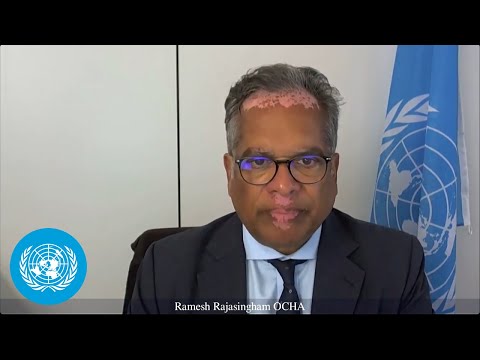
Ramesh Rajasinghe told the council that more than 17 million people in Yemen are food insecure and called for immediate funding, including a $20 million release from the Yemen Humanitarian Fund and increased support for local partners.
Ramesh Rajasinghe, a delegate addressing the council, said more than 17,000,000 people in Yemen are going hungry and that the figure “may crest 18,000,000 by February” (year not specified in the remarks). He said humanitarian assistance can keep people alive but that “only a political solution can make them safe.”
Rajasinghe described dire child malnutrition across the country: “Half of the nation's children under the age of 5 suffer from acute malnutrition, and nearly half suffer from stunting.” He gave a specific case of a 9-month-old child, Ahmed in Abs District in Hajjah Governorate, who required emergency treatment for severe acute malnutrition complicated by infection; Ahmed’s mother, Hafsa, was cited as struggling under “increasingly difficult circumstances.”
The delegate said humanitarian partners — UN agencies, international NGOs, local NGOs, and the Red Cross and Red Crescent movement — have prioritized food responses to 8,800,000 of the most at-risk people. He announced that the Yemen Humanitarian Fund will be releasing $20,000,000 to address the negative impacts of food insecurity, and he said two-thirds of this year’s Yemen Humanitarian Fund allocations have gone directly to local partners.
Rajasinghe warned that the collapse of livelihoods in public services, agriculture and fisheries is worsening household food access. He said families in rural areas of Al Mahwit, Al Hudaydah and Sanaa governorates are selling livestock, tools and agricultural land to buy food, and that children are being forced to work instead of attend school. He also cited gender-related impacts: more than 30,000 women and girls sought support services for gender-based violence in the past six months in the three governorates he named; nearly one-third of women now aged 20–24 were married before 18, and nearly one in 10 were married before 15.
Rajasinghe framed two specific calls to action: “1, increased funding now to scale up urgent emergency food and nutrition support, and 2, direct financial support for the Yemen Humanitarian Fund.” He said that, given the right tools, local partners “can make a huge difference.”
The remarks stressed that humanitarian assistance is necessary but insufficient without political progress toward a lasting settlement. No council decision or vote on funding was recorded in the provided transcript excerpt.