Get Full Government Meeting Transcripts, Videos, & Alerts Forever!
Get email alerts on the International Day Of Hope topic
No spam. Unsubscribe anytime.
United Nations celebration marks first International Day of Hope after General Assembly resolution
Summary
Delegates, civil-society leaders and laureates gathered at a ceremony at United Nations headquarters to mark the newly designated International Day of Hope, highlighting education, water and child protection and calling for sustained, practical follow-up to the General Assembly resolution adopted earlier in 2025.
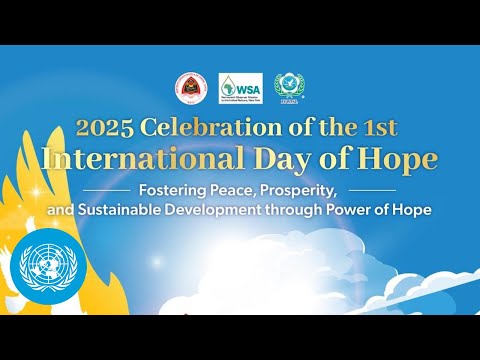
Speakers at a United Nations event on July 11, 2025, marked the first observance tied to a General Assembly resolution designating July 12 as the International Day of Hope and urged practical follow-up on education, water access and child protection.
The event, hosted by the Federation of World Peace and Love (FOPAL) with multiple permanent missions to the United Nations, featured opening remarks from the Timor Leste mission and presentations by senior figures including Dr. Hong Taot So, president of FOPAL; Dr. Navid Kapoor, permanent observer for the Pan African Intergovernmental Agency for Water and Sanitation to the United Nations; former presidents and civil-society leaders; and Nobel Peace Prize laureate Jerry White.
Why it matters: organisers said the new observance is intended as a platform for practical action across the UN sustainable-development agenda. The gathering combined ceremonial elements — including a bell-ringing — with appeals from government representatives and civil-society speakers for investments in youth, mental health, water and protections for children.
At the event, participants reiterated that the UN General Assembly adopted a draft resolution earlier in 2025 establishing the International Day of Hope. Event materials and speakers reported that the resolution secured broad backing in the General Assembly; organisers said 161 member states supported the measure. The resolution itself and the roll-call details were not quoted on the record at the meeting.
Speakers tied the day to concrete priorities. The ambassador from Timor Leste, Dioncio de Costa Babosauris, said the day should spur action and cited his country’s post‑conflict investments in schools and health care, adding, “Hope is not just a word for us. It is the reason we are here.” Dr. Navid Kapoor urged institutions to treat hope as an operational objective, saying, “Hope is not a wishful thinking. Hope is a strategy.”
Several speakers linked hope to specific policy areas. Dr. Kapoor and others said water and sanitation are prerequisites for dignity and peace; Rosalia Atega Serrano, former president of Ecuador, urged improved education and cited Inter‑American Development Bank estimates she said show violence eroding regional GDP. Jerry White, reflecting on research into hope and flourishing, outlined a three‑part approach — “connection, protection and creation” — as practical levers for programs that support children and communities.
Civil‑society presenters pressed for action on child protection and trauma recovery. Bernard Fiacoff and other speakers described global child‑protection shortfalls and called for targeted funding and programs to reduce violence and homelessness among children. Multiple speakers urged a sustained campaign after the ceremonial launch: “What happens on the second day?” White asked, calling for coordinated top‑down, middle‑out and bottom‑up efforts to mobilize resources for mental health, education and community safety.
Organisers described several inaugural activities associated with the observance: bell‑ringing ceremonies, a commemorative book release, and convenings at UN offices that organisers said would continue. Event moderators invited participants to continue discussions on online platforms and to pursue partnerships between governments, faith groups, NGOs and youth organizations.
The meeting did not record any formal UN votes or new funding commitments at the event itself. Speakers recommended that governments, philanthropists and civil society convert the day’s statements into measurable programs and investments — for example, scaling life‑skills and mental‑health programs for youth, expanding access to clean water and sanitation, and funding child‑protection initiatives.
Looking ahead, organisers asked participants to return to their countries with specific follow‑up plans and to report progress to the coalition driving the observance. The event’s close featured calls for partnership and a pledge from the Pan African Intergovernmental Agency for Water and Sanitation mission to “raise the banner of hope” in upcoming initiatives.