Get Full Government Meeting Transcripts, Videos, & Alerts Forever!
Get email alerts on the Code Enforcement topic
No spam. Unsubscribe anytime.
Margate commission advances code-enforcement changes to magistrate process in first reading
Summary
On first reading, the commission approved changes intended to streamline code enforcement hearings and penalties, drawing questions about jail penalties and collection procedures.
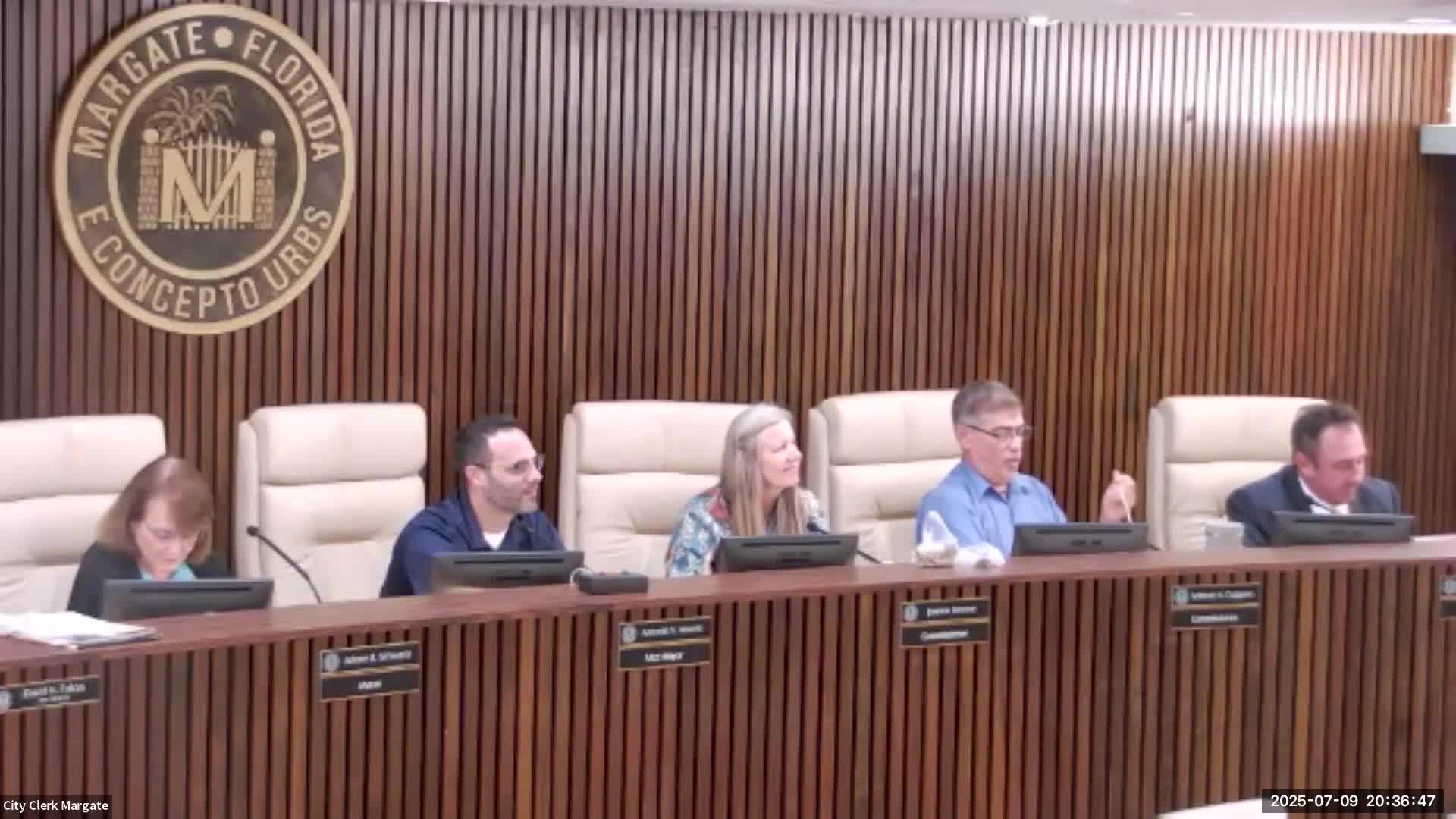
The City Commission of Margate on July 9 approved on first reading an ordinance that amends the city code enforcement procedures and penalties, including changes designed to streamline magistrate hearings and allow immediate fines where appropriate.
City Attorney David Tolson and staff described the ordinance as an update to the code enforcement process intended to reduce repeat hearings and speed compliance. Tolson said the change will allow a magistrate to impose a compliance period and immediate penalties so that violators need not return for multiple hearings.
Residents raised concerns about potential penalties in the amended code. At least one public commenter, Rich Zucchini, questioned a provision that referenced up to 60 days in jail for code violations and urged that severe matters continue to come before the commission rather than a magistrate. City counsel clarified that only a judge, not a magistrate, can impose jail sentences and that the citys ability to add fines to utility bills is governed by state law. "The Florida statutes do not allow the city to put the fines on a water bill," the city attorney said during the meeting.
Staff noted the city had recently collected more than $62,000 from a recorded code lien on a foreclosed property after pursuing excess proceeds; staff said improved collection and lien work were reasons to update enforcement tools.
The ordinance passed first reading on a unanimous roll call. It will return for a second public hearing and final vote at the next scheduled reading.