Get Full Government Meeting Transcripts, Videos, & Alerts Forever!
Get email alerts on the Terrorism topic
No spam. Unsubscribe anytime.
Greece Condemns Damascus Church Bombing, Urges Accountability and Protections for Syria’s Religious and Ethnic Communities
Summary
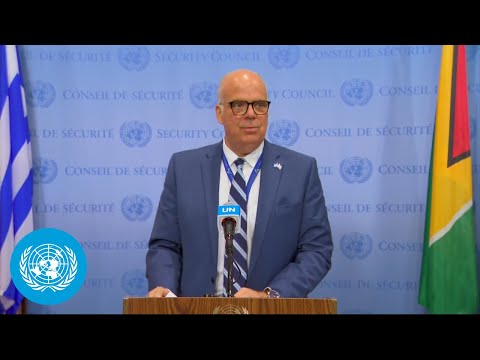
Ambassador (Greece) told a closed meeting of the United Nations Security Council that Greece condemned last week’s suicide bombing at the Mar Elias Greek Orthodox Church in Damascus and urged swift accountability and protections for Syria’s religious and ethnic communities.
Ambassador (Greece) told a closed meeting of the United Nations Security Council that Greece condemned last week’s suicide bombing at the Mar Elias Greek Orthodox Church in Damascus and urged swift accountability and protections for Syria’s religious and ethnic communities. “We were all shocked by the terrorist suicide bombing in the Mar Elias Greek Orthodox Church in Damascus, Syria,” the ambassador said.
The ambassador said the Security Council “condemned in the strongest terms this terrorist attack that targeted Christians in the place of worship” and that Greece had expressed “heartfelt condolences to the families affected” and “deep sympathy and solidarity to the people of Syria.” He said Greece had taken a bilateral role in responding to the attack and had participated in a closed-format Security Council meeting to discuss recent developments in Syria.
The ambassador summarized Greece’s immediate steps after the attack: the Greek ambassador in Damascus visited the church a few hours after the incident; met the Syrian minister of social affairs, identified in the meeting as Hind Qawbawat; met the Damascus city official Maher Marwan; met with the Greek Orthodox Patriarch of Antioch, identified in the meeting as John the tenth; and visited injured people at a local hospital. The ambassador said, “Greece is assisting the vetting of this horrendous attack, delivering humanitarian aid, and will contribute to the restoration of the church.”
Asked by an unnamed delegate what reconciliation should entail and what the Security Council could do, the ambassador replied that reconciliation is “key to the prosperity and stability of Syria,” that interim authorities had taken some initial measures which the Security Council had encouraged, and that implementation of those measures must be seen. “It is a long road, a difficult road, but we are confident that the authorities, with the help of the international community, will steer the country to this direction,” the ambassador said.
The ambassador stressed that protections should extend beyond Christians to “all ethnic and religious group[s] in Syria” and that accountability must be ensured “without shortcomings.” He said the Greek government had taken note of public promises by Syrian interim authorities to mobilize specialized security agencies to identify and bring to justice those responsible.
The Security Council statement and the Greek remarks recorded no formal vote in the transcript. The meeting was described in the transcript as closed; the ambassador’s remarks and the question from another delegate were the substantive items recorded.