Get Full Government Meeting Transcripts, Videos, & Alerts Forever!
Get email alerts on the Bde Lending Expansion topic
No spam. Unsubscribe anytime.
Puerto Rico hearing exposes split over bill to let public development bank offer mortgages, credit cards
Summary
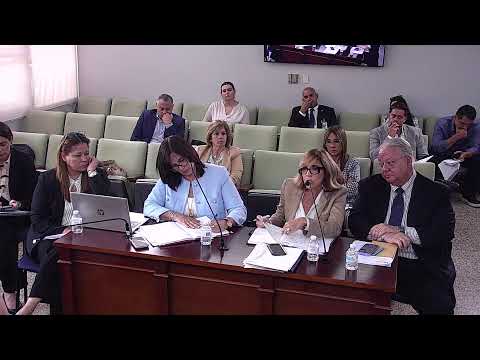
SAN JUAN — Lawmakers heard sharply divided testimony June 16 on House Bill 701 (PC 701), which would amend Articles 2 and 3 of Ley Núm. 22 del 24 de julio de 1985 (the enabling law for the Banco de Desarrollo Económico, or BDE) to allow the BDE to offer residential mortgages, consumer loans and credit cards.
SAN JUAN — Lawmakers heard sharply divided testimony June 16 on House Bill 701 (PC 701), which would amend Articles 2 and 3 of Ley Núm. 22 del 24 de julio de 1985 (the enabling law for the Banco de Desarrollo Económico, or BDE) to allow the BDE to offer residential mortgages, consumer loans and credit cards.
Supporters, led by Carmen Vega, president of the Banco de Desarrollo Económico para Puerto Rico, said the changes would expand access to credit for young people, small businesses and underserved borrowers. Vega told the commission the bank is preparing operational and regulatory steps and said, “La apertura para nuevos productos es saludable y a quien único beneficia es al pueblo de Puerto Rico.” She described planned partnerships with card networks and training programs for prospective borrowers.
Opponents, led by the Asociación de Bancos de Puerto Rico, argued the bill would push the development bank beyond its statutory development role and create fiscal and operational risk. Mea Álvarez Rubio, president of the association, said the measure “alejar al Banco de Desarrollo Económico peligrosamente de su rol fundamental” and stressed that the market for consumer lending in Puerto Rico already includes commercial banks, cooperatives and other lenders.
A fiscal and risk study presented by Francisco Rodríguez Castro, president and CEO of Berlín CapitalAdvisors and provided to the association, warned of large capitalization needs under several participation scenarios. Rodríguez summarized the firm’s findings as showing “enormes riesgos fiscales, operativos y estructurales” and presented projections — described in the study — that, in aggregate scenarios shown to the commission, would require capital and loss reserves running into the billions of dollars. He also noted what his analysis described as BDE balance-sheet weaknesses in publicly available statements.
Lawmakers pressed both sides on operational readiness, supervision and funding sources. Representative members of the commission asked whether the BDE has audited, up-to-date financial statements and whether the bank has been examined recently by the Office of the Commissioner of Financial Institutions (Oficina del Comisionado de Instituciones Financieras, OCIF); witnesses acknowledged gaps in public disclosure and past audit findings. The association requested that OCIF and other regulatory stakeholders be asked to provide technical comments to the legislative record.
Carmen Vega said the BDE already holds staff and systems the bank can repurpose, cited specific pilot funding the bank said it controls, and described phased implementation: an initial focus on a small-card product tied to an educational incentive and a subsequent roll-out of mortgage products. Vega said the bank has about 92 employees and that the institution is preparing external audits and new governance documents, adding it has held discussions with OCIF and card-network partners. She also said the bank proposes mortgage pricing “entre un 6, 6.5 por 100” (6–6.5%) and credit-card pricing “13.95 por 100” (13.95%), with an initial card limit discussed at $500.
Several legislators and witnesses urged more specific, written plans and independent fiscal analysis before granting authority. Committee members asked the bank to provide updated liquidity and audited financials; the chair agreed to a written request for current bank liquidity and funding-source information within five business days.
No formal committee vote was recorded at the hearing. The record contains requests for additional technical review by OCIF, the Puerto Rico Housing Finance authority (referred to in testimony as the authority for housing finance), and other sector stakeholders, and several participants offered to collaborate on training and pilot programs if the legislature moves forward.
The hearing combined factual testimony, a consultant risk report submitted by the banking association, repeated requests for up-to-date audited information and declarative statements from the BDE about phased roll-out plans and partnerships. The commission adjourned the hearing for this bill after the witnesses’ appearances and questions.
Ending — Next steps: The commission received the testimony and materials submitted for the record and directed staff to request current audited statements, liquidity figures and written implementation details from the Banco de Desarrollo Económico and technical comments from OCIF and related agencies before further action on PC 701.