Get Full Government Meeting Transcripts, Videos, & Alerts Forever!
Get email alerts on the Comprehensive Plan topic
No spam. Unsubscribe anytime.
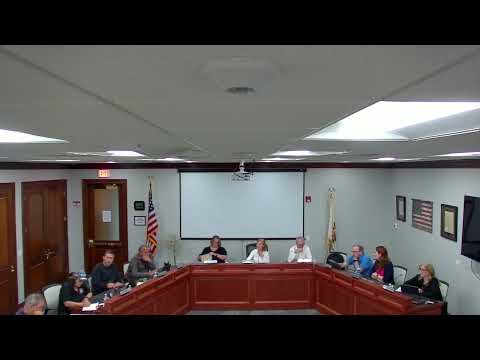
Campton Hills workshop spotlights Route 47 corridor: trustees debate conservation, town‑center language and senior housing
Summary
At a comprehensive-plan workshop trustees and commissioners discussed whether areas northwest of the village along Route 47 should remain agricultural, how to preserve open space, whether to retain "town center" language in the plan, and ways to encourage senior housing and conservation-minded commercial development.
Village planning staff and trustees spent a workshop session reviewing planning-and-zoning minutes and debating how the comprehensive plan should treat the Route 47 corridor, open-space protection, and potential future development.
Planner James began by reading minutes from a Planning and Zoning Commission meeting that said the commission did not want to designate any commercial or mixed-use node along Route 47. James read a line attributing a quote to Commissioner Neil Anderson: "I've been fighting this development and loss of farmland my whole life," and said the commission repeatedly recommended preserving farmland and limiting mixed-use or commercial nodes on the corridor.
Trustees and staff discussed a range of responses. Some urged keeping a firm agriculture/conservation designation for areas northwest of the village; others said the village must balance preservation with being pragmatic about annexation and the landowners' desire to sell. Several trustees urged exploring middle-ground approaches that would preserve open space while allowing forms of development that meet village goals.
Suggestions included expanding the "conservation neighborhood" concept beyond strictly residential uses to apply to potential industrial or commercial development along Route 47, and asking industrial or commercial developers to dedicate a substantial portion of buildable land—speakers suggested targets such as 33%–50%—to permanently protected open space. Trustees also discussed managed aquifer recharge and water-reuse concepts as ways to reduce demand on private wells and to make certain projects more feasible without large municipal water and sewer infrastructure.
Trustees debated the plan's references to a "town center" and denser mixed-use development. Some trustees said earlier plans and outside consultants had proposed a town center, but many meeting participants said the village should remove or soften town-center references from the comprehensive plan: several speakers argued the town-center concept was no longer a community priority and that language inviting denser mixed-use development should be struck or rewritten.
Speakers raised infrastructure constraints and alternatives. Trustee Millet and staff described wastewater and water constraints in the corridor and noted technical solutions—on-site biodigesters, clustered/shared treatment systems, or onsite pre-treatment—could allow certain uses without full sanitary-district connections. Several trustees expressed interest in explicitly encouraging senior housing or senior living options in the plan as a way to meet affordable and aging-in-place goals.
Participants discussed Olson Airport, which a recent purchaser reportedly plans to close; the property spans Route 47 to Kendall Road and was discussed as an example where commercial development facing 47 could be balanced with residential and conservation on the interior side of a parcel. Trustees suggested the village could approach owners of large parcels to negotiate development patterns that preserve open space between commercial frontage and residential areas.
Open-space partnerships and boundary agreements were a recurring theme. Trustees asked whether township open-space organizations could partner across township lines and whether the village should seek expanded boundary‑agreement work with neighboring jurisdictions (Plato Township, Pingree Grove, Hampshire, Elburn). Staff noted legal and statutory limits on township open-space authorities and suggested exploring intergovernmental agreements and county forest-preserve opportunities.
The workshop produced a set of potential edits and follow-ups rather than formal decisions. Staff said they will incorporate trustees' comments—strengthening conservation-neighborhood language for industrial and commercial uses, considering language changes to town-center goals, adding senior-housing goals, and drafting strategy language on boundary agreements and open-space partnerships for the planning area—and return a revised draft.