Lifetime Citizen Portal Access — AI Briefings, Alerts & Unlimited Follows
ECOSOC president: HLPF highlights SDG progress but funding shortfalls and global crises threaten results
Loading...
Summary
Ambassador Ray, president of the UN Economic and Social Council, told a press briefing at UN headquarters that the High-Level Political Forum will take stock of Sustainable Development Goals progress but that COVID-19, armed conflict, climate change and late or missing member-state contributions are impeding results and forcing UN budget cuts.
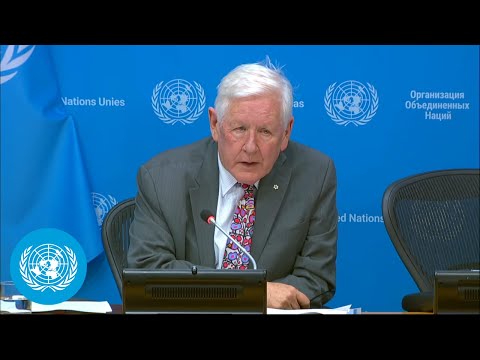
Ambassador Ray, president of the United Nations Economic and Social Council (ECOSOC), told reporters at United Nations Headquarters that the High-Level Political Forum (HLPF) convening in New York is the primary periodic review of progress on the 2030 Agenda for Sustainable Development and will assess where implementation is falling short.
"This is a period in the United Nations calendar, that is really the largest gathering that we have to look specifically at the sustainable development goals," Ambassador Ray said, noting the forum includes member-state statements, ministerial participation in the second week and extensive civil-society engagement.
The forum will include more than 190 side meetings and voluntary national reviews (VNRs), Ray said, adding that "190 out of the 193 members have participated actively in that process, some as many as, 3 times." He framed the meeting as a moment to take stock — "the halfway point" with "5 years to go until 2030" — and to press member states to take ownership of the goals they agreed to pursue.
Ray warned that COVID-19, widespread conflicts and climate change have had substantial negative effects on progress. "We've been impacted by events," he said, and listed the pandemic, a rise in global displacement and rising costs as drivers that have reduced countries' capacity to meet the SDGs.
He also singled out the UN's financing problems as a constraint on progress. "When two of the largest nation states either don't pay their dues or won't pay them on time ... it affects the liquidity of the United Nations," Ray said, calling member-state underpayment a central cause of cuts across UN agencies. He used pointed language to describe delinquent payers: "we have a lot of deadbeat dads in this organization at the moment, member states who do not pay their dues and do not live up to their responsibilities." Ray said agencies are discussing restructuring and resilience measures across New York, Geneva, Vienna and Nairobi.
On the scale of recent budget impacts, Ray told reporters that some agency budgets have fallen from "around 70,000,000,000 to a number that's now in the forties," describing that as "over $25,000,000,000 cut" (figures quoted directly from the briefing). He said the UN cannot borrow or carry funds from one year to the next, which limits institutional flexibility in the face of late or missing contributions.
Ray emphasized member-state responsibility for financing and implementation: "The nations of the world agreed that they, in fact, would accept these goals ... that they would measure, and that they would then do their best to change and shift policies to make it happen." He said further debate over financing and solidarity will be a central theme at HLPF.
Reporters asked a range of follow-ups; Ray closed the briefing by offering to take additional questions offline.
The comments came during an ECOSOC press briefing at UN headquarters convened to preview the two-week HLPF and related side events.