Lifetime Citizen Portal Access — AI Briefings, Alerts & Unlimited Follows
UN chief: UN Charter "not optional" as humanitarian crisis deepens in Gaza; West Bank violence condemned
Loading...
Summary
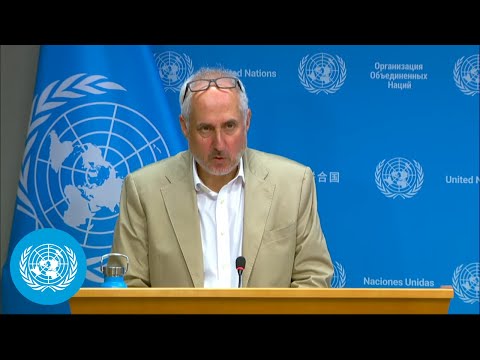
At a United Nations press briefing, the secretary-general and UN officials warned that humanitarian and public-health conditions in Gaza are deteriorating, outlined recent aid deliveries, and condemned violent settler attacks in the West Bank.
Secretary-General António Guterres told attendees at a United Nations press briefing that the UN Charter "is not optional" and warned of mounting assaults on its purposes and principles as the humanitarian situation in Gaza worsens and violence in the West Bank escalates.
Why it matters: Guterres and UN humanitarian partners described large-scale public-health breakdowns, recent mass-casualty incidents and severe restrictions on aid deliveries that the UN says are hampering life-saving operations in Gaza. Separately, UN officials condemned attacks by Israeli settlers in the West Bank and reiterated calls to protect civilians and humanitarian personnel.
Guterres framed the remarks around the UN Charter, calling it "a declaration of hope and the foundation of international cooperation for a better world," and added that upholding its purposes and principles is a "never ending mission." He warned against normalizing violations of the charter and urged member states to "live up to the spirit and letter of the charter."
On Gaza, the Office for the Coordination of Humanitarian Affairs (OCHA) and UN health partners reported continuing civilian casualties from air strikes, shelling and shortages of basic supplies. UN speakers said a mass-casualty incident following a strike in Darabala left Al Aqsa Hospital with more than 20 people dead and about 70 wounded; additional wounded patients were transferred to Nasser Medical Complex and other facilities. UN health partners also reported large outbreaks of preventable diseases: "in just the past two weeks alone, over 19,000 cases of acute watery diarrhea have been recorded," alongside "over 200 cases each of acute jaundice syndrome and bloody diarrhea," the spokesperson said, linking those outbreaks to a lack of clean water, sanitation, fuel and medical supplies.
The World Health Organization (WHO) delivered what the spokesperson described as the "first medical shipment into Gaza since March 2," consisting of nine trucks carrying central medical supplies, approximately 2,000 units of blood and 1,500 units of plasma transported from Karim Shalom and placed in cold storage at Nasser Medical Complex for onward distribution. WHO cautioned that those supplies "are only a drop in the ocean of what is actually needed."
OCHA said humanitarian access is being severely restricted inside Gaza. The spokesperson said that of 17 coordination attempts for humanitarian movements inside Gaza noted yesterday, six were outright rejected by Israeli authorities, nine were facilitated and two were impeded. The UN said those restrictions are undermining life-saving operations and called for increased and diversified routes and crossings to allow sustained deliveries and safe distribution across the Gaza Strip.
Turning to the West Bank, the spokesperson said UN personnel were "gravely concerned about escalating violence" and condemned attacks by Israeli settlers. The briefing named a June attack in which three Palestinians were killed and others injured during a raid on the village of Kafir Malik in the Ramallah governorate, and a separate reported attack in which about 20 settlers set fire to farmland in Asirah al-Qibliya in Nablus governorate. The UN reiterated that international humanitarian and human-rights law must be respected and said those responsible should be held to account.
The spokesperson linked these reports to the secretary-general's broader appeal that member states must not ignore the charter when it is inconvenient. "We cannot and must not normalize violations of its most basic principles," Guterres said, the spokesperson reported.
Ending note: UN officials called for increased humanitarian access and protection of civilians while warning that the collapse of basic services and a failing public-health system in Gaza will drive further suffering unless fuel, water, medical supplies and sanitation items are allowed in and safely distributed.