Lifetime Citizen Portal Access — AI Briefings, Alerts & Unlimited Follows
Holyoke finance committee hears Commission on Disabilities request to use handicap-parking fines under M.G.L. ch. 40, §22G; committee tables proposal for more财政
Loading...
Summary
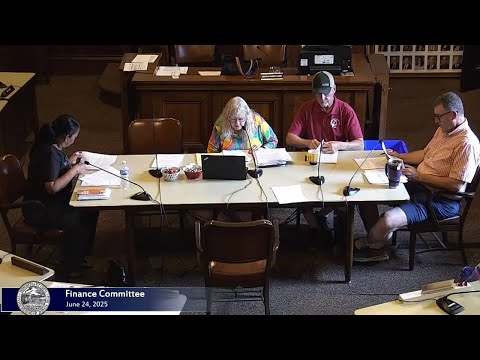
Holyoke Finance Committee members on June 23 heard a multi-hour presentation from the Holyoke Commission on Disabilities and the Massachusetts Office on Disability about Mass. Gen. Laws ch. 40, §22G, which allows municipalities that have adopted §8J to allocate funds from handicap-parking fines to a local Commission on Disabilities.
Holyoke Finance Committee members on June 23 heard a multi-hour presentation from the Holyoke Commission on Disabilities, the Massachusetts Office on Disability and city staff about Mass. Gen. Laws ch. 40, §22G, a statute that authorizes cities and towns that have accepted §8J to allocate funds collected from fines for handicap parking violations to a local Commission on Disabilities.
The Commission on Disabilities, represented by chair Lynn Horan and commission member Marlene Connor, asked the committee to adopt §22G so the commission can hold a separate account for fines and use that money for disability-related projects the commission identifies. Jeffrey Dugan, assistant director for community services at the Massachusetts Office on Disability, told the committee that municipalities that adopt §22G have used the funds for projects including accessible transportation, playgrounds, beach mats, library assistive devices and awareness campaigns.
Why it matters: the commission and commissioners said an independent account would let disabled residents benefit directly from fines tied to misuse of accessible parking. Commissioners noted that Holyoke has not previously established an independent Commission on Disabilities budget or account and that, the commission contended, the city has not systematically used any prior fine revenue for disability programs.
How the law works and the committee’s concerns
Dugan said the statute authorizes municipalities to “allocate all funds” received from fines assessed for violations of handicap parking to the commission, but he told the committee MOD cannot issue binding legal interpretations; local councils and law departments interpret how it operates in their jurisdictions. He said some towns initially split revenues (for example 50/50) and later moved to giving the commission a larger share; other communities give 100%.
Councilors pressed several recurring concerns: (1) accounting and budget mechanics — many councilors asked whether the city must divert gross fine receipts (which currently go into the general fund) before expenses, or whether net revenue after enforcement costs could be allocated; (2) whether such an allocation would “hamstring” the mayor and council’s discretion over the municipal budget; and (3) the unpredictability of fine revenue, which depends on enforcement and collections. Councilor Michael Jourdain and others asked for a full accounting of revenue, expenses tied to parking enforcement and a legal opinion on whether the city may lawfully allocate only a portion of the fines (for example, a percentage after expenses) rather than “all” funds.
The Commission and supporters responded that many municipalities have adopted §22G with no operational problems; Lynn Horan said the commission lacks even a minimal, recurring budget now, cannot reliably provide ASL interpretation or paid virtual access for meetings, and that a dedicated account would allow steady programming and projects (transportation support, classroom assistive devices, accessible playground features). Horan cited a Census figure quoted to the committee that “15.7% of Holyoke residents 65 and older are disabled” (presentation provided to council). Marlene Connor, a commission member who works in transit, emphasized local gaps in accessible ride options and said projected changes to Medicaid nonemergency transportation may increase demand for local services.
Committee action and next steps
Instead of approving language to adopt §22G on the spot, the committee voted to table the matter and asked staff to return with specific information. The committee asked the law department to draft proposed local implementing language (including whether the city may legally limit or fractionate the allocation), the treasurer to provide detailed revenue and expense numbers (gross receipts for handicap-parking fines, ticketing costs and net revenue after enforcement costs), and the law department to opine on whether the city may direct a set percentage or should accept the statute as written. The committee and commission agreed to continue the discussion at a future Finance meeting; the chair said an order accepting the statute could be filed for the August meeting if the requested information and draft language are provided.
Ending
Commission leaders said they will continue to pursue a locally workable solution and offered to negotiate a split or net-after-expenses approach if that is legally and politically feasible. Supporters on the committee reiterated broadly that the council and mayor already have shown willingness to fund disability needs (the mayor proposed $36,000 for the commission this year), but several members insisted a formal legal and financial framework be provided before a vote.