Lifetime Citizen Portal Access — AI Briefings, Alerts & Unlimited Follows
Casino regulators warn executive order to transfer oversight could disrupt license review as IPI bankruptcy proceeds
Loading...
Summary
Members of the Commonwealth Casino Commission told a Senate committee that an executive order transferring casino supervision to the Commonwealth Lottery Commission could delay a pending suitability review of a new operator and weaken local regulatory capacity as IPI's bankruptcy and sale to a bidder proceed.
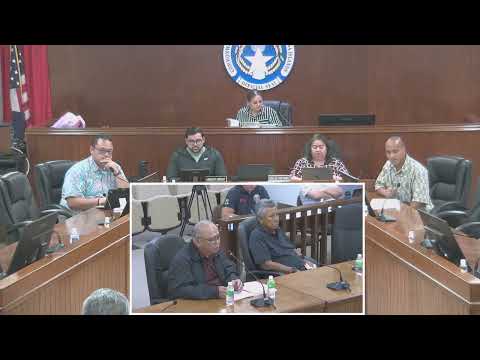
The Commonwealth Casino Commission warned a Senate joint committee that an executive order to transfer supervision of casino gaming from the Casino Commission (CCC) to the Commonwealth Lottery Commission (CLC) could delay a pending suitability review of a proposed new operator and hamstring local regulation.
Commissioner Taitano, appearing before the committee, said the CCC is in the middle of a revocation deliberation tied to IPI’s bankruptcy and that moving oversight now would “delay the timely suitability review of the new casino operator” and “handicap the CNMI’s ability to properly regulate the casino industry.”
The commission described several practical and legal obstacles that, it said, make a fast transfer problematic. The CCC said it has technical teams that test gaming machines to international standards, enforce daily reporting of casino “drop,” audit machine performance and certify hardware and chips. “The casino itself is a 24/7 operation,” Commissioner Taitano told senators, arguing the Lottery Commission’s part‑time membership and coverage of other agencies would not provide the same continuity of on‑site regulatory work.
Committee members pressed the commission on the status of IPI’s bankruptcy proceedings and the winning bidder, identified in court filings as Tim King. The commission said it had been told during the lunch break that IPI (or its bidder) had paid liability insurance and that the insurer notification would be delivered to the bankruptcy court by Friday. The commission described a narrow cash pool — a reported $12.9 million in sale proceeds — compared with roughly $125 million of liabilities that the estate faces, and said that unsecured creditors such as the CCC would be low in priority if distributions proceed on a pro rata basis.
On IPI’s unfinished facility, the commission reported a recent informal estimate that finishing construction could cost between $150 million and $200 million. The commission also said IPI previously documented a commitment of up to $500 million from a group of Japanese banks, of which about $150 million had already been spent; the transcript identifies a remaining $350 million that was described as still available before bankruptcy.
The commission said it began layoffs when its funding ran out and that it has no current employees; it said its outstanding liabilities include office rent that the commission estimated at $10,000 per month for roughly two and a half years and unpaid commissioner compensation. The commission said many former staff members told it they are willing to return if funding and hiring are reestablished.
Law and representation concerns also figured in the discussion. Senators and the commission referenced Public Law 18-56 (the casino law) and the CNMI Constitution when noting that the Casino Commission was created by statute and provides mandated representation for Rota and Tinian. The commission warned that abolishing the CCC under a 60‑day executive‑order timetable would terminate statutory representation from those jurisdictions because the Lottery Commission’s membership structure does not include those seats.
Committee members asked the commission to provide written proposals for legislative changes that could address concerns the governor cited in the executive order, including cost savings and reducing duplicative functions. Several senators encouraged the CCC to begin contingency planning and outreach to the Lottery Commission and to coordinate with the Department of Public Lands and the Attorney General’s office so the Legislature can review a fuller record before it must accept, reject or modify the executive order within the 60‑day window.
On enforcement, Commissioner Taitano said the CCC had already completed a revocation hearing and was in deliberations when bankruptcy proceedings imposed restrictions; she said the commission expects to reconvene revocation deliberations if Chapter 11 protection is dismissed. “Remember that we already completed the revocation hearing. We're in the deliberation phase,” she said.
The committee recorded no legislative action on the executive order during the session. The meeting concluded with a routine motion to adjourn, which the committee carried by voice vote.
Reporting and next steps: senators said they will continue to gather documents (including an Attorney General opinion that the commission said it had not received) and plan follow‑up meetings with the Lottery Commission, the Department of Public Lands and the Attorney General’s office to clarify leasehold, insurance and distribution questions in the bankruptcy docket.