Get Full Government Meeting Transcripts, Videos, & Alerts Forever!
Get email alerts on the Inmate Health Medical Contracts topic
No spam. Unsubscribe anytime.
DOC's health contract with Unity described as expanded and central; department reports over 500 people on MAT program
Summary
Department of Corrections officials told the Committee on Judiciary and Public Safety on June 11 that the newly renegotiated Unity contract covers comprehensive medical and behavioral services, with enhancements including dental and 24-hour sick call; DOC said more than 500 residents are on medically assisted treatment (MAT).
Department of Corrections leadership described an expanded health-services contract and the department's use of medically assisted treatment during the June 11 budget hearing.
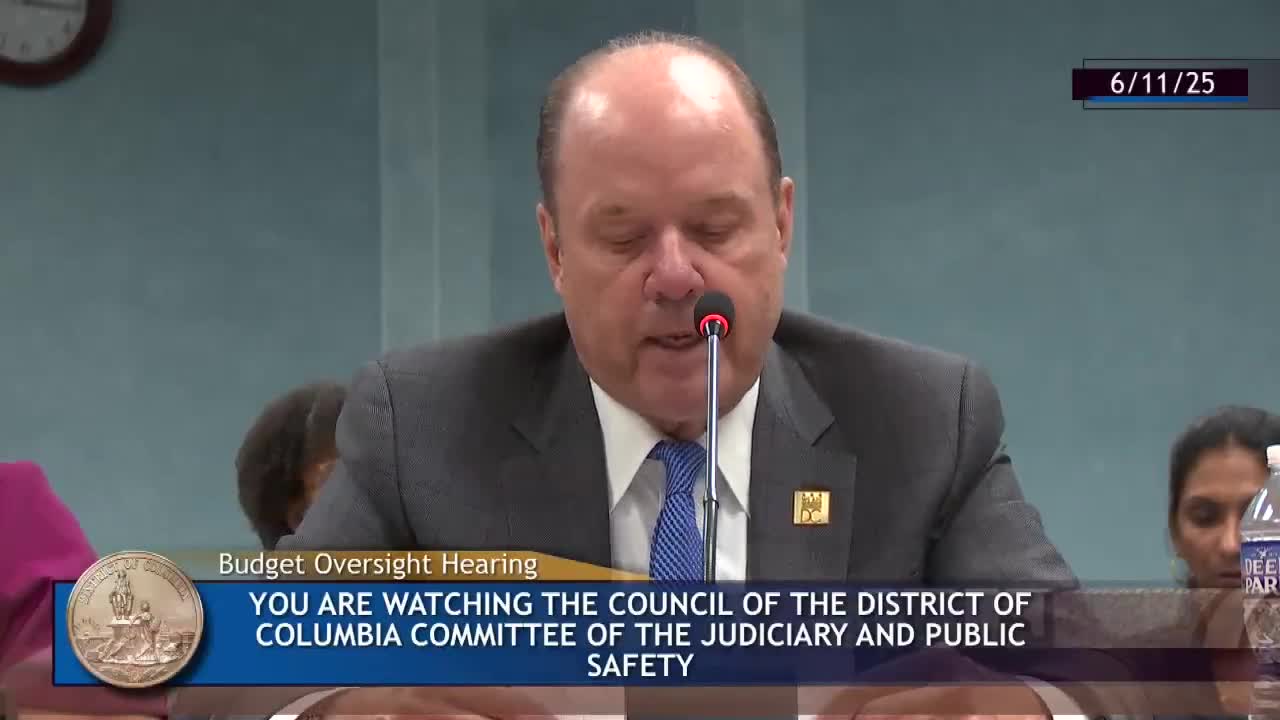
Director Tom Faust said the department's new contract with Unity Health services is "for all the medical services, dental, the whole range of medical services, mental health, everything" and stated the total value of the Unity contract is about $50,000,000. Deputy officials described specific enhancements: a more comprehensive dental program, 24-hour sick-call response established during the pandemic now included in the contract, continued and expanded MAT services and further behavioral health support.
Faust and his deputies told the committee the DOC has more than 500 residents on MAT, describing the program as among the largest in the city and saying the department has worked with the Department of Behavioral Health (DBH) to tighten post-release tracking. DOC said DBH funds a new position under SOAR grant funding to collect GPRA tracking metrics that will support continuity of care after release.
Why it matters: Health services and MAT affect overdose prevention, continuity of care after release and medical needs in custody. Dental and chronic-care capacity were specifically raised as areas of expanded service that DOC sees as important for the changing clinical profile of residents.
What remains unresolved: Committee members asked how the department and Unity track outcomes after release and whether MAT medications have been diverted in custody; DOC said medications are subject to watch-take protocols, strict controls, and programmatic accounting and that Unity and DBH coordinate follow-up tracking.