Get Full Government Meeting Transcripts, Videos, & Alerts Forever!
Get email alerts on the Haiti Crisis Response topic
No spam. Unsubscribe anytime.
UN, Haitian SRSG and donors call for paired security, development and funding response as Haiti crisis deepens
Summary
Officials at a joint ECOSOC–Peacebuilding Commission briefing said Haiti’s security, displacement and humanitarian needs have worsened, urged faster deployment and funding for the multinational security support (MSS) mission, and emphasized community violence reduction, disarmament and reintegration alongside security operations.
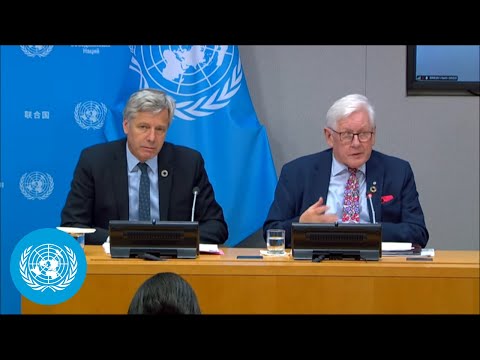
A joint Economic and Social Council–Peacebuilding Commission briefing on Haiti on Tuesday brought United Nations officials, the Haitian Special Representative of the Secretary‑General and donor representatives together to press for faster deployment, clearer funding and parallel peacebuilding efforts as violence and displacement increase.
Ambassador Ray, speaking at the ECOSOC–Peacebuilding Commission briefing, said the crisis in Haiti has deepened and that “without development, we have no security” and “we now have 1,300,000 who are officially labeled as internally displaced within Haiti.”
The briefing, which included Thomas Piste Jensen, Chargé d’affaires ad interim of the Mission of Germany to the United Nations representing the Peacebuilding Commission chair, and Maria Isabel Salvador, Special Representative of the Secretary‑General (SRSG) in Port‑au‑Prince, focused on how to pair security efforts with development, human rights and community programs. Jensen described the Peacebuilding Commission’s role and its Peacebuilding Fund as a “substantial instrument” that works with host countries on social cohesion, community violence reduction, disarmament, demobilization and reintegration (DDR), governance and rule of law.
Salvador, joining from Port‑au‑Prince, said the crisis is “multifactorial” and urged the international community to match “the scale, urgency, and the complexity of the challenge.” She stressed locally led community violence reduction and said, “Peace education is foundational to sustainable security in Haiti,” calling for strong participation of women and youth in those programs.
Officials described the multinational security support (MSS) force as present on the ground but incompletely deployed because of logistical and funding constraints. Ambassador Ray and Salvador said the MSS has made some local progress while noting it has not yet reversed gang territorial expansion. “We only have what member states will give us,” Ray said, urging more bilateral and multilateral contributions to the MSS trust fund and to humanitarian and development programs.
Reporters at the briefing cited recent humanitarian figures and operational gaps. Ray and Salvador referenced an updated humanitarian needs assessment: less than 9% of the year’s humanitarian response plan is funded, and displacement has grown from hundreds of thousands to about 1.3 million people. Ray quoted a meeting with a young Haitian who asked, “Why is it easier for a young person in Haiti to get a gun than it is to get a daily meal?” as a way to underscore the interlinked nature of security and development problems.
Participants discussed options beyond a traditional UN peacekeeping operation. The Secretary‑General’s proposal, speakers said, does not rule out a future transition to a UN peacekeeping mission but states that such a transition is “not assessed as a feasible option” at present and would only be considered after “significant progress” in reducing gang control and after a fully staffed, funded and equipped MSS has achieved its mandated tasks. Salvador summarized that position and emphasized that security responses must run in parallel with community violence reduction (CVR) and DDR initiatives.
Donor representation and funding were recurring themes. Jensen credited Germany’s early financial support for the Peacebuilding Fund portfolio in Haiti and said the Commission aims to connect Haiti with international financial institutions, including the Inter‑American Development Bank, to scale up response efforts. Speakers said the Peacebuilding Fund and other trust funds can continue short‑term support but will need sustained replenishment from member states to remain effective.
Journalists at the briefing pressed whether solutions outside the Security Council—hybrid arrangements, bilateral contributions, or regional mechanisms—could accelerate results. Ray and Jensen said diplomats are pursuing bilateral and regional discussions with countries including the United States, the United Kingdom, European states, African partners and regional organizations such as the Organization of American States to increase troop, equipment and financial support. Salvador noted public endorsements from several countries and regional actors for the Secretary‑General’s options discussed in the Security Council earlier in the year.
Speakers repeatedly said security alone is insufficient. Salvador and others recommended a whole‑of‑society approach that prioritizes community resources, economic recovery, and programs to remove children and young people from recruitment pathways. Salvador argued that peace education and women’s and youth participation are central to long‑term stability.
On funding, Ray warned that the United Nations cannot act without member‑state contributions: “Strategy without resources is better called hallucination,” he said, and added that while the trust fund currently has usable resources, it cannot sustain long‑term operations without fresh contributions. Officials cautioned that cuts by major donors would materially reduce the UN’s ability to sustain security, humanitarian and development efforts in Haiti.
The briefing concluded with organizers pointing to an afternoon conference to hear further ground‑level perspectives and to discussions intended to translate the briefing’s conclusions into concrete requests for member‑state support and coordination with regional actors.