Lifetime Citizen Portal Access — AI Briefings, Alerts & Unlimited Follows
Advocates and residents tell committee language barriers and fear of requesting interpretation limit access to services
Loading...
Summary
At a Committee on Public Works and Operations hearing on June 10, multiple community witnesses described a pattern of language‑access barriers at shelters and city services and urged the council to maintain or increase funding for enforcement of the District's Language Access Act.
At a Committee on Public Works and Operations hearing on June 10, multiple community witnesses described a pattern of language‑access barriers at shelters and city services and urged the council to maintain or increase funding for enforcement of the District's Language Access Act.
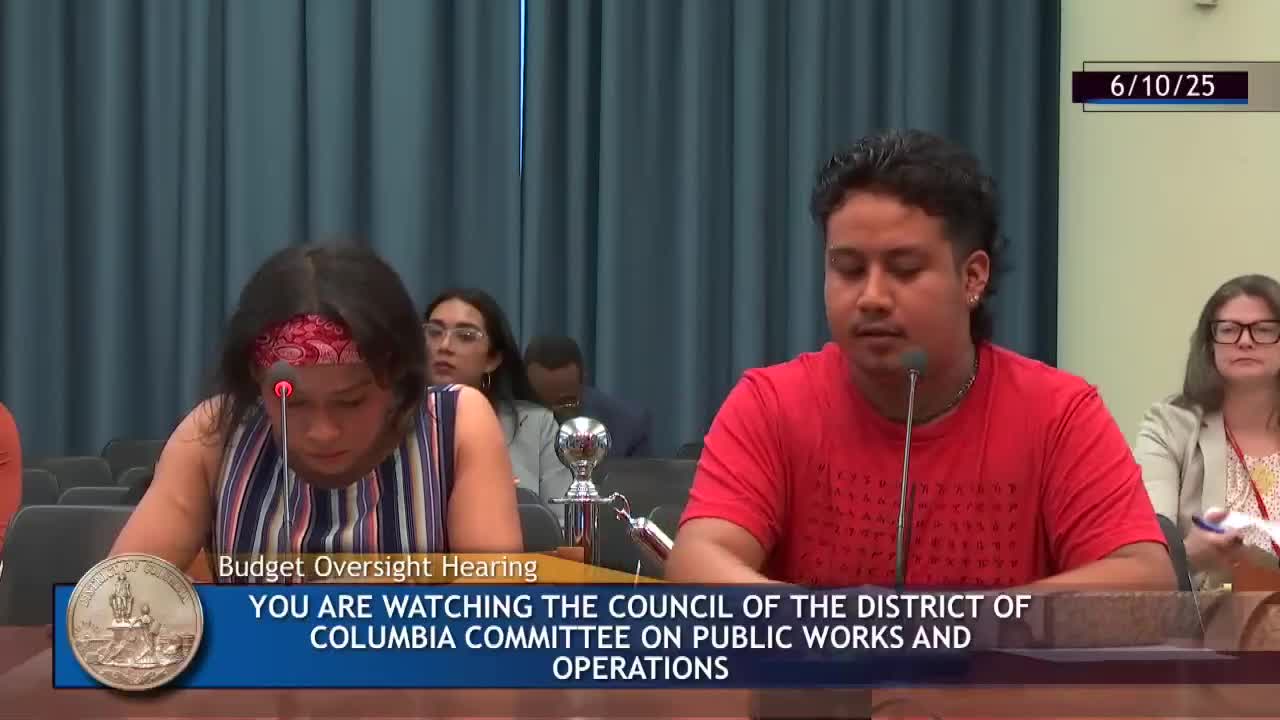
Valeria Hernandez, whose testimony was delivered through a translator, described housing and shelter experiences in the District that she said were marked by language barriers and stigma. “Even in the places designed to be safe for her, she'd never felt welcomed,” the translator relayed about Hernandez's experience at youth and adult LGBTQ‑affiliated shelters.
Nicky (first name given in testimony), a 25‑year‑old immigrant from Guinea, said he encountered religious and language obstacles while in shelter and described staff interactions that left him feeling demeaned. Andres Meza, a bilingual street outreach worker at SMILE, testified that his team has reached about 200 unhoused LGBTQ and limited‑English‑proficient people this year and recounted repeated denials of front‑line services because of language barriers.
“Creating an amendment where fines are paid to the victims will only create that empowerment I'm speaking of,” Meza said when describing proposed changes to language access enforcement that would direct monetary penalties to impacted individuals.
Nancy Leon, director of advocacy at Many Languages 1 Voice and leader of the DC Language Access Coalition, urged the committee to preserve current OHR funding for language access and to pursue amendments that bring stronger accountability for agencies with repeated violations. "Language access is fundamental to having the best city in the world," she said.
Several witnesses and the Office of Human Rights described the agency's current language‑access work: OHR distributes Know‑Your‑Rights and "I Speak" cards, conducts trainings, and has handled thousands of language‑access interactions through outreach. Staff told the committee they distributed about 4,975 multilingual I Speak cards and participated in roughly 49 community events to share information on language access.
Advocates said recent political actions, including an executive order around English as an official language, have created a climate of fear that deters residents from asking for interpretation. Leon told the committee that residents now sometimes fear requesting services or worry they could be fined for speaking their native language.
Committee members asked witnesses and agency staff to provide follow‑up details and written testimony; the committee closed the record on June 24 for additional submissions.
Ending: Advocates asked the council to preserve OHR language‑access funding and to work with community groups on statutory amendments to strengthen enforcement and ensure fines or corrective remedies produce direct relief for people who face repeated denials of interpretive services.