Lifetime Citizen Portal Access — AI Briefings, Alerts & Unlimited Follows
DC Health warns federal funding uncertainty could shrink critical programs in FY26 budget
Loading...
Summary
DC Health Director Ayanna Bennett told the Council’s Committee on Health that while the mayor proposed increased local investments for FY26, more than 60% of DC Health’s budget depends on federal grants and the agency cannot yet account for possible federal reductions.
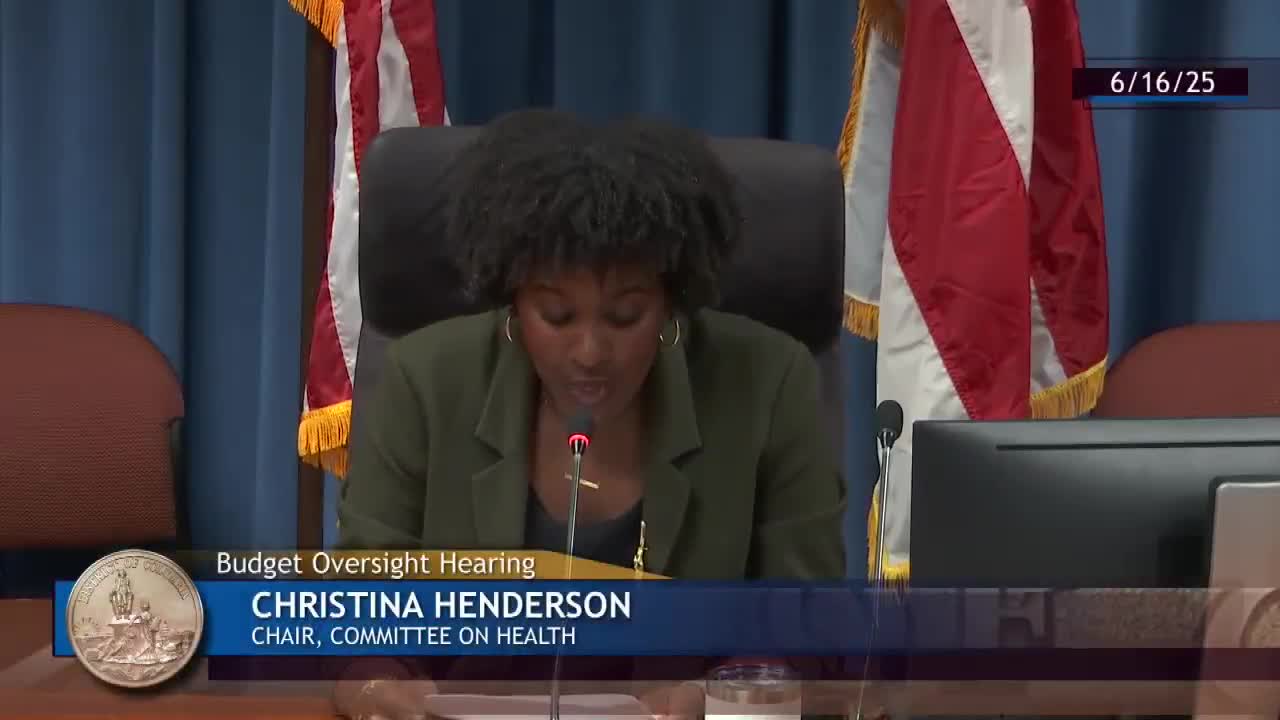
Chair Christina Henderson opened the Committee on Health’s June 16 oversight hearing for DC Health’s FY26 budget and said the committee would consider the agency’s budget chapter and public testimony recorded earlier in June.
“DC Health provides programs and services with the ultimate goal of reducing the burden of disease and improving opportunities for health and well-being for all district residents and visitors,” Director Ayanna Bennett told the committee in her opening statement. She thanked Mayor Muriel Bowser for prioritizing public health in the Grow DC FY26 proposal but emphasized uncertainty around federal grant funding.
Why it matters: DC Health relies on federal grants for roughly 60% of its budget, Bennett said, and pending federal decisions could affect HIV/AIDS prevention and treatment, food-access programs, chronic disease care, vaccine access, workforce supports and epidemiology and surveillance.
Bennett described agency reorganizations and program changes that the FY26 budget would support, including creating an Environmental Health Administration and a Health Systems and Preparedness Administration. She told the committee the reorganization is intended to “work with residents and stakeholders to build programs and approaches that protect the health of DC residents and visitors,” particularly on indoor habitability, extreme weather response and aligning licensing and preparedness functions.
The director also noted operational changes the agency expects to implement in FY26: a staggered renewal timeline for health professional licenses, a new endorsement pathway for nurses holding multistate licenses, the transition of school health services from a contractor to DC Health staff, and expanded IT investments intended to streamline customer-facing services such as birth records.
Bennett stressed planning challenges. “All of this work, it assumes that DC Health budget will contain the funding required to do these activities,” she said. “With DC Health relying on funding from the Department of Health and Human Services for over 60% of our budget, any changes to funding for HIV/AIDS prevention, food access programs, chronic disease care, vaccination access, healthcare workforce programs, or epidemiology and surveillance will impact us significantly.”
Committee members pressed for details about which federal streams were most at risk and how the agency would prioritize local funds if federal support fell short. The committee also asked for rapid follow-ups on a number of program-level line items during the markup scheduled later in June.
Ending: Committee Chair Henderson closed by reminding the public the record remained open for written testimony through June 23 and set a June 23 markup for the committee’s FY26 recommendations.