Lifetime Citizen Portal Access — AI Briefings, Alerts & Unlimited Follows
Health, education and recreation agencies back consolidating childhood‑obesity rules into education reform bill with caveats
Loading...
Summary
At a public hearing on Project 148, health, education, recreation, nutrition and psychology stakeholders largely supported consolidating obesity-related statutes into the education reform law, while urging inclusion of the Nutrition Commission, stronger monitoring, funding clarity, anti‑stigma safeguards and interagency coordination.
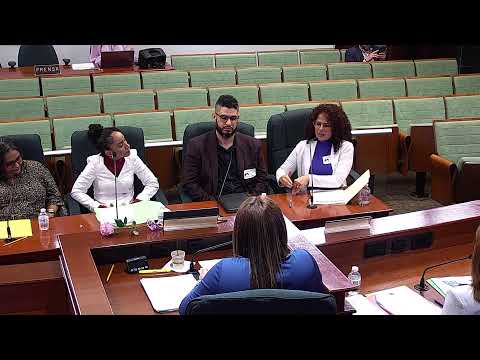
A legislative public hearing on March 7 in the House of Representatives examined Project de la Cámara 148, which would add an article to Law 85‑2018 (the education reform law) to consolidate the island’s statutes and public policy on childhood obesity prevention, nutritional guidance and school‑health protocols.
Representatives, the Department of Health, the Department of Education, the Department of Recreation and Sports, the Commission of Nutrition and several professional associations and civil‑society witnesses testified. Most witnesses told the Commission of Education they support consolidation and clearer interagency coordination but warned that removing earlier laws without explicitly preserving key bodies or protocols could create gaps.
Victor Ramos, secretary of health, said the measure’s aims are sound but urged that monitoring be robust and recurring. He told the commission that data collection should be repeated throughout the school year to accurately measure progress rather than relying on a single point in time.
Luz Rodríguez, executive director of the Puerto Rico Commission of Alimentación y Nutrición, described a body that already has a multi‑year Plan of Action and urged that the bill explicitly include the commission’s participation. “La Tanita es un equipo… que se puede obtener información más profunda… cuánto peso… en agua, en músculo y en grasa,” she said when describing measurement tools; she added that a unit can cost “desde aproximadamente los setecientos [dólares],” while program implementers elsewhere in the hearing estimated lower prices for other equipment.
The Department of Education said its school‑health, nursing and physical education programs already coordinate preventive activities—health fairs, clinical evaluations and teacher training—and that consolidating obligations into one article could produce a more coherent policy. Michelle Tirado, operations manager for the school health program, said the department is running a federal pilot, “Vida Activa Salud Integral,” that supplies Tanita units to one school per educational region and provides curricula on prevention of chronic disease and healthy lifestyles.
Recreation and Sports urged a socioecological, cross‑sector approach and highlighted training for municipal leaders and coaches, while the Association of Psychology of Puerto Rico recommended a biopsychosocial framework to avoid stigma and to integrate mental‑health indicators—including self‑esteem and bullying—into monitoring.
Witnesses identified practical implementation issues: equipment procurement and calibration, the cadence and responsibility for measurements, funding sources to train and pay staff, and safeguarding student privacy. Félix González Crespo, manager of operations for physical education, said the education program is receiving physical‑fitness kits and measuring implements through a pandemic-era federal grant that will reach schools; he also noted differences in equipment cost and calibration standards and argued for consistent, validated measurement tools across schools.
Several legislators pressed the panel on specific implementation details: how often to measure body‑mass index, who communicates results to parents, how to protect students with medical conditions, and how to reconcile school food menus with local dietary preferences. Panelists agreed that pediatricians routinely measure weight and height at clinical visits and that schools should coordinate with families and health providers for any follow‑up.
The Commission on Nutrition and witnesses asked that the commission explicitly include the advisory Commission of Alimentación y Nutrición and preserve its surveillance role; Department of Health testimony noted that Law 157‑2019 amended prior statutes and that the commission should remain part of the statutory structure.
The department of education and other agencies agreed to provide additional data requested by the commission—such as how many students currently receive medically prescribed special diets—and the Department of Recreation and Sports was asked to supply counts of physical‑education teachers. Committee members also suggested asking the Office of Legislative Budget for a fiscal estimate to identify sustainable funding sources for training and equipment.
Ending: The hearing closed with broad interagency agreement on the bill’s goals but clear directives to include the Nutrition Commission, define funding and monitoring mechanisms, adopt anti‑stigma language and specify which agencies and professionals are responsible for measurement, communication and follow‑up.