Lifetime Citizen Portal Access — AI Briefings, Alerts & Unlimited Follows
House passes jobs, labor and economic development budget (Senate File 17) after debate on paid leave, childcare and small-business mandates
Loading...
Summary
The Minnesota House passed Senate File 17, a biennial jobs, labor and economic development budget bill, by a roll-call vote of 96–37 on a motion to suspend the rules and place the bill on its final passage.
The Minnesota House passed Senate File 17, a biennial jobs, labor and economic development budget bill, by a roll-call vote of 96–37 on a motion to suspend the rules and place the bill on its final passage.
The bill “funds the Department of Employment and Economic Development, Department of Labor and Industry, Explore Minnesota, the Film Board [and] Bureau of Mediation Services,” Representative Dave Pinto said while explaining the measure on the House floor. Pinto added the bill contains provisions intended to strengthen protections for workers and employers and to fund workforce programs, apprenticeships and other initiatives.
Why it matters: The bill packages funding and policy changes that affect state workforce programs, employer mandates and early-childhood care providers across Minnesota. Lawmakers debated how new mandates interact with existing collective-bargaining agreements, how paid family and medical leave will be implemented, and whether small businesses should receive exemptions from earned sick and safe time requirements.
Discussion highlights
Representative Niska opened the procedural motion to suspend the rules so Senate File 17 could receive its third reading and final passage. Representative Schultz offered an amendment (A1) intended to provide mandate relief for small businesses — including exempting businesses with four or fewer employees (and farms with five or fewer) from earned sick and safe time and clarifying interaction with public employer bargaining — but withdrew that amendment on the floor. “So at this time, madam speaker, I’m going to withdraw the a 1 amendment,” Schultz said.
Supporters emphasized worker protections and new workforce programs. Representative Greenman said the bill “fights for the economic security and the time, the economic autonomy for workers,” and pointed to the statute establishing earned safe and sick time and the pending paid family and medical leave program. Representative Mueller and Representative Frasier (Frazier) highlighted a teacher-apprenticeship provision, saying the bill adds a registered apprenticeship pathway for educators modeled on programs adopted in other states.
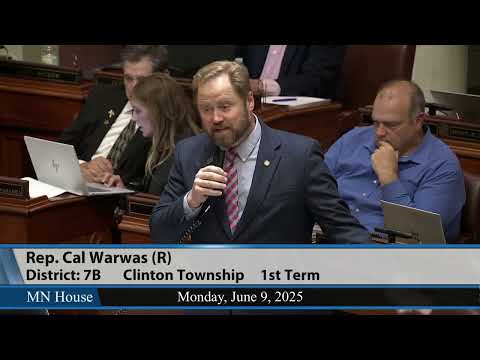
Several members stressed provisions targeted to specific regional needs. Representatives Warwas and Igoe credited bipartisan efforts to include an unemployment insurance extension for miners in the Iron Range after layoffs at regional employers, saying the measure will provide temporary relief for affected workers. Representative Zalesnikar noted a $1 million child-care allocation in the bill, with scholarships or CCAP grants of up to $5,000 available to some early-learning providers and families; she said one-quarter of that funding is directed to northeastern Minnesota.
Concerns and outstanding issues
Opponents and some members on the Republican side questioned the aggregate cost and the timing of rule-making. Representative Trey Baker, a small-business owner and cochair of the committee, repeatedly said the Legislature did not do enough to help businesses and warned the implementation timeline for paid family and medical leave creates uncertainty: “Do you know Department of Economic Development hasn’t even finished making the rules yet, and this is gonna start in 6 months?” Baker said.
Baker and others also raised the noncompete issue and broader competitiveness concerns for Minnesota employers, cautioning that some companies may relocate functions out of state. Several speakers warned that public employers and school districts will need to reconcile new mandates with existing collective-bargaining agreements.
Formal actions and votes
- Procedural motion to suspend the rules and give Senate File 17 its third reading and place it on final passage. Mover: Representative Niska. The motion prevailed and the clerk read Senate File 17.
- Amendment A1 (mover: Representative Schultz) was introduced to mirror language in Senate File 2300 and to exempt very small employers and certain farms from earned sick and safe time; the amendment was withdrawn by the mover and therefore not adopted.
- Final passage of Senate File 17 (biennial jobs, labor and economic development budget): The roll call closed at 96 ayes and 37 nays; the bill passed and its title was agreed to.
Outcomes and next steps
With passage, the bill moves forward consistent with the Legislature’s process; members noted that implementing the paid family and medical leave program and some other provisions will require administrative rulemaking and further work between sessions. Lawmakers cited upcoming conversations about how the new mandates will interact with collective-bargaining agreements and signaled continued attention to child-care viability and employer competitiveness.
Key quotes
- “This is the jobs, labor, and economic development bill… I urge members to support it,” Representative Niska said when moving the motion to suspend the rules.
- “What I’m most proud of is the work that we did to fight for the economic security and the time the economic autonomy for workers,” Representative Greenman said in urging support for the bill.
- “So at this time, madam speaker, I’m going to withdraw the a 1 amendment,” Representative Schultz said after introducing the mandate-relief amendment.
- “Do you know Department of Economic Development hasn’t even finished making the rules yet, and this is gonna start in 6 months?” Representative Trey Baker warned, urging further work on implementation timelines.
Ending
House members approved a broad jobs-and-labor budget package after floor debate over worker protections, small-business relief and supports for child-care and regional unemployment needs. The bill’s implementation will depend on agency rulemaking and further legislative attention to how new state mandates intersect with local collective-bargaining agreements and the operations of small employers.