Lifetime Citizen Portal Access — AI Briefings, Alerts & Unlimited Follows
Minnesota leaders set special session for Monday to finish budget; highlight bonding, data‑center package, health coverage and transportation changes
Loading...
Summary
Legislative leaders said a special session will begin 10 a.m. Monday to finalize a bipartisan budget agreement that includes a $700 million bonding bill, a data‑center tax package, a standalone bill to end certain health coverage for undocumented adults, and a change to how metro sales tax is shared with counties.
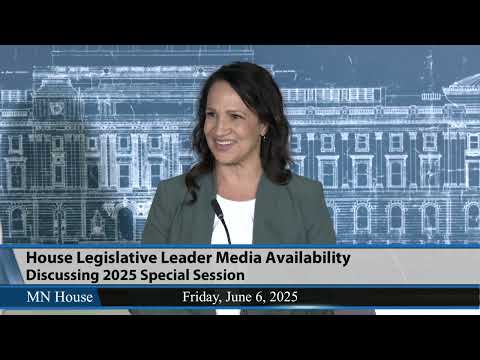
Legislative leaders said a special session of the Minnesota Legislature will begin at 10 a.m. Monday to finalize a budget agreement that leaders negotiated with the governor and caucus leaders. The leaders said the package will include a roughly $700 million bonding bill, a data‑center tax and regulation package, a standalone bill to end state health coverage for undocumented adults age 18 and older, and transportation‑funding changes that reduce counties’ share of the metro sales tax from the 2023 arrangement.
The announcement came during a leadership press conference in which the speakers said several draft bills were still being completed and posted. Leaders said the public will have an opportunity to view bill language and join public hearings before the bills are taken up on the floor, and that some elements of the agreement were finalized late the previous night.
Why it matters: the package ties multiple high‑profile policy changes to the budget process. Leaders said the agreement balances priorities across parties while addressing an anticipated general‑fund shortfall in later fiscal years; the measures would change tax treatment for data centers, alter regional transportation revenue sharing, and remove coverage for a group of uninsured adults in state programs unless the bills are revised before enactment.
Data‑center package Leaders said the data‑center measure negotiated as part of the agreement would change the current tax exemptions for data centers. Under existing law, new data centers receive exemptions for software, hardware and electricity for 20 years or until 2042, whichever is earlier. The negotiated language would extend the time period to 35 years or until 2042, whichever is later, while phasing out the electricity exemption after the special session bills are signed. Leaders also said the package includes a set of environmental and energy “guardrails” developed by a working group. The working group and data‑center coalition were cited repeatedly as participants in the drafting process.
Bonding bill Leaders said the bonding bill agreed in principle is about $700,000,000. They said the leaders’ spreadsheet being finalized would direct just over $250,000,000 toward roads and wastewater projects. Leaders described the bill as a modest, bipartisan list of basic infrastructure priorities rather than a package focused on nonprofit or special‑interest projects.
Health coverage for undocumented adults and contingency language Leaders said the agreement includes a standalone bill that would end state insurance coverage for undocumented adults age 18 and older. They described a contingency mechanism embedded in the health‑finance language: funding for the Department of Health in the health bill would be made contingent on enactment of the standalone repeal. Leaders said that contingency was included to provide additional assurance to caucuses that the broader budget would only take effect if the separate measure became law.
Transportation funding and county shares Leaders acknowledged concern from county officials about a change to how revenue from the metro‑area sales tax will be distributed. They said the 2023 deal had given counties 17 percent of that new revenue; under the new agreement counties would receive 8.5 percent. Leaders defended the change as a response to an anticipated general‑fund shortfall in later fiscal years and said counties still receive more revenue than before 2023, though less than had been planned under the earlier arrangement. Leaders said hearings were under way in the Senate and that any amendments to posted bills would require agreement from all four leaders and the governor.
Earned sick and safe time, paid family leave and taxes Leaders said the special‑session package will include changes to the state’s earned sick and safe time law that were negotiated in the Senate. Reported adjustments include shortening the period before an employer may request documentation from three days to two and adding limited language to help manage shift work and year‑end calculations; leaders said the exact statutory sections correspond to provisions in a Senate bill (Senate file 2300, second engrossment) and that specific sections on notice, documentation and replacement workers would be included. On paid family medical leave, leaders said they were not able to secure “meaningful changes” and that the only business relief in the agreement was an adjustment to the tax cap in the previously negotiated GRAMA agreement (moving a cap from 1.2 to 1.1 as described by leaders).
Process, transparency and procedures Reporters asked whether the public and local officials had been given sufficient notice of late changes. Leaders acknowledged the process is opaque at times, said many provisions had been debated in committees earlier in the session and described current work as “public walk‑throughs” by working groups before floor action. Leaders said they will try to post draft language and spreadsheets and provide links to hearings. They also said leadership had agreed informally to discourage floor amendments that would disrupt the package but acknowledged members retain the constitutional right to offer amendments.
Layoff notices and schedule Leaders said there are layoff notices tied to the budget that were scheduled to go out but that discussions with unions may allow officials to delay notifying employees until as late as 7 a.m. Tuesday if the Legislature finishes its work by that time. Leaders said the plan is to convene at 10 a.m. Monday and proceed through the bills, with periodic precaucusing as needed.
What’s next Leaders said three drafts remained to be posted — a final health bill, a data‑center bill and the bonding bill spreadsheet — and that staff revisers would complete drafting once the spreadsheets are finalized. They said hearings and links to bill language will be posted as available. Leaders emphasized the primary goal of the special session is to fund state government and keep state operations running.
Ending Leaders said some legislators and interest groups remain unhappy with parts of the package, and that the compromises were driven by narrow vote margins and an effort to produce a bipartisan result. Final votes and any amendments will be recorded when the special session convenes on Monday.