Lifetime Citizen Portal Access — AI Briefings, Alerts & Unlimited Follows
Nurses and union say St. Elizabeth's Hospital staff face daily assaults, call for more security and supplies
Loading...
Summary
Nurses, union leaders and clinicians testified that St. Elizabeth's Hospital has an escalating level of violence and lacks adequate security, staffing and supplies as forensic admissions rise. They urged the Council to require safety investments and to scrutinize recent DBH staffing and budget changes.
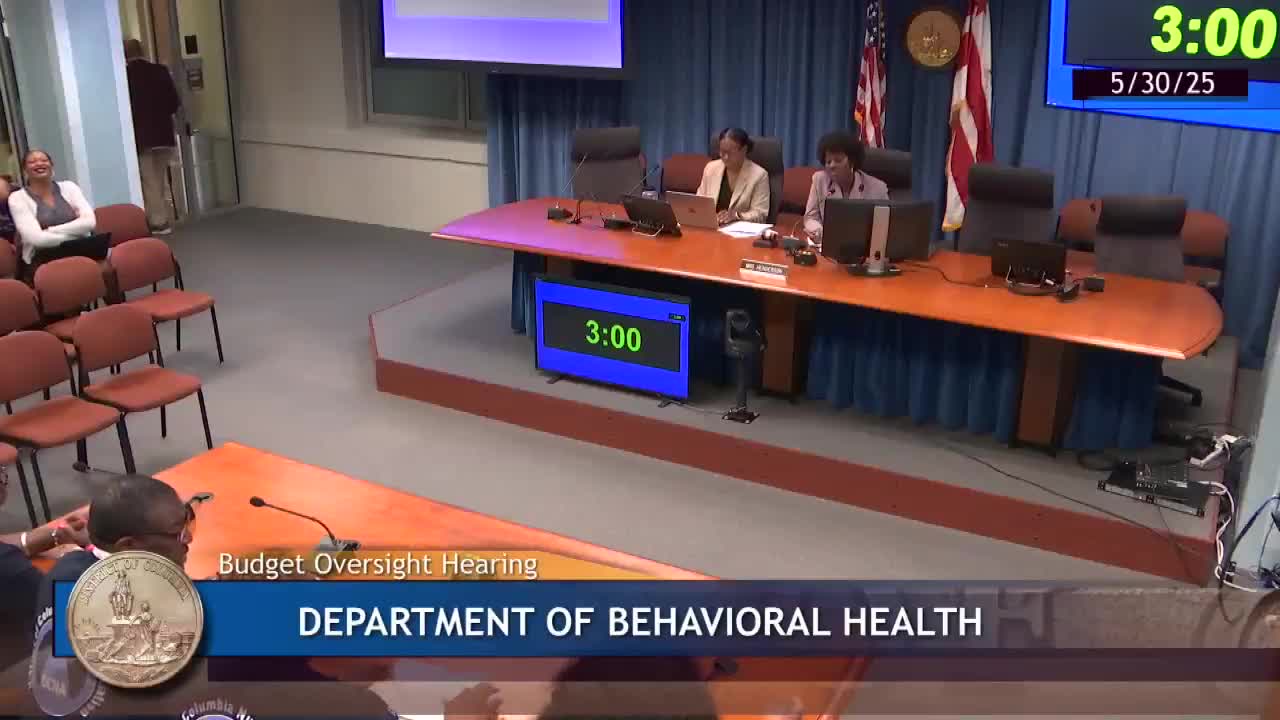
Nurses, union leaders and frontline clinicians told the Committee on Health on May 30 that St. Elizabeth's Hospital is experiencing frequent, severe workplace assaults and material shortages and that the hospital’s staffing and security posture has not kept pace with a growing forensic population.
Nancy Boyd, president of the District of Columbia Nurses Association and a nurse educator at St. Elizabeth’s, said the hospital now averages “37 physical assaults each month — more than one assault every single day on our staff or the individuals in our care.” Boyd and other union witnesses described an increase in forensic patients admitted to the hospital and said management has not provided consistent, operational responses to recurrent violence.
“There's a lack of substantial action to address this escalating violence,” Boyd said. The union urged immediate investments including “increased security presence…a minimum of officers to be available in every unit 24/7,” installation of promised jail‑style phones, walkie‑talkies, reinforced ceiling‑to‑ceiling nursing stations and stronger entry and exit doors.
Darryl Stewart, vice president of the District of Columbia Nurses Association and a nurse practitioner, said frontline staff face “an explosive environment” partly because forensic (court‑related) admissions have overtaken civil admissions. “The alarming 5 to 1 ratio of pretrial admissions from the District of Columbia Central Detention Facility compared to civil admissions” contributes to higher acuity, Stewart said, and he described shortages of basic supplies and delays in equipment and durable medical goods.
Multiple nurses described units with a single way in and one way out, inadequate security coverage and long delays in obtaining needed supplies. Nicole Shefa, a registered nurse at St. Elizabeth’s, said her unit had reduced its census to protect other patients because one individual in care was “so violent that administration decided to remove all the other patients from the unit…not to protect us.” Nurses described staff injuries requiring surgery, long return‑to‑work gaps, and underreporting in administrative summaries of assaults.
Union witnesses also questioned whether budget and administrative decisions were connected to the operational shortfalls. Justin Palmer of the District of Columbia Hospital Association, testifying earlier, supported a $9 million overtime enhancement at St. Elizabeth’s while urging the Council to ensure that proposed cuts — including a $2.4 million reduction in clinical medical services and a $4.4 million reduction in nursing services — do not reduce the hospital’s ability to care for patients. The committee was told that the mayor’s proposed budget contains line changes described by witnesses as reductions to housekeeping, nursing and nutrition services.
Union members sought greater transparency about how funds are allocated within St. Elizabeth's and requested management include frontline clinical staff and nurses in decision‑making on supplies, security, and procurement. They also asked the Council to consider hazard pay and stronger enforcement of staffing ratios and to demand that DBH and hospital leadership present a clear plan to address rising forensic admissions and unit safety.
Ending: Committee Chair Christina Henderson acknowledged the testimony and said staff would follow up with DBH and St. Elizabeth’s leadership. No formal action was taken at the hearing; witnesses asked the committee to request more detailed incident data and a plan to address staffing, security and supply chain problems.