Lifetime Citizen Portal Access — AI Briefings, Alerts & Unlimited Follows
Nonprofits and seniors urge restoration of proposed cuts to D.C. aging services at EAL budget hearing
Loading...
Summary
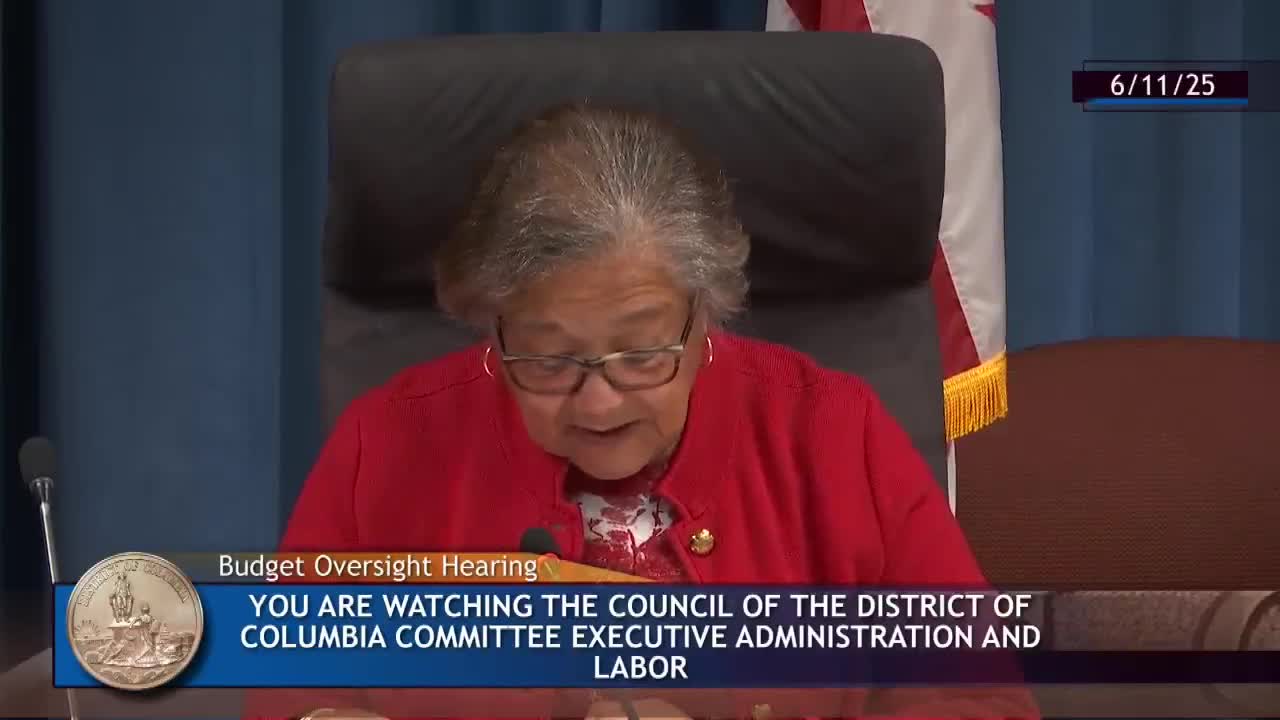
The Committee on Executive Administration and Labor, chaired by At-Large Councilmember Anita Bonds, heard more than two dozen witnesses on June 11, 2025, urging the council to restore proposed FY26 reductions to the Department on Aging and Community Living, warning the cuts would harm transportation, caregiver supports, legal help and neighborhood senior services.
The Committee on Executive Administration and Labor, chaired by At-Large Councilmember Anita Bonds, heard more than two dozen witnesses on June 11, 2025, urging the council to restore proposed reductions to the District’s Department on Aging and Community Living (DACL) budget for fiscal 2026.
Witnesses from senior centers, nonprofit providers and advocacy groups told the committee that the mayor’s FY26 proposal—cited in the hearing as $62,200,000 and 122 FTEs, reflecting a roughly 4.32% reduction—would translate to cuts in services that many seniors depend on.
Why it matters: DACL funds lead agencies, senior wellness centers, home-delivered meals, transportation and caregiver supports that, witnesses said, prevent hunger, isolation and unnecessary institutionalization. Providers said recent local restorations and one-time enhancements helped but warned proposed cuts would erode capacity at a time of rising demand.
Providers described specific program impacts and local needs. Maria McPhail, president and CEO of VIDA Senior Centers, told the committee VIDA delivered 115,332 services in FY24 and said VIDA provided “over 27,000 culturally appropriate congregate meals” with DACL support; VIDA said it has 1,800 enrolled seniors and had delivered 33,703 units of service in 2025 to date. McPhail said VIDA was grateful the council restored $60,000 in FY25 funding that reversed a staff-hours reduction in 2024, but warned one of VIDA’s major funders might cut support by 30% in FY26 and cautioned that VIDA generally begins each fiscal year “with a projected deficit of over $200,000.”
Rhonda Cunningham Holmes, executive director of Legal Counsel for the Elderly (LCE), said LCE’s legal hotline handled more than 4,600 calls in FY24 and that in that year hotline attorneys resolved roughly 3,400 cases. Holmes said the council added $110,000 last year to add an attorney; that $110,000 “has been eliminated in the proposed EACL budget.” She warned: “Cutting funding does not cut demand for services.” Holmes asked the committee to restore the $110,000.
AARP volunteer speakers and advocates highlighted nutrition and caregiver supports. The hearing record includes AARP testimony supporting increases proposed by the mayor for nutrition—$302,000 for community dining and $930,000 for home-delivered meals in the mayor’s proposal—and urging the council to restore cuts to caregiver programs (testimony noted a $1,200,000 cut to caregiving supports attributed to expected federal reductions). Witnesses asked the council to preserve a $300,000 one-time enhancement for the Safe at Home home modifications program.
Transportation was repeatedly raised. Witnesses warned that a proposed 9% reduction to senior transportation (the hearing cited a $517,000 reduction in a transportation line item) would worsen access to wellness centers and medical care; Seabury Resources for Aging and other providers described rebuilding local connector services and urged stable funding for transit that connects seniors to programs and grocery runs.
Other details included: testimony from Seabury that DACL-supported programs represent approximately $3.3 million in funding to Seabury and support more than 6,000 older adults; Iona Senior Services stressed its dementia navigator work and said an FY25 enhancement of $250,000 was critical to preserve capacity for people with cognitive impairment; East River Family Strengthening Collaborative and other lead agencies urged no reductions in lead-agency budgets because they provide the neighborhood access points for services; Palisades Village and the D.C. Villages Collaborative described volunteer-based “village” programs and urged restoration of baseline funding for villages.
Several witnesses offered case examples. Iona’s testimony recounted a person labeled “Mrs. Woods” who, without community-based dementia navigation, would likely have cycled through emergency rooms, shelters and the streets; Iona said dementia navigators successfully placed her in appropriate care. LCE offered legal case examples in which hotline guidance led to dismissal or discharge of large liabilities for individual seniors.
Committee procedure and next steps: Chairperson Bonds noted the hearing record would remain open until June 25 and that the committee planned to hear Department on Aging and Community Living leadership at a June 16 follow-up session. Witnesses were asked to submit written materials and budget detail by the record-closing date.
Ending: Speakers urged the council not to pare programs that prevent costly downstream outcomes (evictions, hospitalizations and institutionalization) and asked for targeted restorations to caregiver support, legal services, lead agencies, transportation and village baseline funding. Chairperson Bonds closed the hearing at 4:06 p.m. on June 11, 2025.