Lifetime Citizen Portal Access — AI Briefings, Alerts & Unlimited Follows
Arab group and Palestinian envoy urge immediate Gaza ceasefire and lifting of blockade at U.N. session
Loading...
Summary
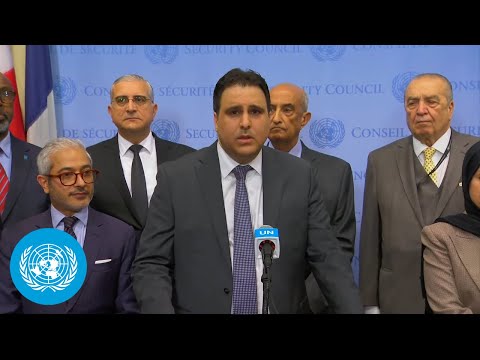
The chair of the Arab group for the month of May called on the U.N. Security Council to “take immediate action to bring an end to this horrific war and Israel's inhumane blockade on the Gaza Strip,” and demanded “the lifting of all restrictions on humanitarian aid and its distribution based on humanitarian principles.”
The chair of the Arab group for the month of May called on the U.N. Security Council to “take immediate action to bring an end to this horrific war and Israel's inhumane blockade on the Gaza Strip,” and demanded “the lifting of all restrictions on humanitarian aid and its distribution based on humanitarian principles.”
Ambassador Majid Bamia of the State of Palestine told the same briefing that an immediate, unconditional ceasefire is needed and repeated calls for the “immediate and unconditional release of all hostages, and the release of detainees.” He said the humanitarian situation in Gaza — including displacement, starvation and bombardment — constitutes a human tragedy and that statements of outrage alone are not enough.
The Arab group and the Palestinian envoy pressed the Security Council to adopt a draft resolution that they said would end the bloodshed, secure the release of hostages and prisoners, allow “the massive entry of humanitarian aid,” and require the withdrawal of Israeli forces from Gaza. The transcript refers to “resolution 27 35” as the council text Arab group speakers said should be fully implemented; the transcript does not specify the formal number or text beyond that phrase.
Why it matters: speakers said the conflict has produced prolonged suffering for civilians in Gaza and elsewhere in the occupied Palestinian territory and warned that continuing policy choices — including blockades and restrictions on aid distribution — amount to using starvation as a weapon of war. The Arab group said it will press the issue at the Security Council, the U.N. General Assembly and at an international conference set for June that is being co-chaired by Saudi Arabia and France.
Speakers also raised broader political and legal concerns. Ambassador Bamia described recent actions by the Israeli government as aimed at “liquidat[ing] the Palestinian question by force,” criticized comments by Israeli leaders, and said the international community must put in place measures that would “deter” further actions the Arab group deems illegal or extreme. When asked about an Israeli announcement to build 22 settlements in the West Bank, Bamia said such settlements are “illegal” and condemned by the world, and said international responses should be stronger.
Journalists at the briefing asked what concrete steps the Arab group expects from the June conference and what measures the Security Council should take. The transcript records that conference planning includes “8 working groups” developing concrete steps and that recognition of a Palestinian state is among possible measures mentioned by speakers.
On humanitarian operations, an ambassador identified as Abu Shahab said the United Arab Emirates has “been a huge provider of humanitarian assistance,” and described continuing UAE activity in Gaza including “operating field hospitals, desalination plants” and efforts to scale up aid. When asked about the funding of the Gaza Humanitarian Foundation, the transcript records that the respondent said the funding source was not known or “I don't have an answer to that.”
There were no formal votes or recorded Council decisions in the portion of the briefing captured in the transcript. The Arab group said a draft resolution circulated by Algeria and other e-10 consultations remain under discussion and that further consultations were ongoing at the time of the briefing.
The briefing combined statements by the Arab group and by the Palestinian envoy, exchanges with journalists and several questions about the scope of international steps, including sanctions or arms embargoes. Speakers repeatedly distinguished between public expressions of condemnation and the concrete measures they said are needed to stop the fighting and allow aid into Gaza.