Lifetime Citizen Portal Access — AI Briefings, Alerts & Unlimited Follows
Mayor’s office proposes consolidation, larger FY26 budget as council questions details
Loading...
Summary
The Executive Office of the Mayor (EOM) presented a restructured FY26 budget that consolidates community-affairs offices into three teams, increases the office’s operating chapter and FTE roll, and transfers some functions; council members asked for more detail about funding lines, legislative steps and transparency.
The Committee on Executive Administration and Labor heard testimony June 6 from Lindsay Parker, chief of staff to Mayor Muriel Bowser, on the Executive Office of the Mayor’s proposed fiscal 2026 budget and an administrative reorganization that consolidates multiple community-affairs offices under the EOM.
Parker told the committee the mayor’s GrowDC FY2026 proposal would place the previously separate community-affairs chapters under a single EOM budget chapter and that the EOM’s proposed operating budget for FY26 is roughly $31–32 million with about 175 FTEs. Parker said the reconfiguration consolidates 16 community-affairs offices into three “strategic teams” — Community Relations, Cultural Affairs, and Community Partnerships — and that the accounting change reduces the overall FTE total for those functions by about 4.5 compared with the prior configuration.
The reorganization aims to group constituent services, cultural and demographic outreach, and partnership work under unified leadership, Parker said. She described three teams: a Community Relations team (neighborhood concerns/constituent services, religious affairs, Clean City and nightlife/business liaison work); a Cultural Affairs cone (Mayor’s offices on African, African American, Asian and Pacific Islander, Caribbean, Latino and LGBTQ affairs); and Community Partnerships (Serve D.C., Veterans Affairs, Returning Citizens’ Affairs, Women’s Policy). Parker said the $5 million shown in the community partnerships budget line is a consolidation of previously budgeted grant dollars and a transfer of six grant-managing FTEs into the single chapter, not net new program funding.
Parker also described administrative changes: the Office of the Secretary will remain a separate budget chapter, the Mayor’s Office on Deaf, DeafBlind and Hard of Hearing is proposed to move to the Department on Disability Services, and the Office of Federal and Regional Affairs will remain programmatically within Intergovernmental Affairs despite an administrative placement issue in the published chart. She said the consolidation is intended to improve coordination, reduce duplication and find efficiencies.
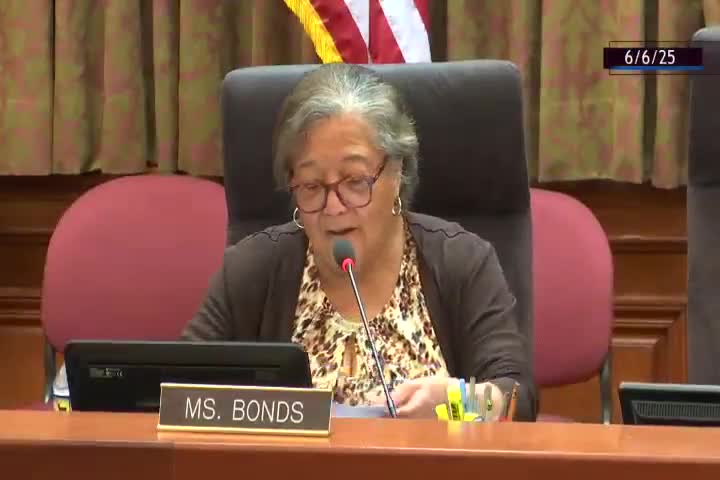
Committee members pressed for specifics. Chairperson Anita Bonds and other council members asked whether the moves required legislation; Parker said not at present but she was “happy to work with your team” if counsel believes statutory action is needed. Council members asked where residents would find the program-level detail that used to appear in controller/object lines; Parker said the District’s new financial systems use programs and activities rather than some older object detail and pledged to work with the committee on transparency.
Council members also asked about the EOM’s public communications and document production. Parker said the annual 10‑year progress report (A Decade of Delivering) is available online at progressreport.dc.gov, was distributed at public events and via the EOM newsletter, and that the EOM’s in‑house communications team produces limited printed copies. On Freedom of Information Act workload, Parker and staff reported FOIA request counts for recent years: 75 in 2023, 112 in 2024 and 65 so far in 2025; the Office of General Counsel said it had 20 open requests at the time of the hearing — fewer than the same point in the prior year.
The hearing also explored topics adjacent to EOM operations, including the RFK campus redevelopment the mayor has proposed to help bring the Washington Commanders back to D.C.; Parker said the administration has held community meetings and has a public site (ourrfk.dc.gov) and that the mayor wants the project to move forward with the budget. On hiring and the mayor’s recent hiring freeze, Parker said waivers are handled by the mayor’s budget team and the Office of General Counsel does not track waiver counts.
Why it matters: the reorganization centralizes community engagement functions under the mayor’s chief of staff and moves grant administration and some constituent services into a single chapter. Council members signaled they want clearer program-level budget detail, transparent cost documentation of the changes, and an explanation of whether any legislative steps are required to finalize the administrative moves.
What’s next: committee members asked EOM staff for follow‑up documentation, including updated organization charts that show reporting lines, clarification about the Office of Federal and Regional Affairs placement, and program-level detail that the new financial system can produce. Parker said she will work with the committee on requested clarifications and is open to further discussions about whether legislation is necessary.